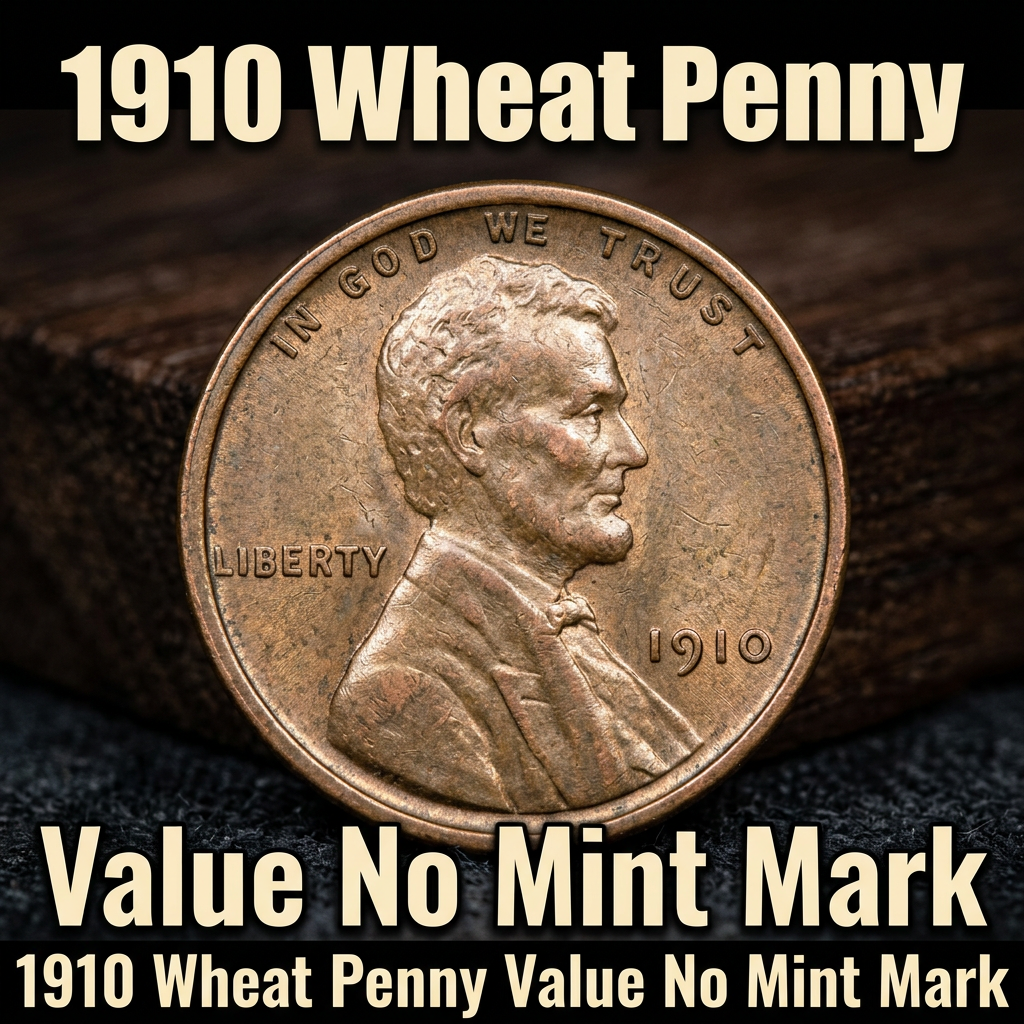
1910 Wheat Penny Value No Mint Mark Worth and Rarity Guide
The 1910 Wheat Penny is worth anywhere from $0.50 in worn condition to over $300 in uncirculated state. If you find one of these vintage Lincoln cents in your pocket change or an old jar, you are holding a piece of American history from the early days of the “Wheat” design.
Historical Significance of the 1910 Lincoln Cent
The year 1910 was only the second year the United States Mint produced the Lincoln Wheat Penny. After the controversial removal of the designer’s initials (V.B.D.) in late 1909, the 1910 issue represented the first full year of the “standard” design we recognize today. Because these coins are over a century old, finding one is always an exciting moment for casual collectors. For a quick and easy way to check your find, you can use a free coin identifier app to see exactly what you have.
The 1910 penny without a mint mark means it was struck at the Philadelphia Mint. Philadelphia was the primary production facility, and in 1910, it churned out over 146 million of these copper coins. While this sounds like a high number, the survival rate of coins in high-grade condition is quite low. Many people prefer using the CoinKnow app because it helps distinguish between a common circulated coin worth a few cents and a rare gem worth hundreds.
How to Determine the Value of Your 1910 Penny
When evaluating your 1910 Wheat Penny, the most important factor is the “grade” or the amount of wear on the coin’s surface. Most coins found today are in “Good” or “Very Good” condition, meaning the wheat stalks on the back are worn down and Lincoln’s features are smooth. These common coins typically sell for about 50 cents to a dollar. However, if the coin has original luster—the shiny, reddish glow it had when it left the mint—the price jumps significantly.
Collectors pay a premium for “Red” (RD) coins, which have preserved their original copper color without oxidizing. You can check the current market trends for a 1910 Wheat Penny in Mint State Red condition to see how much serious investors are willing to pay. Even a slight difference in condition can mean a hundred-dollar difference in value. This is why many hobbyists rely on tools like the CoinKnow app to get a realistic estimate before selling.
| Condition / Grade | Estimated Value (USD) |
|---|---|
| Good (G-4) | $0.35 – $0.75 |
| Fine (F-12) | $1.50 – $3.00 |
| Extremely Fine (XF-45) | $8.00 – $15.00 |
| Uncirculated (MS-63 Brown) | $35.00 – $60.00 |
| Gem Uncirculated (MS-65 Red) | $250.00+ |
What to Look for: Errors and Variations
While the standard 1910 Philadelphia penny is common, collectors are always on the lookout for specialized errors. Doubled die varieties or off-center strikes can instantly increase the price tag. While 1910 isn’t famous for a “major” doubled die like the 1955 or 1972 versions, subtle doubling in the lettering or date can still attract interest from niche buyers.
Understanding the nuance of 1910 penny value and grading factors is essential if you plan on selling your collection. Most everyday Americans might overlook a small “lamination error” where a piece of the copper surface flakes off, but these small quirks are what make coin collecting fun and potentially profitable. Always handle your coins by the edges to avoid getting finger oils on the surface, as this can degrade the value over time.
Proper Storage for Your 1910 Lincoln Penny
If you discover a 1910 Wheat Penny that looks particularly “new” or shiny, stop what you are doing and put it in a protective holder. Because these coins are made of 95% copper, they are highly susceptible to moisture and environmental damage. A “Red” penny that turns “Brown” due to poor storage can lose 80% of its market value in just a few years.
Using the CoinKnow app can help you keep a digital inventory of your collection so you don’t lose track of your best finds. Whether you are a casual hunter or a dedicated numismatist, the 1910 Wheat Penny is a classic entry point into the world of coin collecting. It offers a tangible connection to the era of President Taft and the early 20th century while remaining affordable enough for anyone to own.
FAQ:
Q: Where is the mint mark on a 1910 penny?
A: On Lincoln Wheat Pennies, the mint mark is located just below the date on the front (obverse) side. If there is no letter there, it was minted in Philadelphia.
Q: Is a 1910 penny rare?
A: In circulated condition, it is not considered rare, as over 146 million were made. However, coins in “uncirculated” condition with their original red color are quite rare and valuable.
Q: Should I clean my 1910 Wheat Penny to make it look better?
A: No! Never clean your coins. Cleaning causes microscopic scratches that professional graders can detect, and it can reduce the value of a coin by 50% or more.
