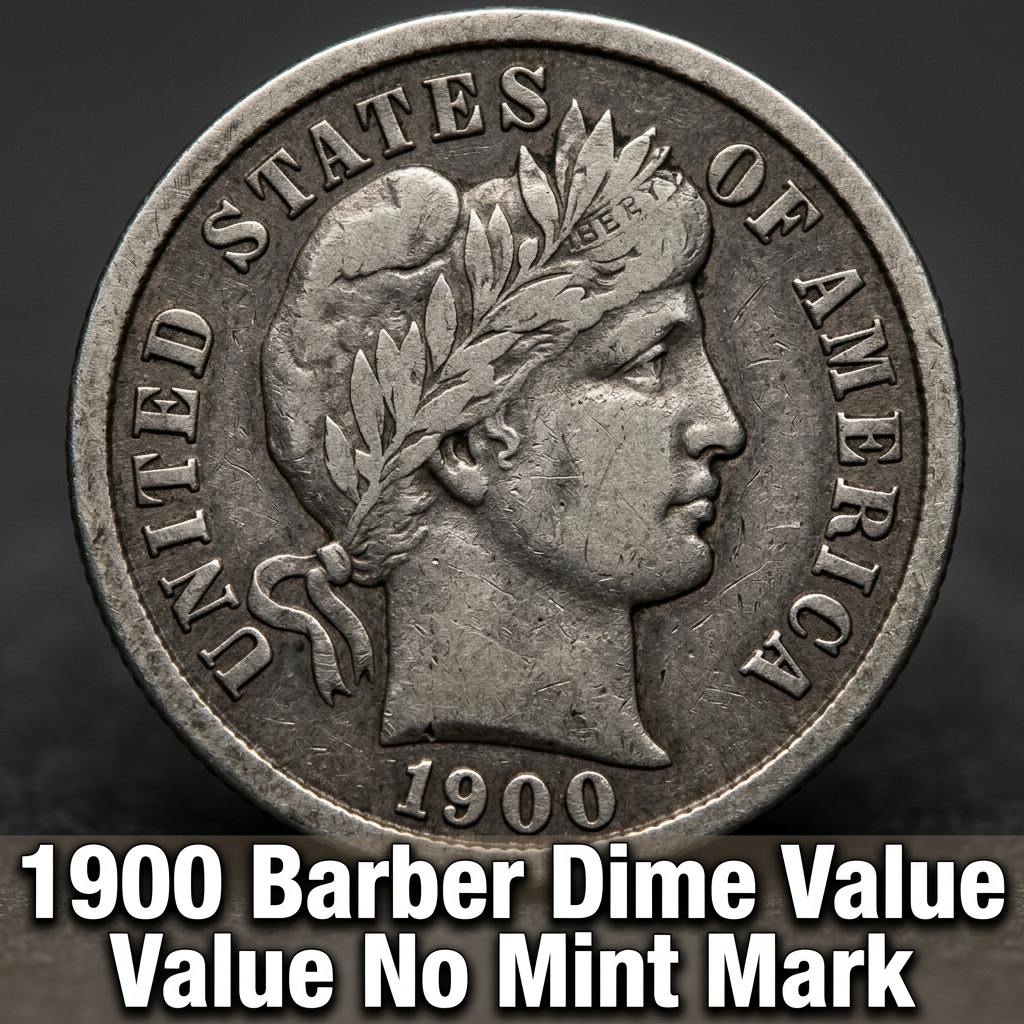
1900 Barber Dime Value Guide for Coins with No Mint Mark
The 1900 Barber Dime with no mint mark is typically worth between $3 in heavily circulated condition and over $600 for exceptional uncirculated specimens. This silver classic is a favorite among collectors due to its age, historical significance, and the elegant design created by Charles E. Barber.
Imagine rummaging through an old jar of change or a forgotten jewelry box and finding a silver coin that is over 120 years old. If you have found a 1900 dime, you are holding a piece of American history from the turn of the century. Identifying your coin is the first step, and using a free coin identifier app can help you confirm the date and variety quickly. While millions were minted, many have been lost to the melting pot or worn down to smooth slivers of silver, making well-preserved examples quite valuable today.
Understanding the No Mint Mark Philly Issue
When you look at your 1900 dime, you might notice the lack of a small letter on the reverse side. In the world of numismatics, a 1900 dime with no mint mark signifies that it was struck at the main United States Mint in Philadelphia. During this era, the Philadelphia Mint did not use a mint mark, while branch mints like San Francisco (S) and New Orleans (O) did.
Because the Philadelphia Mint produced a healthy supply of over 21 million dimes that year, the coin is relatively common in lower “Good” or “Very Good” grades. However, finding one that hasn’t been battered by decades of commerce is a different story. To get an instant estimate of what your specific coin might be worth, the CoinKnow app provides real-time market data directly to your smartphone.
How Grading Affects the 1900 Barber Dime Value
The largest factor in determining price is the “grade” or physical condition of the coin. Most 1900 dimes found by everyday people are in “Good” condition. In this state, the portrait of Liberty is visible, but the word “LIBERTY” in her headband is likely worn away or barely legible. These coins are valued primarily for their silver content and historical novelty.
As you move up to “Fine” or “Extremely Fine,” the value jumps significantly. Collectors look for sharp details in the hair and the laurel wreath. If you are lucky enough to own a “Mint State” (Uncirculated) coin, you are looking at a high-value asset. You can check the current 1900 Barber Dime price charts to see how much a pristine specimen can fetch at auction.
| Condition / Grade | Estimated Market Value |
|---|---|
| Good (G-4) | $3.00 – $5.00 |
| Fine (F-12) | $12.00 – $18.00 |
| Extremely Fine (EF-40) | $45.00 – $65.00 |
| Uncirculated (MS-60) | $160.00 – $220.00 |
| Choice Uncirculated (MS-65) | $650.00+ |
Silver Content and Intrinsic Worth
Even if your 1900 Barber Dime is in terrible condition—perhaps it is bent, scratched, or heavily corroded—it still holds “melt value.” Every Barber Dime is composed of 90% silver and 10% copper. This means the coin’s value will never fall below the spot price of the silver it contains.
When silver prices rise, the baseline value for even the most worn 1900 dimes increases. However, you should never clean your coins, as this can destroy their numismatic value and make them worth only their silver weight. For those wondering about the current spot price impacts on their collection, the CoinKnow app is an excellent tool to track silver fluctuations as they relate to your coins.
Rare Errors and Varieties to Look For
While the 1900 Philadelphia dime is mostly straightforward, collectors always keep an eye out for “doubled die” errors. These occur when the coin is struck by a die that has a misaligned or doubled image. On a Barber Dime, check the lettering and Liberty’s profile for any signs of blurring or “doubling” of the lines.
While errors for this specific year are not as famous as others in the series, they can command a massive premium from specialists. If you suspect your coin has a unique error, compare it with high-resolution images in the CoinKnow database to see if yours matches known varieties.
Q: Is a 1900 dime made of real silver?
A: Yes, all Barber Dimes minted in 1900 are made of 90% silver. They contain approximately 0.0723 ounces of pure silver, which gives them a “floor” price based on the current precious metals market.
Q: Where is the mint mark on a 1900 Barber Dime?
A: The mint mark is located on the reverse side of the coin, at the bottom, just below the bow of the wreath. If that space is empty, your coin was minted in Philadelphia and is known as a “no mint mark” variety.
Q: Should I clean my 1900 Barber Dime to make it look newer?
A: No! You should never clean old coins. Collectors prefer the natural patina and “toning” that comes with age. Cleaning creates tiny scratches on the surface that professional graders can easily spot, which often reduces the coin’s value by 50% or more.
