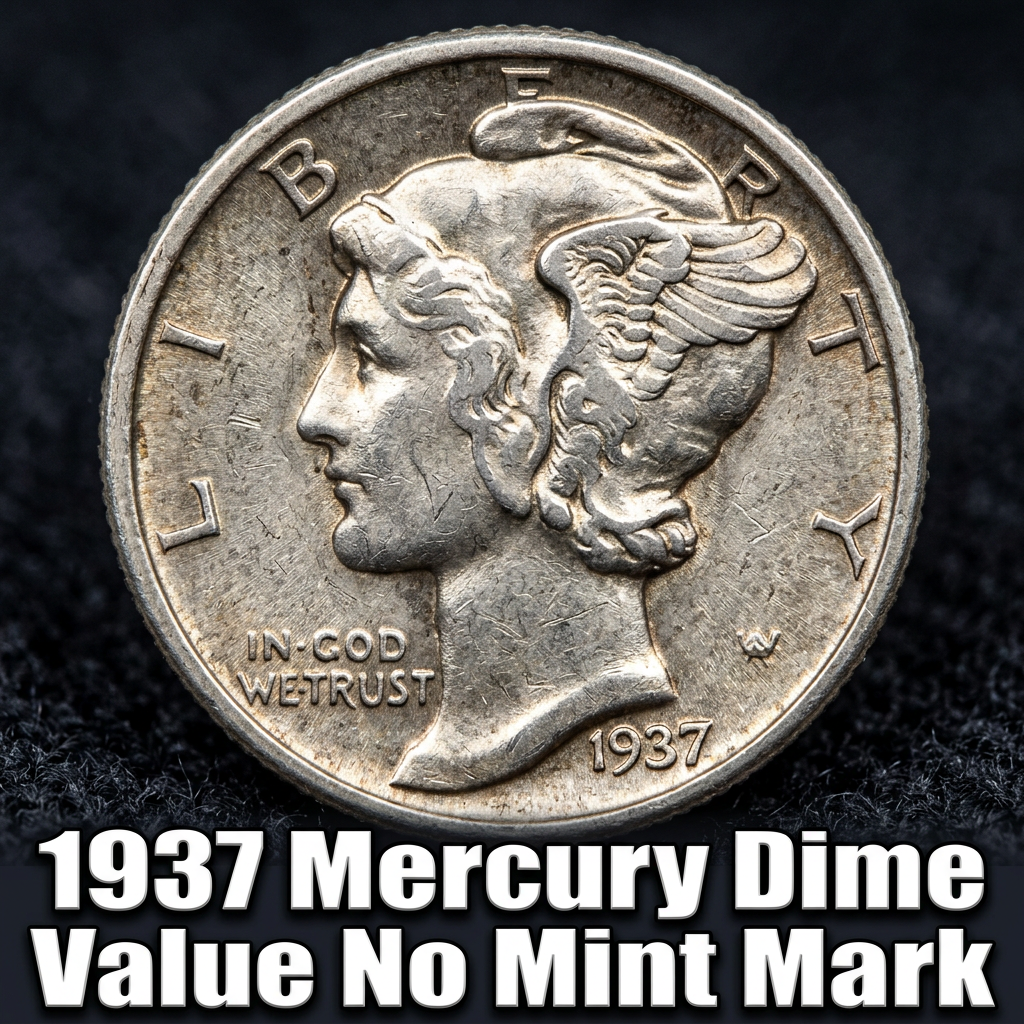
How Much is a 1937 Mercury Dime With No Mint Mark Worth Today
The 1937 Mercury Dime with no mint mark is worth anywhere from $3 in worn condition to over $150 in high-grade mint state. Finding one of these silver treasures in your pocket change or an old jar is an exciting discovery that connects you directly to American history.
What Makes the 1937 Mercury Dime Special for Collectors
In 1937, the United States was slowly climbing out of the Great Depression, and the Mercury Dime was a staple of daily commerce. Designed by Adolph A. Weinman, this coin actually depicts Liberty wearing a winged cap, symbolizing freedom of thought.
However, most people mistook Liberty for the Roman god Mercury, and the name stuck. If your coin has no mint mark, it means it was struck at the Philadelphia Mint. During this era, Philadelphia was the primary hub for coinage, producing over 65 million of these dimes in 1937 alone.
Because so many were made, they aren’t considered “rare” in the traditional sense, but their 90% silver content gives them a high baseline value. If you are unsure if your coin is a genuine Philadelphia strike, you can use a free coin identifier app to confirm the variety and origin in seconds. Using tools like CoinKnow allows beginners to skip the guesswork and get straight to the facts about their collection.
Determining the Market Value of a 1937 No Mint Mark Dime
The value of your 1937 Mercury Dime is primarily determined by its physical condition, also known as its “grade.” Most coins found in old collections are “Circulated,” meaning they show wear from being spent at grocery stores or theaters decades ago. These are generally valued for their silver weight plus a small premium for their age.
For those lucky enough to find a coin that looks like it just came from the bank, the price increases significantly. To get a precise idea of what collectors are paying, you can check the 1937 Mercury Dime auction records and price data. Professionals look for “Full Bands” (FB) on the reverse side of the coin, which refers to the horizontal straps holding the fasces together. If those lines are crisp and distinct, the coin’s value can skyrocket into the hundreds of dollars.
| Condition / Grade | Estimated Market Value |
|---|---|
| Good (G-4) | $2.50 – $3.00 |
| Fine (F-12) | $4.00 – $5.50 |
| Extremely Fine (XF-40) | $8.00 – $12.00 |
| Uncirculated (MS-63) | $25.00 – $35.00 |
| Gem Uncirculated (MS-65+) | $60.00 – $150.00+ |
Where to Find the No Mint Mark and What it Means
Most people looking at an old dime are searching for a small letter “S” or “D” to see where it was born. On a Mercury Dime, the mint mark is located on the reverse side (the back), near the bottom, just to the left of the base of the fasces (the bundle of rods). If you see a blank space there, you have a Philadelphia coin.
While “no mint mark” is sometimes associated with rare errors in other coin series, for the 1937 dime, it is perfectly normal. It simply indicates the coin’s origin. Beginners often use the CoinKnow app to zoom in on this specific area to ensure they aren’t missing a faded mark.
Even without a rare mint mark, the 1937-P dime is highly sought after by collectors trying to complete a “year set” or a full run of Mercury Dimes. You can find more detailed 1937 mercury dime value and history information to help you understand how this specific year fits into the broader market for silver coins.
Silver Content and Long Term Worth
One reason the 1937 Mercury Dime remains popular is its intrinsic metal value. Every dime minted before 1965 contains 90% silver and 10% copper. This means that even if the coin is so worn that the design is barely visible, it will always be worth its weight in silver (known as “melt value”).
As the price of silver fluctuates on the global market, the floor price of your dime will move with it. For many Americans, these coins serve as a “savings account” of sorts. Keeping a handful of 1937 silver dimes is a great way to hold onto physical assets that have a history of retaining value.
Before you consider selling your find, it is wise to use CoinKnow to scan the coin and see if it might have any “doubled die” errors or Full Band characteristics that could make it worth significantly more than just its silver weight. Many people have sold “junk silver” only to realize later they let go of a high-grade specimen.
Frequently Asked Questions about 1937 Mercury Dimes
Q: Is a 1937 dime with no mint mark rare?
A: No, it is not considered rare. The Philadelphia Mint produced over 65 million of them. However, they are rare to find in “pocket change” today because most have been pulled out of circulation for their silver content.
Q: How can I tell if my 1937 dime is silver?
A: All United States dimes minted in 1937 are made of 90% silver. You can tell by the edge of the coin; if it is solid silver-colored with no copper stripe, it is a silver coin. It also has a distinct high-pitched “ring” when dropped on a hard surface compared to modern clad coins.
Q: Should I clean my 1937 Mercury Dime to make it worth more?
A: Absolutely not. Cleaning a coin with chemicals or cloths can scratch the surface and remove the “patina” that collectors look for. A cleaned coin can lose up to 50% or more of its numismatic value. It is always best to keep the coin in its original, found state.
