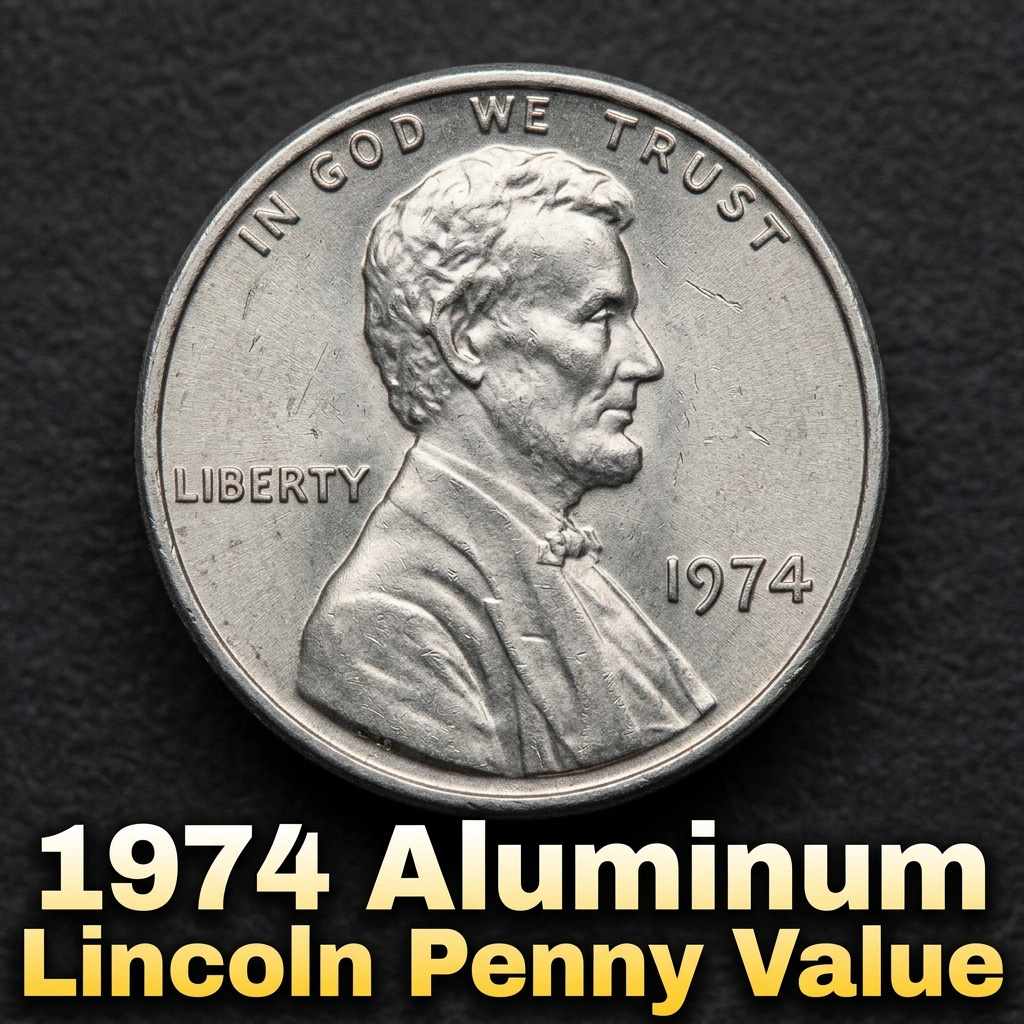
1974 Aluminum Lincoln Penny Value and Rarity Guide for Collectors
The 1974 Aluminum Lincoln Penny is worth anywhere from $250,000 to over $2 million because it is a rare experimental pattern coin that was never officially released to the public. While you likely have a common copper or zinc-plated penny in your pocket, finding an authentic aluminum specimen would be a life-changing financial discovery.
History of the 1974 Aluminum Penny Experiment
In the early 1970s, the cost of copper began to rise significantly. By 1973, it became clear to the United States Mint that the cost of producing a standard bronze penny would soon exceed its face value. To combat this, the Mint experimented with various alternative metals, eventually settling on an aluminum alloy. Over 1.5 million of these aluminum cents were struck in late 1973, bearing the 1974 date. If you find a silver-colored penny and want to check its authenticity, using a free coin identifier app can help you distinguish between a common steel-plated hobbyist coin and a genuine mint error.
Vending machine manufacturers quickly protested the new metal, claiming the lightweight aluminum coins would jam their machines. Furthermore, pediatricians expressed concern that the aluminum coins wouldn’t show up on X-rays if swallowed by children. Consequently, the project was scrapped, and the Mint ordered all specimens to be destroyed. However, several dozen coins had already been distributed to members of Congress and Mint officials as samples, and not all of them were returned. This created one of the most mysterious “forbidden” coins in American history, which you can easily track using the CoinKnow mobile application.
What is Your 1974 Penny Actually Worth
If you are looking at a typical brown or red copper penny from 1974, the value is much more modest. Most 1974 pennies found in pocket change are worth exactly one cent, though their copper melt value is currently around two cents. However, high-grade uncirculated coins can fetch a premium among collectors. For those interested in the market data, professional grading services provide a clear 1974 Lincoln Penny price guide for Mint State Red specimens, showing that top-quality coins can sell for $20 to $100.
The aluminum version, on the other hand, occupies a different stratosphere of value. Because the U.S. government technically considers these coins federal property, they are rarely seen at public auctions. One notable specimen was donated to the Smithsonian Institution, while another was returned to the Mint by the son of a Capitol Police officer who had been given the coin by a Senator. Because of this legal gray area, a definitive 1974 penny value assessment depends heavily on whether the coin is a common copper strike or the elusive aluminum pattern.
| Coin Type | Condition | Estimated Value |
|---|---|---|
| 1974 Aluminum Cent | Mint State (MS60+) | $250,000 – $2,000,000+ |
| 1974 Copper Cent | Average Circulated | $0.01 – $0.05 |
| 1974-S Copper Cent | Proof | $1.00 – $5.00 |
| 1974 Copper Cent | Uncirculated (MS65 RD) | $15.00 – $35.00 |
How to Identify a Real Aluminum Penny
The most striking feature of the 1974 aluminum penny is its color and weight. It looks like a shiny new dime but has the design of a Lincoln cent. While a standard copper penny weighs 3.11 grams, an aluminum penny is incredibly light, weighing only 0.93 grams. If you find a “silver” penny in your change, it is more likely a copper coin that was plated in zinc or chrome for a chemistry experiment. You can quickly verify coin weights and specs using CoinKnow.
Another common mistake is confusing the aluminum penny with the 1943 Steel Penny from World War II. Steel pennies are magnetic, whereas aluminum is not. If your silver-colored coin sticks to a magnet, it is either a 1943 steel cent or a later plated imitation. Professional authentication is always recommended for coins of this potential value, as the CoinKnow community often highlights that counterfeits are common in the high-stakes world of rare numismatics.
Other Rare 1974 Penny Varieties to Watch For
While the aluminum penny is the “Holy Grail,” there are other 1974 variations that collectors look for. For example, the 1974-S (San Francisco) and 1974-D (Denver) mint marks can sometimes feature “repunched” mint marks or “doubled die” errors. While these don’t reach the million-dollar heights of the aluminum version, a significant error coin can still be worth hundreds of dollars to the right buyer.
Always check the “In God We Trust” lettering and the date for any slight doubling, which indicates a Doubled Die Obverse (DDO). These errors are rare but can still be found in old jars of coins. Keeping a magnifying glass and a reliable price guide handy will ensure you don’t accidentally spend a valuable piece of history at the grocery store.
Q: How many 1974 aluminum pennies are still in existence?
A: It is estimated that fewer than 10 to 12 aluminum pennies survived the Mint’s destruction order, though only one has been officially authenticated and allowed to remain in private hands (after a legal settlement).
Q: Is it illegal to own a 1974 aluminum penny?
A: For many years, the U.S. Mint claimed all aluminum pennies were government property. However, after recent legal battles, the status of these coins is complex. Most collectors consider them “illegal” to own unless the government has explicitly abandoned its claim to that specific coin.
Q: I found a 1974 penny that looks silver. Is it aluminum?
A: Most “silver” 1974 pennies are actually copper coins that have been plated with another metal outside of the Mint. The best way to tell is to weigh the coin; if it weighs around 3 grams, it is plated copper. If it weighs less than 1 gram, you may have found something incredible.
