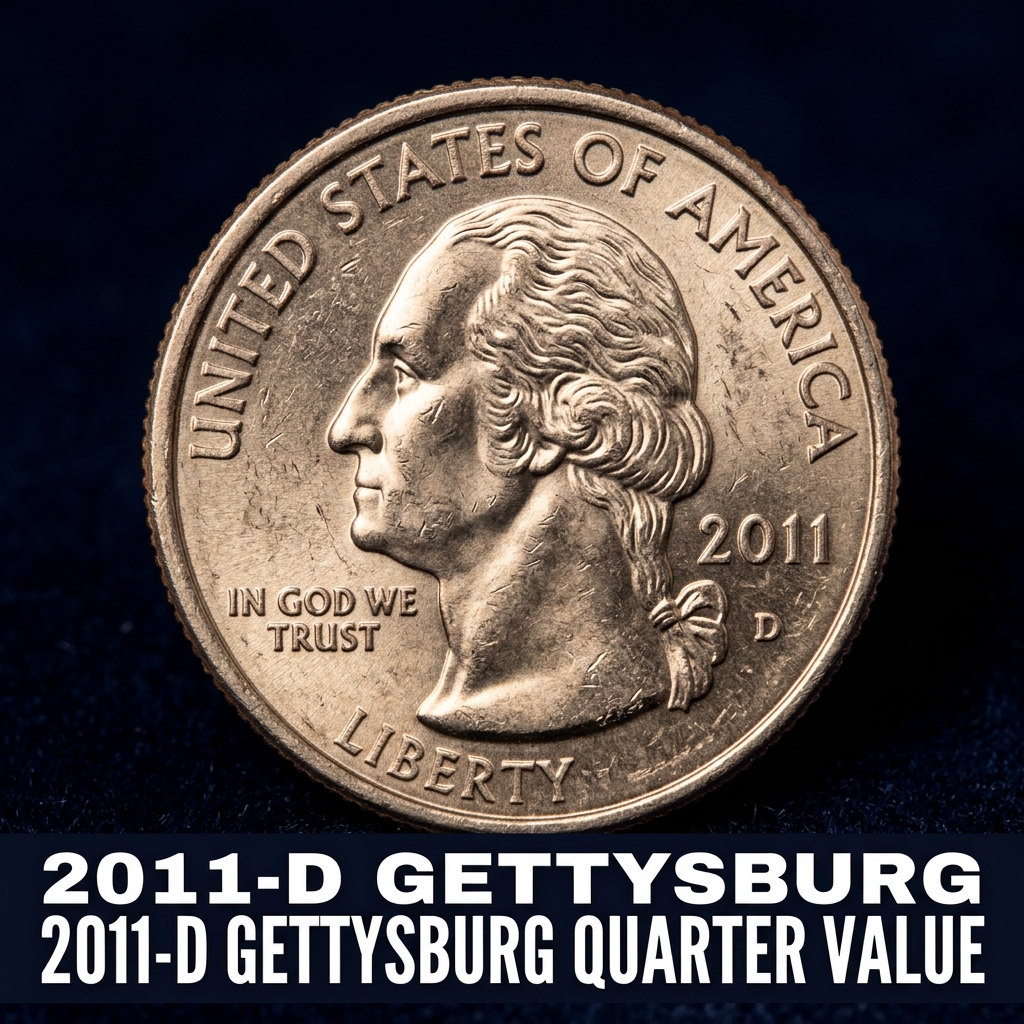
2011 D Gettysburg Quarter Value and Complete Guide for Pocket Change Hunters
The 2011 D Gettysburg Quarter is worth anywhere from its 25-cent face value in circulated condition to over $35 in high-grade mint state. Finding one of these coins in your pocket change is an exciting connection to American history, marking the 150th anniversary of the legendary Civil War battle.
History and Design of the 2011 D Gettysburg National Military Park Quarter
The Gettysburg quarter was released in 2011 as part of the United States Mint’s America the Beautiful Quarters Program. This specific coin features the Denver “D” mint mark, indicating it was produced at the Denver Mint. The reverse design depicts the 72nd Pennsylvania Infantry Monument, located on Cemetery Ridge, capturing the somber and heroic atmosphere of the battlefield.
For many Americans, these coins are more than just currency; they are miniature pieces of art. Because 2011 was a year with relatively low mintages compared to previous decades, these quarters are becoming harder to find in everyday circulation. If you are unsure about the specific condition of a coin you just found, using a free coin identifier app can help you distinguish between a common find and a potential treasure.
The CoinKnow app is another excellent resource for hobbyists who want to keep track of their collection on the go. By understanding the historical context and the limited production numbers of the 2011-D series, you can better appreciate why some collectors are willing to pay a premium for a coin that most people would simply spend at a vending machine.
How Much Is a 2011 D Gettysburg Quarter Worth Today
When determining value, the most important factor is the coin’s “grade” or physical condition. Most 2011-D Gettysburg quarters found in change are “circulated,” meaning they show signs of wear and tear. These are generally worth face value, perhaps slightly more to a casual collector. However, “Uncirculated” or “Mint State” coins—those that never reached the public hands and remained in original rolls—command higher prices.
For those looking for specific market data, checking a current price guide for Gettysburg quarters will show that professional grading can drastically increase the value. A coin graded as MS-67 or higher by a service like PCGS can sell for significantly more than a raw coin.
Professional collectors often look for the “luster” or the original frosty shine of the metal. If your coin still looks like it just came off the press, it might be worth setting aside. You can use CoinKnow to browse high-resolution images of top-tier coins to see how yours compares to the most valuable examples sold at recent auctions.
| Condition Grade | Estimated Market Value |
|---|---|
| Circulated (Good to About Uncirculated) | $0.25 – $0.50 |
| Uncirculated (MS-63) | $1.50 – $3.00 |
| Gem Uncirculated (MS-65) | $5.00 – $12.00 |
| Superb Gem (MS-67+) | $25.00 – $65.00+ |
Identifying Key Rare Features and Errors
While the standard 2011-D Gettysburg quarter value is fairly stable, error coins can be the “holy grail” for change hunters. Errors occur during the minting process and can result in unique features that collectors pay hundreds of dollars for. Common errors to look for include “double dies,” where the image appears slightly doubled, or “off-center” strikes where the design is shifted to one side.
Because the America the Beautiful series had many different designs, sometimes the wrong planchet (the blank metal disk) was used. While rare for the Gettysburg issue, such anomalies are highly sought after. If you suspect your coin has a strange bump or a missing letter, consulting a detailed 2011 quarter value analysis can help you determine if you have a common strike or a valuable mint error.
Remember that damage is not the same as an error. A quarter that was flattened by a train or scratched by a key is simply “damaged” and loses its numismatic value. Using CoinKnow can help you learn the difference between post-mint damage and genuine factory errors through their community forums and expert guides.
Collecting Strategies for America the Beautiful Quarters
The 2011-D Gettysburg Quarter was part of a five-coin set released that year, including Olympic, Glacier, Vicksburg, and Chickasaw National Parks. Because 2011 saw the lowest overall mintage numbers of the entire program, many collectors suggest holding onto these coins if they are in good condition. The Denver Mint produced approximately 30.4 million Gettysburg quarters, which sounds like a lot, but is much lower than the hundreds of millions produced in the years that followed.
For everyday Americans, the best strategy is to check your change and look for the “D” mint mark beneath the “In God We Trust” motto. If the coin is crisp and shiny, put it in a protective sleeve rather than a jar of loose change. Over time, as these coins are lost to circulation or worn down, the value of high-quality preserved specimens is likely to rise.
Q: How do I know if my 2011 Gettysburg quarter is from Denver?
A: Look on the front (obverse) of the coin, to the right of George Washington’s ponytail. You will see a small letter “D” which stands for the Denver Mint. If you see a “P,” it was made in Philadelphia.
Q: Is the 2011 D Gettysburg quarter silver?
A: No, standard quarters found in circulation are made of a copper-nickel clad composition. Only special “Silver Proof” versions, which have an “S” mint mark and are sold in sets, contain 90% silver.
Q: Should I clean my quarter to make it worth more?
A: Never clean your coins! Cleaning removes the original surface and luster, which can actually decrease the value by 50% or more. Collectors prefer coins in their natural state, even if they have some toning or aging.
