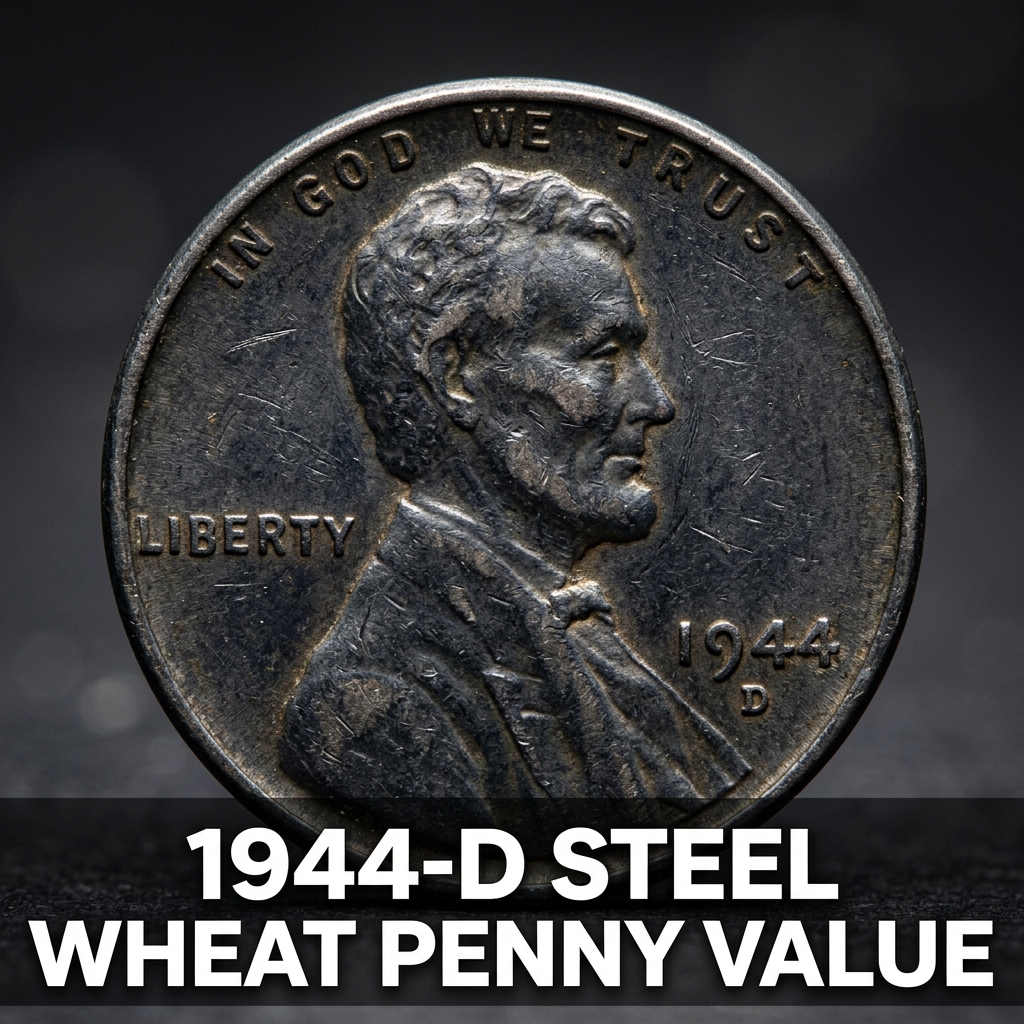
1944-D Steel Wheat Penny Value Guide What This Rare Wartime Error Is Really Worth
The 1944-D Steel Wheat Penny is one of the most exciting error coins in American history, worth anywhere from $35,000 in circulated condition to well over $100,000 in higher mint state grades. If you found one of these hiding in an old jar or inherited coin collection, you may be sitting on a life-changing piece of numismatic history.
What Makes the 1944-D Steel Penny So Rare and Valuable
The story behind this coin is fascinating. During World War II, the U.S. Mint switched from copper to zinc-coated steel for penny production in 1943 — copper was needed for the war effort. By 1944, they switched back to copper. But a small number of leftover steel planchets from 1943 accidentally made their way into the production line at the Denver Mint, resulting in a tiny batch of 1944-D steel pennies being struck by mistake.
That accident is exactly why this coin is so valuable today. Estimates suggest fewer than 10 authentic examples are known to exist. That extreme rarity drives the price into the tens of thousands of dollars even for worn specimens.
If you think you might have one, don’t clean it or handle it too much. Use a free coin identifier app to get a quick first look before you do anything else. Apps like CoinKnow let you scan your coin using your phone camera and immediately pull up reference images and value estimates, which is a great starting point.
How to Tell If Your 1944 Penny Is Steel or Copper
This is the most important question most people have — and thankfully, it’s easy to test at home.
A genuine 1944-D Steel Wheat Penny is made of zinc-coated steel, which means it is magnetic. Hold a magnet near your penny. If it sticks, you may have a steel cent. If it doesn’t, it’s a regular copper penny from 1944, which is common and worth only a few cents to a couple of dollars.
Check the mint mark next. Look just below the date on the obverse (front) of the coin. A small “D” indicates it was struck at the Denver Mint. That “D” mint mark combined with the steel composition is what makes this coin extraordinary.
Keep in mind that many steel pennies from 1943 get mistakenly identified as 1944 issues. Always double-check the date carefully under good lighting or a magnifying glass. CoinKnow has a built-in magnification and detail comparison feature that can help you read faint or worn dates more accurately.
1944-D Steel Wheat Penny Value Chart by Grade
The value of this coin varies dramatically depending on its condition. Professional grading by PCGS or NGC is essential before any sale or purchase.
| Grade | Condition | Estimated Value |
|---|---|---|
| G-4 (Good) | Heavy wear, details visible | $35,000 – $50,000 |
| VF-20 (Very Fine) | Moderate wear, clear details | $55,000 – $75,000 |
| EF-40 (Extremely Fine) | Light wear on high points | $75,000 – $95,000 |
| MS-63 (Mint State) | Uncirculated, minor marks | $100,000+ |
For the most up-to-date auction records and certified sale prices, you can check out the latest 1944 Wheat Penny price data by grade to see how the market has been trending.
How to Get Your 1944-D Steel Penny Authenticated
Never try to sell this coin without professional authentication. Because the values are so high, counterfeits and altered coins are common. Fraudsters sometimes shave down a “4” on a 1943 steel penny to make it look like a 1944, or they plate copper coins with steel-colored material.
The only reliable way to confirm authenticity is to submit your coin to PCGS (Professional Coin Grading Service) or NGC (Numismatic Guaranty Company). Both services will encapsulate and certify the coin, which is required by virtually every serious buyer or auction house.
Before you spend money on professional grading, use CoinKnow to do an initial check. The app helps you compare your coin against authenticated examples and flags common red flags like unusual weight or suspicious surfaces — giving you confidence before investing in the grading process.
You can also read a more detailed breakdown of the full 1944 Steel Penny value and authentication guide to understand exactly what graders look for.
FAQ
Q: How do I know if my 1944 penny is the rare steel version?
A: The simplest test is the magnet test. A steel penny will stick to a magnet; a copper penny will not. Then check the mint mark — it should be a “D” below the date for the Denver Mint version. If both conditions are true, have it professionally authenticated immediately.
Q: Is the 1944-D Steel Wheat Penny the rarest U.S. penny?
A: It is among the rarest. Along with the 1943 copper penny and the 1944-S Steel penny, it ranks as one of the top three most valuable Lincoln Wheat Penny errors ever produced. Fewer than 10 confirmed examples of the 1944-D steel cent are known to exist.
Q: Where is the best place to sell a 1944-D Steel Wheat Penny?
A: After getting it certified by PCGS or NGC, your best options are major auction houses like Heritage Auctions or Stack’s Bowers, which specialize in rare coins and attract serious collectors willing to pay top dollar. Private sales to dealers are also possible but typically yield lower prices.
