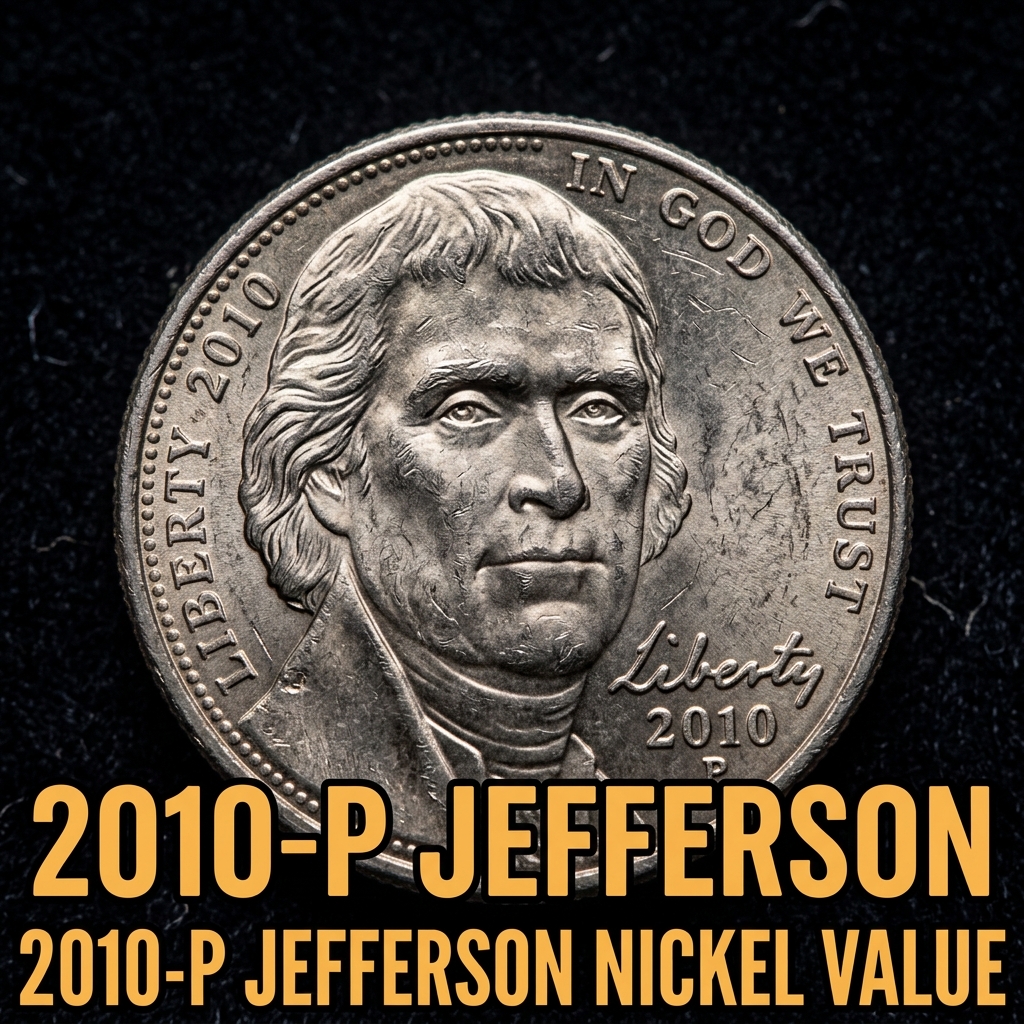
2010-P Jefferson Nickel Value — What This Common Coin Is Actually Worth
The 2010-P Jefferson Nickel is worth anywhere from face value (5 cents) in circulated condition to around $5 or more in top-tier mint state grades. Most people will find this coin in their pocket change and assume it’s worthless — but a few rare examples in pristine condition can surprise you.
What Is the 2010-P Jefferson Nickel?
The 2010-P Jefferson Nickel was struck at the Philadelphia Mint, indicated by the small “P” mintmark on the coin’s obverse. This is a modern coin, and billions were produced for everyday circulation, which is why most examples you’ll find are only worth face value.
That said, condition matters enormously in coin collecting. A heavily worn 2010-P nickel is essentially worth 5 cents. But a coin that was never circulated — still showing its original luster and sharp details — can be worth several dollars to a serious collector.
If you’re not sure what you’re holding, a free coin identifier app can help you quickly figure out the coin’s details and whether it might be worth more than face value. Tools like CoinKnow make it fast and easy to scan your coin and get an instant value estimate.
2010-P Jefferson Nickel Value by Grade
Coin values are based on grades — a standardized scale from 1 (heavily worn) to 70 (perfect uncirculated). For the 2010-P Jefferson Nickel, here’s what you can generally expect:
| Grade | Condition | Estimated Value |
|---|---|---|
| G-4 (Good) | Heavy wear, outlines visible | $0.05 |
| VF-20 (Very Fine) | Moderate wear, details clear | $0.05 – $0.25 |
| MS-63 (Uncirculated) | No wear, some bag marks | $0.50 – $1.50 |
| MS-65 (Gem Uncirculated) | Strong luster, minor imperfections | $2.00 – $5.00 |
| MS-66+ Full Steps (FS) | Near perfect, sharp steps on Monticello | $10.00 – $50.00+ |
As you can see, the big money is at the very top of the grading scale — especially for coins designated “Full Steps” (FS), which means the steps on the reverse image of Monticello are fully struck and clearly visible. For a closer look at certified 2010-P Jefferson Nickel MS Full Steps price data, that resource breaks down auction results by grade in detail.
The Full Steps Designation and Why It Matters
If you’ve heard collectors talk about “Full Steps” nickels, here’s what it means. The reverse of every Jefferson Nickel shows Monticello, Thomas Jefferson’s Virginia home. At the base of the building, there’s a set of steps. On most circulation strikes, the dies were overused or coins were poorly struck, leaving the steps flat and blurry.
A coin with a Full Steps designation means those steps are crisp, complete, and clearly defined — a sign of an exceptional strike. These coins are significantly rarer than standard uncirculated examples and command a serious premium in the collector market.
The 2010-P is actually one of the tougher dates to find in true Full Steps quality, which is why top-graded examples can sell for many times face value at auction. If you think your coin might qualify, it’s worth getting it professionally graded by PCGS or NGC.
How to Tell If Your 2010-P Nickel Is Worth More
Start by checking the basics. Look for the “P” mintmark on the obverse (front) just to the right of Jefferson’s portrait. Next, examine the coin’s overall condition — does it show scratches, wear, or discoloration? Any of those things reduce its value.
Then flip it over and look carefully at the steps of Monticello with a magnifying glass. If you can count five or six complete, unbroken steps, you might have something special on your hands.
Using CoinKnow is a great shortcut — the app can help you assess the coin’s grade and condition quickly without needing years of collector experience. It’s especially handy when you’re going through a jar of old change and want quick answers.
You can also check detailed 2010 nickel value information by condition and mintmark to compare your coin against known values and recent sales.
Is It Worth Keeping or Selling?
For most people, the 2010-P Jefferson Nickel in circulated condition is just a nickel. But if you’re a collector or you’ve found a coin that looks unusually sharp and bright — especially one with crisp Monticello steps — it’s absolutely worth a second look.
Even if your coin isn’t worth big money, building a collection of modern Jefferson Nickels in high grades is a fun and affordable hobby. And with tools like CoinKnow, getting started has never been easier.
—
Frequently Asked Questions
Q: How much is a 2010-P Jefferson Nickel worth today?
A: Most 2010-P Jefferson Nickels in circulated condition are worth only face value — 5 cents. Uncirculated examples can be worth $1 to $5, and coins graded MS-66 or higher with Full Steps can sell for $10 to $50 or more depending on demand.
Q: What does “Full Steps” mean on a Jefferson Nickel?
A: Full Steps (FS) refers to coins where the steps on the Monticello design on the reverse are fully struck and clearly visible. It’s a quality indicator that significantly increases a coin’s collector value. These coins are rarer and more desirable than standard uncirculated pieces.
Q: Should I get my 2010-P nickel professionally graded?
A: If your coin appears uncirculated and shows sharp, complete steps on Monticello, professional grading by PCGS or NGC could be worthwhile. The cost of grading is generally only justified if the coin has a realistic chance of achieving a high grade like MS-65 FS or better.
