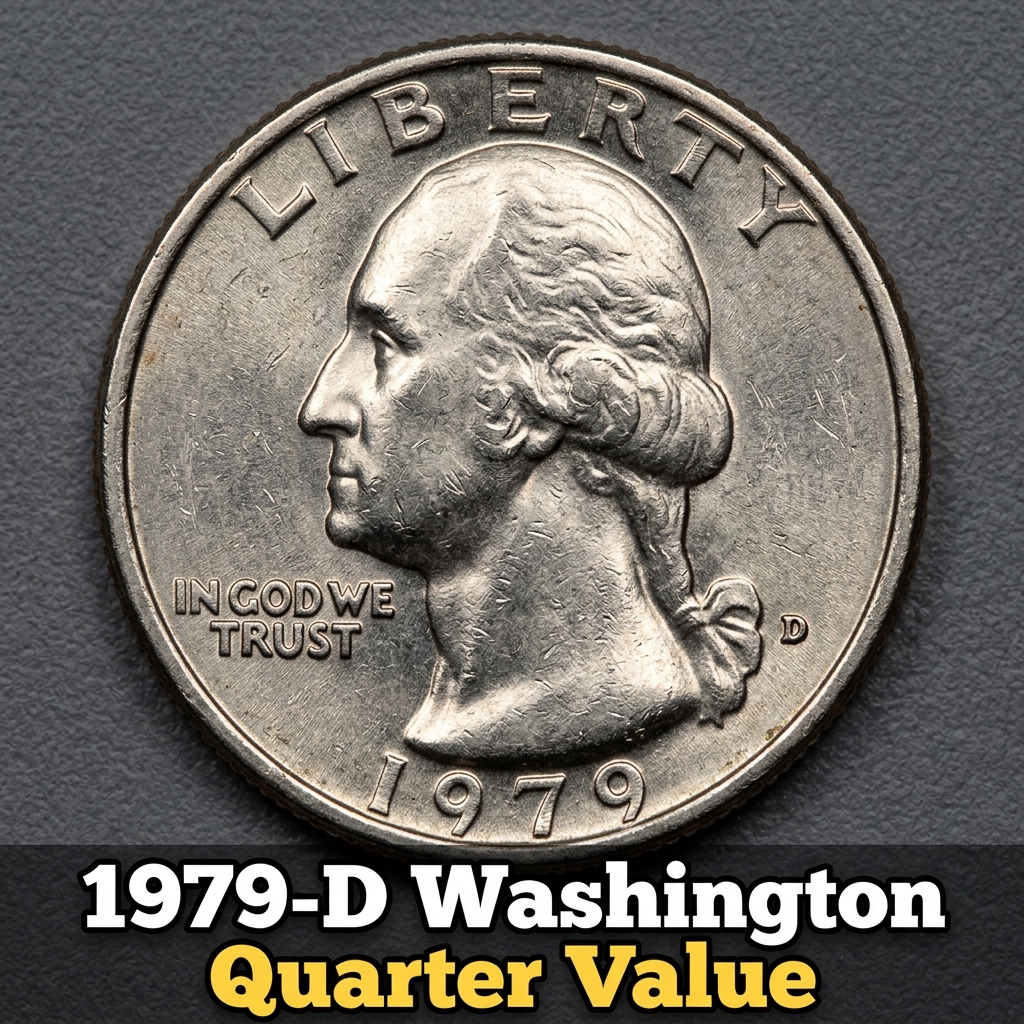
1979-D Washington Quarter Value What It’s Really Worth and When to Hold On
The 1979-D Washington Quarter is worth between $0.25 and $15 in typical circulated condition, but high-grade mint state examples can climb to $50 or more depending on the coin’s surface quality and eye appeal. If you’ve got one sitting in a jar or found it in an old collection, you’re in the right place to find out exactly what it’s worth.
What Makes the 1979-D Quarter Special
The 1979-D Washington Quarter was minted at the Denver Mint, which is why it carries the small “D” mintmark on the obverse, just to the right of Washington’s neck. Denver produced over 390 million of these coins that year, making it a high-mintage issue.
Because so many were made, most examples you’ll find in your pocket change or at flea markets aren’t rare. However, that doesn’t mean they’re all worth face value. Condition is everything in the coin world, and even a common coin in pristine, uncirculated condition can fetch a solid premium.
The design features John Flanagan’s classic portrait of George Washington on the front, with an eagle on the reverse. These quarters are composed of a copper-nickel clad sandwich — no silver content in 1979 issues from either mint.
If you’re not sure whether your coin has a “D” mintmark or want help identifying it quickly, try using a free coin identifier app right from your phone. It can save you a lot of time guessing.
1979-D Quarter Value by Grade
The value of your 1979-D Washington Quarter depends almost entirely on its grade — how well the coin has been preserved over the decades. Circulated coins show wear on the high points, while uncirculated coins retain their original mint luster.
Here’s a quick breakdown of typical values:
| Grade | Description | Estimated Value |
|---|---|---|
| Good (G-4) | Heavy wear, design visible | $0.25 – $0.50 |
| Fine (F-12) | Moderate wear, some detail | $0.50 – $1.00 |
| Extremely Fine (EF-40) | Light wear on high points | $1.00 – $3.00 |
| About Uncirculated (AU-55) | Slight wear, mostly lustrous | $3.00 – $8.00 |
| MS-63 | Uncirculated, minor marks | $8.00 – $20.00 |
| MS-65 or Higher | Gem uncirculated, sharp strike | $30.00 – $60.00+ |
For a more detailed look at certified mint state 1979-D Washington Quarter price data across all MS grades, numismatic databases track actual auction results that can show you what buyers are really paying today.
How Condition and Strike Quality Affect the Price
Beyond the basic wear scale, strike quality plays a big role in what a 1979-D quarter is worth to serious collectors. Denver quarters from this era are sometimes found with soft strikes, meaning the fine details — like the hair above Washington’s ear or the eagle’s breast feathers — are not fully defined even on uncirculated coins.
A sharply struck gem example with full, crisp detail is significantly more desirable than a weakly struck coin at the same grade level. This is why two MS-65 coins can have noticeably different prices at auction.
Luster matters too. Original, unbroken mint luster gives the coin a bright cartwheel effect under light. Coins that have been cleaned or dipped will lose that natural luster and are worth considerably less, even if they look shiny at first glance.
CoinKnow is a handy app that helps collectors assess coin quality based on photos and grade ranges — great for beginners who aren’t yet confident reading a coin’s surface characteristics.
Are Any 1979-D Quarters Worth Big Money
Most 1979-D quarters you’ll come across are common coins, but every now and then an exceptional example surfaces. Coins graded MS-67 or higher are extremely scarce for this date and mint, and they can sell for $100 to several hundred dollars at major coin auctions.
Error coins are another story entirely. Although no major recognized errors are widely documented for the 1979-D quarter, minor die varieties, off-center strikes, and planchet errors do occasionally pop up. If your coin looks oddly shaped, struck off-center, or has doubling on the lettering, it might be worth having it examined by a professional grader like PCGS or NGC.
For a complete overview of 1979 quarter values including both P and D mint issues across all grades, comparing both mintmarks side by side can help you understand where your specific coin fits in the market.
CoinKnow can also help you photograph your coin properly and compare it against known examples before you decide whether professional grading is worth the cost.
Where to Sell Your 1979-D Quarter
If you’ve determined your coin is in nice condition and you want to sell it, you have several options. eBay remains one of the best places to gauge real-world value — search “1979-D Washington Quarter” and filter by “Sold Listings” to see what buyers actually paid.
Local coin shops are convenient but may offer lower prices since they need room for profit. Coin shows are great for meeting multiple dealers and getting competing offers in one afternoon.
For coins graded MS-65 or better, submitting to PCGS or NGC for certification is usually worth it. A certified grade adds credibility and makes the coin much easier to sell to serious collectors online.
Whatever route you choose, CoinKnow can help you track market trends and get a realistic idea of your coin’s value before you commit to a sale.
—
Frequently Asked Questions
Q: Is the 1979-D Washington Quarter made of silver?
A: No. By 1979, the U.S. Mint had long discontinued silver in circulation quarters. The 1979-D is a copper-nickel clad coin with no silver content whatsoever.
Q: How can I tell if my 1979-D quarter is uncirculated?
A: Look for original mint luster — a flowing, cartwheel-like shine when you tilt the coin under a light. Any flat, dull gray areas on the high points indicate wear and mean the coin has been circulated.
Q: Is it worth getting a 1979-D quarter professionally graded?
A: Only if the coin appears to be MS-65 or better. Grading fees typically run $20–$40 per coin, so it only makes financial sense for coins with strong eye appeal and no visible wear. For average circulated examples, grading costs would exceed the coin’s value.
