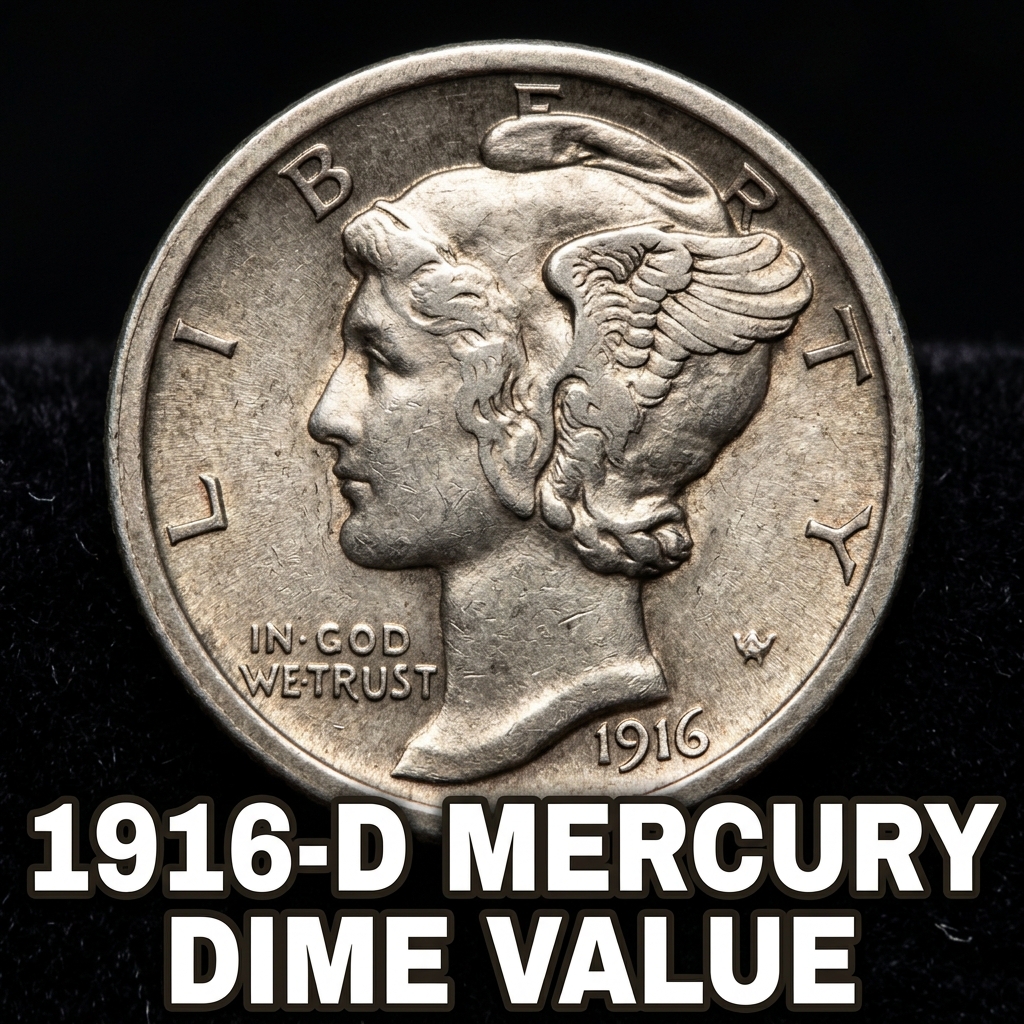
1916-D Mercury Dime Value and What Makes It One of America’s Most Valuable Coins
The 1916-D Mercury Dime is worth anywhere from $7,000 in heavily worn condition to well over $100,000 in mint state — making it one of the most sought-after coins in all of American numismatics. If you’ve stumbled across a Mercury dime with a small “D” mintmark, you may be holding something truly extraordinary.
What Is the 1916-D Mercury Dime?
The Mercury Dime series launched in 1916, designed by Adolph Weinman. The obverse features Liberty wearing a winged cap — often mistaken for the Roman god Mercury, which gave the coin its popular nickname. Three mints produced dimes that year: Philadelphia, San Francisco, and Denver.
The Denver Mint struck only 264,000 of these coins in 1916, making the 1916-D one of the lowest-mintage dimes in the entire 20th century. Compare that to Philadelphia’s 22 million, and you can immediately understand why the “D” mintmark matters so much.
To check whether your dime is a 1916-D, flip it over to the reverse (the side with the fasces and olive branch) and look at the bottom left, just to the right of the “E” in “ONE.” A tiny “D” means it was minted in Denver — and that changes everything.
If you’re unsure what you’re looking at, you can use a free coin identifier app to scan the coin and get an instant read on its mint mark, grade estimate, and approximate value.
1916-D Mercury Dime Value by Grade
Coin value depends heavily on condition, or “grade.” A coin that’s been passed around in pockets for decades will show significant wear, while an uncirculated coin retains its original luster and sharp detail. Here’s a look at the approximate retail value for the 1916-D Mercury Dime across different grades:
| Grade | Description | Estimated Value |
|---|---|---|
| AG-3 (About Good) | Heavily worn, outline visible | $7,000 – $9,000 |
| G-4 (Good) | Major details visible | $9,000 – $12,000 |
| VG-8 (Very Good) | Design clear, moderate wear | $13,000 – $18,000 |
| F-12 (Fine) | Even wear across high points | $20,000 – $30,000 |
| VF-20 (Very Fine) | Light wear, good detail | $35,000 – $55,000 |
| EF-40 (Extremely Fine) | Slight wear on high points | $60,000 – $80,000 |
| MS-63 (Mint State) | Uncirculated, minor marks | $90,000 – $120,000+ |
For a deeper look at current 1916-D Mercury Dime price data across mint state grades, including recent auction results and population reports, dedicated numismatic resources can give you real-time market context.
How to Tell a Real 1916-D From a Fake
Because this coin is so valuable, counterfeits are a serious problem. The most common fake is a genuine 1916 Philadelphia dime that has had a “D” mintmark added. Fortunately, there are ways to spot the difference.
First, examine the mintmark itself. On an authentic 1916-D, the “D” was hand-punched and shows characteristics consistent with Denver Mint dies of that era — it’s slightly oval in shape and positioned in a specific location relative to the design elements.
Second, the mintmark on a genuine coin looks part of the coin’s surface, not raised or uneven. If it looks applied or the surrounding metal appears disturbed, that’s a red flag.
Third, always buy certified coins. Professional grading services like PCGS and NGC authenticate and encapsulate coins, giving you confidence in what you’re buying. CoinKnow helps collectors track certified coin values and compare recent auction sales, so you’re never guessing in the dark.
Why Is the 1916-D Mercury Dime So Valuable?
Rarity and demand drive this coin’s extraordinary value. With just 264,000 struck — and many of those lost to circulation over the decades — the surviving population is tiny. Coin collectors have pursued complete Mercury Dime sets for generations, and the 1916-D is the one key date that makes or breaks a set.
This coin also benefits from intense collector interest in early 20th-century American coinage. Mercury Dimes are beloved for Weinman’s elegant design, and the 1916-D represents the rarest year and mint combination in the series.
If you want a full breakdown of what your 1916 Mercury Dime is worth based on condition and mintmark, including comparisons across all three 1916 mint issues, make sure you’re working from up-to-date collector resources.
CoinKnow is a great tool for everyday people who want to understand coin grading, track values over time, and make smarter decisions before selling or buying.
Should You Get Your 1916-D Mercury Dime Graded?
Absolutely — if you believe you have a genuine 1916-D, professional grading is not optional, it’s essential. A PCGS or NGC holder adds credibility, protects your coin, and can significantly increase the selling price in today’s market.
Submitting through an authorized dealer or directly through the grading service costs between $30 and $150 depending on turnaround time. Given that even a worn 1916-D is worth thousands, that’s a small price to pay for peace of mind.
While you wait, use CoinKnow to research comparable certified examples, see what similar coins have sold for at major auctions, and get a realistic sense of your coin’s market value before you ever sit down with a dealer.
Frequently Asked Questions
Q: How do I know if my Mercury dime is a 1916-D?
A: Look at the reverse of the coin at the bottom left near the base of the fasces. A small “D” mintmark indicates the coin was struck at the Denver Mint. If there’s no mintmark, it’s a Philadelphia issue, which is far more common and less valuable.
Q: Is a worn 1916-D Mercury Dime still worth a lot?
A: Yes. Even in About Good condition — where the coin is heavily worn and barely readable — a genuine 1916-D Mercury Dime typically sells for $7,000 or more. The rarity of the coin means demand stays high regardless of grade.
Q: Where is the best place to sell a 1916-D Mercury Dime?
A: Major auction houses like Heritage Auctions and Stack’s Bowers specialize in rare coins and will get your coin in front of serious buyers. Always get it professionally graded before selling. Avoid selling to unknown online buyers without verification, as the risk of being underpaid is significant.
