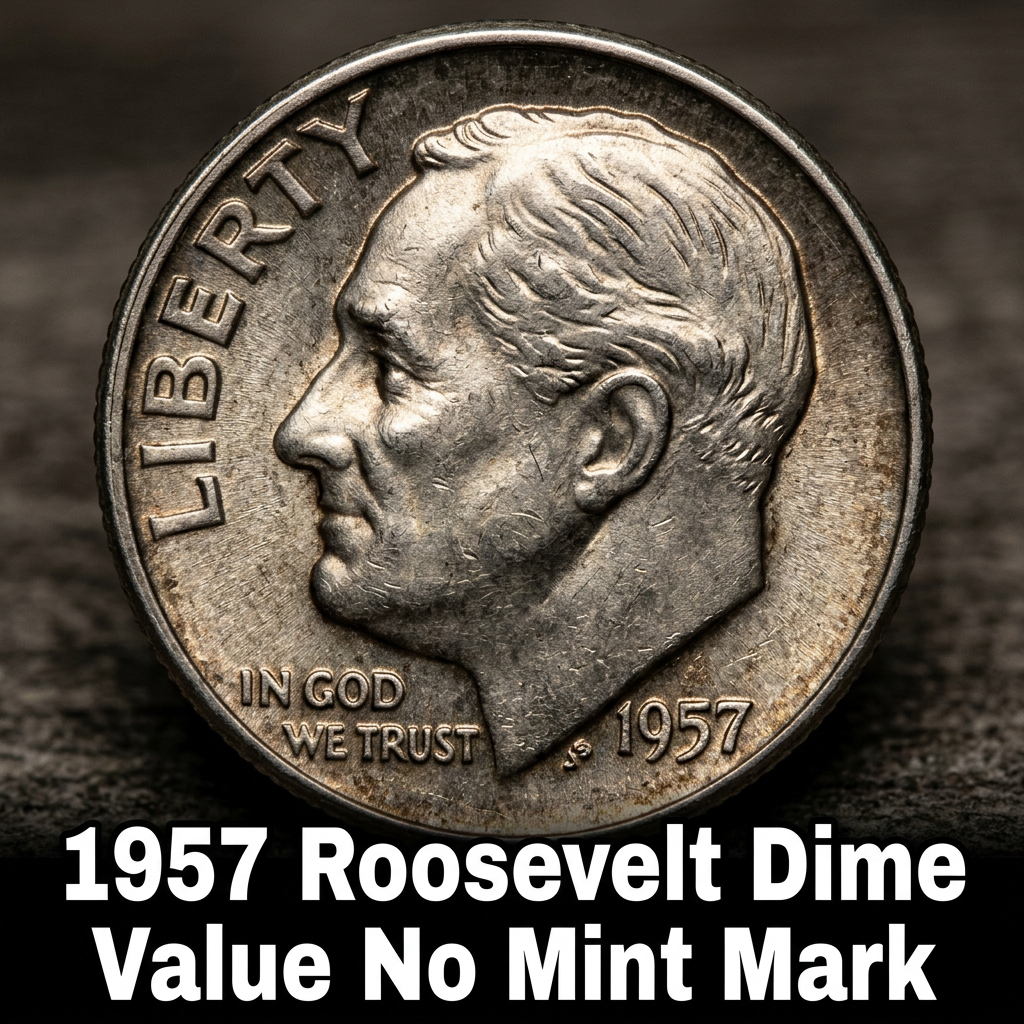
Understanding the 1957 Roosevelt Dime Value with No Mint Mark
The 1957 Roosevelt Dime is worth anywhere from $2.50 in worn condition to over $600 in high-grade mint state. Finding one of these silver treasures in your pocket change or an old jar is an exciting moment for any American, as it represents a piece of history from the mid-century era.
Silver Content and the 1957 Dime Value
The first thing you should know about your 1957 Roosevelt Dime is that it is made of 90% silver and 10% copper. Unlike the clad dimes we use today, which are mostly copper and nickel, these vintage coins have intrinsic bullion value. If you are unsure if your coin is authentic, using a free coin identifier app can help you confirm the date and composition instantly. Current market prices for silver mean that even a heavily damaged or worn 1957 dime is worth significantly more than its ten-cent face value.
Because of this metal content, the “melt value” serves as the price floor for these coins. If you use the CoinKnow app, you can track how the daily fluctuations in silver prices impact the base value of your collection. Most circulated examples will sell for a small premium over their silver weight, making them a popular entry point for new collectors.
The Meaning of the No Mint Mark on 1957 Dimes
Many people become excited when they find a 1957 Roosevelt dime with no mint mark, often wondering if it is a rare error. In the world of U.S. coinage, the absence of a mint mark simply means the coin was struck at the Philadelphia Mint. During 1957, Philadelphia produced 160,140,000 dimes. Because this was such a high production year, coins in average circulated condition are very common.
When evaluating your coin, you should check the reverse side, near the base of the torch. If there is no “D,” it’s a Philly coin. For those looking for the most accurate market data, checking the 1957 Roosevelt Dime auction records for mint state grades can provide a clearer picture of what professional collectors are willing to pay for “No Mint Mark” examples in pristine condition.
Determining the Grade and Condition
Condition is everything when it comes to coin collecting. A 1957 dime that looks like it just came off the press will be worth significantly more than one that has been sitting in a cash register for decades. Collectors look for “Full Bands” on the reverse torch; if the horizontal lines at the top and bottom of the torch are clearly separated and distinct, the coin carries a massive premium.
You can get an instant estimate of your coin’s grade by uploading a photo to CoinKnow, which uses image recognition to compare your coin against high-resolution standards. If you find that your coin has a beautiful multi-colored rainbow tone or sharp, mirror-like surfaces, you might be looking at a high-value specimen. Referencing a detailed 1957 silver dime price guide can help you distinguish between a common $3 coin and a rare gem-quality strike worth hundreds.
| Condition / Grade | Average Value (USD) |
|---|---|
| Circulated (Worn) | $2.25 – $3.00 |
| About Uncirculated (AU50) | $4.00 – $6.00 |
| Mint State (MS63) | $12.00 – $20.00 |
| Gem Mint State (MS65+) | $35.00 – $100.00 |
| MS67 with Full Bands | $500.00+ |
Common Errors and Variations to Look For
While the standard 1957 Roosevelt dime is common, there are specific errors that can drive the value up. Look for “Double Die” varieties, where the lettering or the date appears to have a slight ghosting or doubled image. This happened when the coin die was hubbed incorrectly. These errors are rare but highly sought after by specialists.
Another factor to consider is the “Proof” strike. Philadelphia also minted over 1.2 million proof sets in 1957 for collectors. These coins have a mirror-like finish and were never intended for circulation. If you find a 1957 dime with incredibly shiny surfaces and deep details, it might be a proof coin that escaped into the wild. Always keep your CoinKnow app handy to scan these anomalies, as modern technology can often spot the subtle differences in strike quality that the naked eye might miss.
Q: Is a 1957 dime with no mint mark rare?
A: No, the absence of a mint mark simply means it was minted in Philadelphia. Over 160 million were produced, so they are common, though their silver content makes them valuable.
Q: How can I tell if my 1957 dime is silver?
A: All dimes minted in 1957 are 90% silver. You can tell by looking at the edge of the coin; if you see a solid silver color without a copper-colored stripe, it is silver. It also makes a high-pitched “ring” when dropped gently on a table.
Q: Where is the best place to sell a 1957 Roosevelt dime?
A: For common circulated silver dimes, local coin shops or bullion dealers are best. For high-grade or rare error coins, consider professional grading services and online auction houses to get the maximum price.
