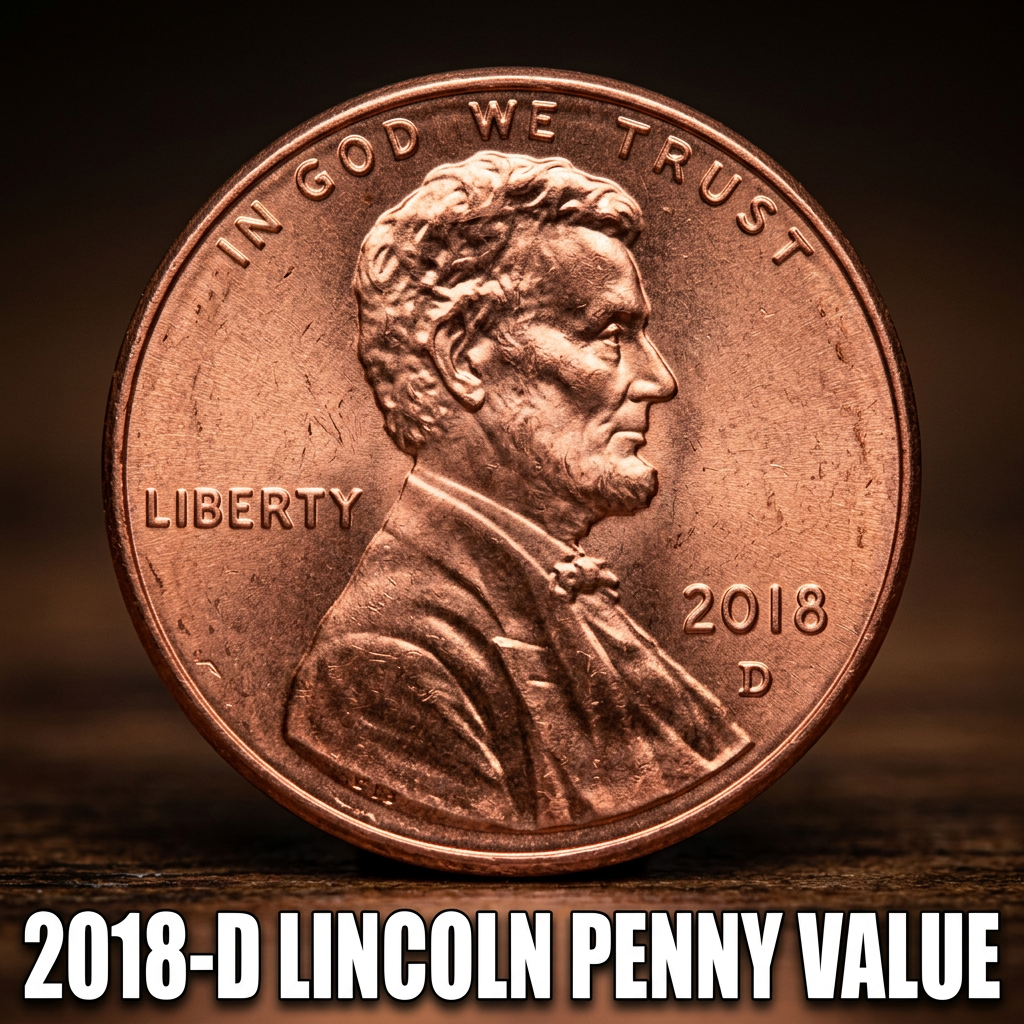
2018-D Lincoln Penny Value — What’s It Really Worth and Should You Keep It?
The 2018-D Lincoln penny is worth face value in most cases, but well-preserved uncirculated examples can fetch anywhere from $0.30 to over $5.00, and top-grade specimens certified by PCGS or NGC have sold for significantly more at auction.
If you just found one in your pocket change or a coin jar, you’re probably wondering whether it’s worth setting aside. The good news is — it might be, depending on its condition. The 2018-D penny was minted in Denver and carries the small “D” mintmark just below the date. While it’s a modern coin and not rare by any historical standard, collectors still seek out high-grade examples. If you want a quick way to check what you’ve got, a free coin identifier app can help you figure out the coin’s details and condition before you decide what to do with it.
What Is the 2018-D Lincoln Penny and Where Was It Made?
The 2018-D Lincoln penny was struck at the Denver Mint, one of the two main facilities producing circulating cents in the United States. The “D” mintmark on the obverse — found just below the “2018” date — identifies its origin.
In 2018, the Denver Mint produced over 4.2 billion Lincoln cents. Yes, billion with a “B.” That enormous mintage is why most circulated 2018-D pennies are worth exactly one cent. Rarity is one of the biggest drivers of coin value, and with billions made, this coin simply isn’t rare in worn condition.
The coin features the familiar portrait of Abraham Lincoln on the front, designed by Victor David Brenner and later updated by Frank Gasparro and Don Everhart. On the reverse, you’ll find the Union Shield design — a modern reverse introduced in 2010 to symbolize Lincoln’s preservation of the United States.
2018-D Lincoln Penny Value by Grade and Condition
Condition is everything when it comes to modern coins like the 2018-D penny. A worn, heavily circulated example is worth a cent. But an uncirculated coin — one that never made it into everyday commerce — is a different story.
Coin grading uses a scale from 1 to 70, with MS (Mint State) grades starting at 60. The sweet spot for collectors is usually MS65 Red (RD), meaning the coin still has its original bright copper luster with no distracting blemishes.
Here’s a general breakdown of 2018-D Lincoln penny values by condition:
| Grade | Description | Estimated Value |
|---|---|---|
| Good (G-4) | Heavy wear, details visible | $0.01 |
| Fine (F-12) | Moderate wear | $0.01–$0.05 |
| MS-63 RB | Uncirculated, some marks | $0.30–$0.75 |
| MS-65 RD | Gem uncirculated, full red | $1.50–$5.00 |
| MS-67 RD | Superb gem, near-perfect | $20.00–$100+ |
Keep in mind these are general market estimates. Certified coins with strong eye appeal can always command a premium.
How to Check If Your 2018-D Penny Is Worth More Than a Cent
Not sure where your coin falls on the grading scale? Start by looking at it under good light. If the surface looks dull, scratched, or worn smooth on Lincoln’s cheek and hair, it’s circulated — and likely worth face value.
If the coin has a bright, shiny orange-red color with no visible wear on the high points, you might have an uncirculated example worth holding onto. Use CoinKnow to quickly scan and assess your coin’s condition right from your smartphone. The app makes it easy for everyday people — no experience required — to get a rough idea of what they’ve got.
For a deeper dive into what your specific coin might be worth today, check out this detailed breakdown of 2018 penny values across all grades and mint marks. It’s a solid reference whether you’re a casual finder or a budding collector.
Are There Any Valuable Errors on the 2018-D Penny?
Here’s where things get interesting. Even a modern coin with a massive mintage can be worth serious money if it has a mint error. Errors happen when something goes wrong in the striking process — and they happen more often than you’d think.
Some error types to look for on your 2018-D Lincoln penny:
– Doubled Die Obverse (DDO): Look for doubling in the lettering “LIBERTY” or “IN GOD WE TRUST,” or in Lincoln’s eye and ear details.
– Off-Center Strike: If the design is shifted and you can see a blank crescent of metal, that’s an off-center error. A 50% off-center coin can be worth $50 or more.
– Die Cap or Brockage Errors: Extremely rare, but these dramatic errors can fetch hundreds of dollars.
– Wrong Planchet: Extremely rare cases where a cent is struck on a foreign planchet.
If you think you’ve spotted something unusual, CoinKnow lets you photograph your coin and compare it to known error varieties. It’s a great first step before spending money on a professional appraisal.
Is the 2018-D Lincoln Penny Worth Keeping?
For most people, a circulated 2018-D penny found in change is just a penny. But if you’ve got rolls of uncirculated coins from a bank, it’s worth sorting through them for high-grade examples — especially ones with bright red luster and no contact marks.
Collectors who focus on modern Lincoln cents by date and mint mark will always need 2018-D examples for complete sets. That creates steady, low-level demand. And if you find an error coin, the sky’s the limit.
The bottom line? Don’t throw it away without looking. A little attention could turn a one-cent coin into a small but satisfying score.
Use CoinKnow to scan, identify, and track the coins in your collection — it’s built for people exactly like you.
—
FAQ About the 2018-D Lincoln Penny
Q: Is the 2018-D penny rare?
A: No, it is not rare. The Denver Mint struck over 4.2 billion 2018-D Lincoln cents, making it one of the more common modern coins. Circulated examples are worth face value, but top-grade uncirculated examples and error coins can be worth more.
Q: What does the “D” mintmark mean on a 2018 penny?
A: The “D” mintmark indicates the coin was made at the Denver Mint in Denver, Colorado. You’ll find it on the obverse (front) of the coin, just below the year “2018.”
Q: How can I tell if my 2018-D penny has an error?
A: Examine the coin closely under magnification. Look for doubling in the lettering or design details, off-center strikes, or any unusual features that don’t match a standard coin. Apps like CoinKnow can help you compare your coin to known examples and spot potential varieties or errors quickly.
