Everything You Need to Know About the 1918 S Wheat Penny Value and History
The 1918 S Wheat Penny is worth anywhere from $1 in heavily worn condition to over $500 in high-grade mint state. Finding one of these century-old copper coins in your pocket change or a family heirloom jar is an exciting discovery that connects you directly to the era of World War I.
Historical Significance and the San Francisco Mint Mark
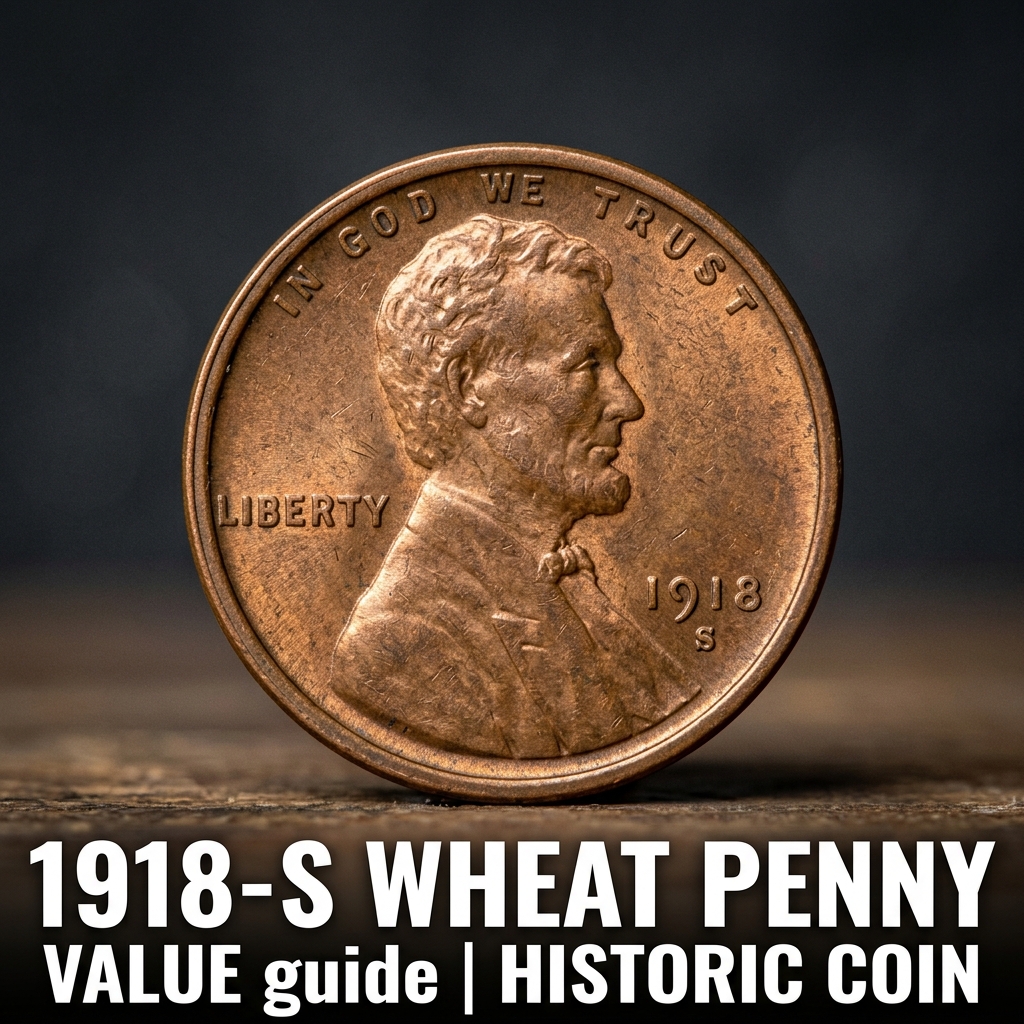
The 1918 S Wheat Penny was struck during a pivotal year in global history. As the United States was deeply involved in the Great War, the San Francisco Mint was busy churning out millions of Lincoln cents to keep up with the demands of a wartime economy. You can easily identify this specific coin by looking for the small “S” mint mark located just below the date on the obverse (front) side. If you are unsure if your coin is authentic or need a quick way to catalog your collection, using a free coin identifier app is a great way to get started.
When you look at your 1918 S penny, you are holding a piece of history that has likely traveled across the country several times. Because these coins have been in circulation for over a hundred years, finding one in “uncirculated” condition is quite rare. Most examples found today show significant wear on Lincoln’s coat and the wheat stalks on the reverse. For collectors, the CoinKnow app is a fantastic resource to track how these historical factors influence market demand and help you organize your finds.
Determining the Grade and Condition of Your 1918 S Penny
In the world of coin collecting, condition is everything. A 1918 S penny that looks shiny and new will always command a much higher price than one that is dark and smooth. Professional graders look at the fine details, such as the lines in the wheat ears and the clarity of the letters in “In God We Trust.” Even if your coin looks a bit rough, it still carries value above its face worth.
For those looking for a deep dive into the specific market trends, the current 1918 S wheat penny price guide for mint state red coins shows that high-quality specimens are highly sought after by investors. If your penny still has its original copper-red luster, you could be looking at a significant payday. Most everyday finds will fall into the “Good” or “Very Good” categories, which are still prized by hobbyists filling out their Lincoln cent folders.
1918 S Wheat Penny Value Chart
To help you understand what your coin might be worth at a coin shop or online auction, refer to the price breakdown below. These values are based on average market sales for different stages of wear.
| Condition / Grade | Estimated Value |
|---|---|
| Good (G-4) | $1.25 – $2.50 |
| Fine (F-12) | $4.00 – $7.00 |
| Extremely Fine (XF-40) | $15.00 – $25.00 |
| Uncirculated (MS-63) | $120.00 – $250.00 |
| Gem Uncirculated (MS-65 Red) | $600.00+ |
Rare Errors and Varieties to Look For
Sometimes, a coin’s value isn’t just about its age, but about a mistake made at the mint. While the 1918 S is not as famous for errors as the 1955 doubled die, collectors still hunt for “S over S” mint mark varieties or coins with significant die cracks. These anomalies can turn a common penny into a rare treasure worth hundreds of dollars.
If you suspect your coin has a unique feature, checking the 1918 Lincoln cent value information and rarity factors can help you confirm your findings. Many beginners use the CoinKnow app to zoom in on their coins and compare them with known error photos. Remember, never clean your coins, even if they look dirty! Cleaning a coin can actually strip away its value by damaging the surface patina that collectors love.
Final Tips for New Coin Collectors
Discovering a 1918 S Wheat Penny is often the “gateway” into the rewarding hobby of numismatics. These coins are small pieces of art that have survived through the Great Depression, several wars, and the birth of the digital age. Whether you plan to sell your coin or keep it as a family memento, knowing its history adds to the enjoyment of owning it.
Always keep your coins in a cool, dry place to prevent further oxidation. Using the CoinKnow app can help you keep a digital inventory of your collection so you always know what you have on hand. As you continue your search through change, keep your eyes peeled for that “S” mint mark—it might just be your lucky day.
Frequently Asked Questions
Q: Where is the mint mark on a 1918 S Wheat Penny?
A: The mint mark is a small letter “S” located on the front of the coin, directly underneath the date “1918.” If there is no letter, it was minted in Philadelphia.
Q: Is a 1918 S penny made of real copper?
A: Yes, pennies from this era are made of 95% copper and 5% tin and zinc. This gives them a distinct weight and “ring” compared to modern zinc pennies.
Q: Why is the San Francisco mint mark (S) often worth more?
A: Generally, the San Francisco Mint produced fewer coins than the Philadelphia Mint, making “S” mint coins slightly more scarce and desirable for collectors completing sets.
