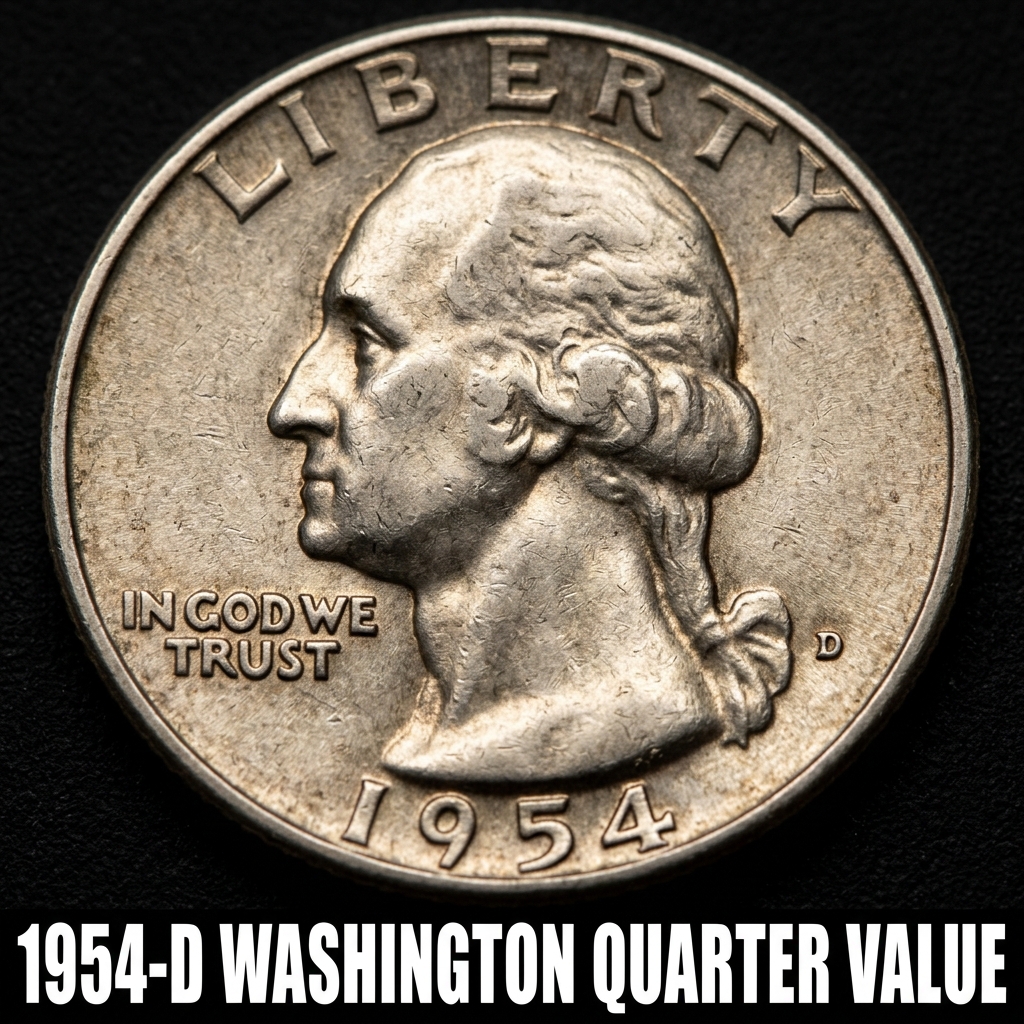
1954 D Washington Quarter Value and How to Spot Rare Varieties
The 1954 D Washington Quarter is worth anywhere from $6 in worn condition to over $35,000 for rare high-grade specimens. Whether you found one in a jar of change or inherited a collection, these silver coins are always worth significantly more than their twenty-five-cent face value because of their precious metal content.
Comparing the 1954 D Washington Quarter Prices by Grade
When you find an old silver quarter, the first thing you want to know is how much cash it represents. Because the 1954 D quarter is composed of 90% silver, it has an intrinsic “melt value” that fluctuates with the silver market. However, for collectors, the numismatic value is where the real excitement begins. If you aren’t sure how to categorize your coin’s condition, using a free coin identifier app can help you distinguish between a common circulated coin and a potential treasure.
In average circulated condition, most 1954-D quarters sell for a modest premium over their silver weight. However, when a coin reaches “Mint State” (MS), the price climbs rapidly. A 1954-D quarter in MS65 condition is highly sought after by collectors looking to complete their sets. You can find detailed breakdowns of these 1954 D Washington Quarter auction records to see how much professional buyers are willing to pay for top-tier quality. Use the CoinKnow app to scan your quarter and see where it fits on the grading scale.
| Condition Grade | Estimated Market Value |
|---|---|
| Good (G-4) | $6.00 – $7.50 |
| Fine (F-12) | $8.00 – $9.00 |
| Extremely Fine (XF-40) | $10.00 – $12.00 |
| Uncirculated (MS-60) | $15.00 – $25.00 |
| Gem Uncirculated (MS-65+) | $50.00 – $200.00+ |
Identification and Mint Marks on the 1954 Quarter
To determine the exact 1954 quarter value, you must first confirm where the coin was made. In 1954, the Denver Mint produced over 54 million quarters, which was a significant number for that era. You can identify a Denver-minted coin by looking for a small “D” located on the reverse side. It is positioned directly below the eagle’s wreath and above the “R” in the word “QUARTER.”
If there is no letter present in that spot, the coin was minted in Philadelphia. While the Denver coins are common, they are prized for often having better luster and sharper strikes than their Philadelphia counterparts. Understanding the current market trends for 1954 silver quarters allows you to make an informed decision before selling your find to a local coin shop. If you’re ever in doubt about a mark, the CoinKnow app provides high-resolution references to help you verify your coin’s origin.
Key Varieties and Rare Error 1954-D Quarters
Collectors are always on the hunt for “varieties”—coins that have slight defects or unique characteristics from the minting process. For the 1954 D Washington Quarter, keep an eye out for “Repunched Mint Marks” (RPM). This happens when the “D” was stamped into the die twice, creating a shadowed or doubled look on the letter. These errors can turn a standard $10 coin into a piece worth $50 or $100 depending on the clarity of the error.
Another factor to consider is “Full Steps” or “Full Luster.” While quarters don’t have the same step details as Monticello on a nickel, the sharpness of Washington’s hair and the eagle’s feathers dictates the price. Coins that have developed a beautiful rainbow “toning” over the decades can also command a massive premium. Using a tool like CoinKnow can help you identify these subtle visual cues that an untrained eye might miss but a serious collector will pay top dollar for.
Why the Silver Content of the 1954 Quarter Matters
Even if your 1954-D quarter is heavily worn, scratched, or damaged, it still holds a “floor” value due to its silver content. Unlike modern quarters made of copper and nickel, the 1954 edition is 90% silver and 10% copper. This means it contains approximately 0.1808 troy ounces of pure silver.
As the price of silver rises, so does the value of your common-date Washington quarters. Many investors buy these coins in bulk, often referred to as “junk silver,” as a way to hedge against inflation. This silver content ensures that your 1954-D quarter will always be worth many times its original face value. If you have several of these, their total value can add up quickly, making them a great starting point for any silver stacker or hobbyist collector.
Q: Where is the mint mark on a 1954-D Washington Quarter?
A: The “D” mint mark is located on the reverse side of the coin, specifically at the bottom center, just above the word “QUARTER” and below the eagle’s wreath.
Q: Is a 1954 quarter made of real silver?
A: Yes, all Washington Quarters minted in 1954 are composed of 90% silver and 10% copper. This remained the standard until the composition was changed to base metals in 1965.
Q: How can I tell if my 1954-D quarter is worth thousands of dollars?
A: High-value 1954-D quarters are usually in “Mint State” condition, meaning they have no visible wear and look like they just came from the mint. Professional grading (like PCGS or NGC) is usually required to realize values over $1,000.
