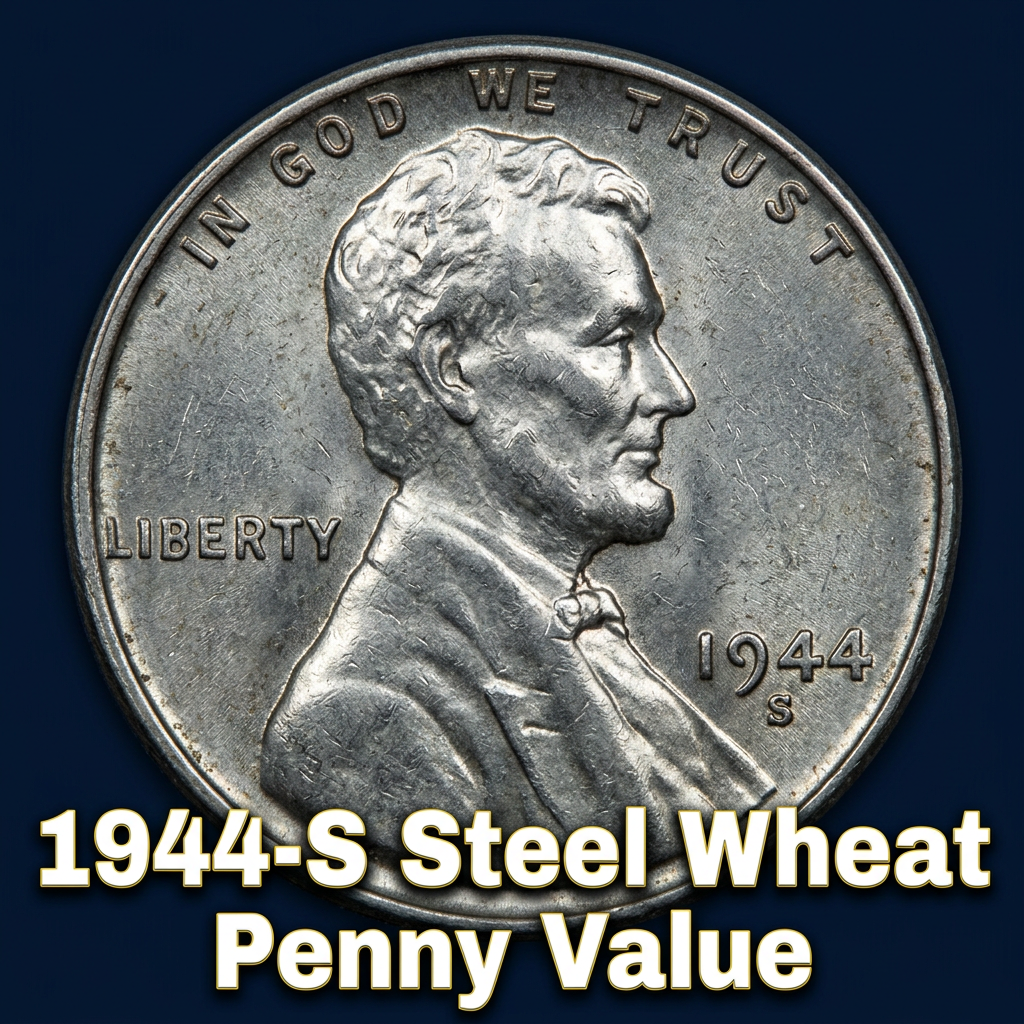
The 1944-S Steel Wheat Penny Value Guide for Collectors and Beginners
The rare 1944-S Steel Wheat Penny is worth anywhere from $100,000 in circulated condition to over $500,000 for specimens in pristine mint state. This incredible valuation stems from the fact that steel pennies were officially discontinued in 1943, making any 1944 steel strike a legendary “wrong planchet” mint error.
The History Behind the 1944-S Steel Penny Rarity
During World War II, the United States Mint changed the composition of the one-cent piece to zinc-coated steel to conserve copper for the war effort. While this change was strictly meant for 1943, several steel blanks remained stuck in the machinery or manufacturing bins at the San Francisco Mint heading into the following year.
If you think you have discovered one of these treasures in your pocket change, using a free coin identifier app is the best first step to determine if your find is a genuine error or a common copper penny. Genuine 1944-S steel pennies are incredibly rare, with only a handful of authenticated examples known to exist.
Most pennies from 1944 are made of copper (recycled shell casings), but these “off-metal” errors happened when the mint switched back to copper and a few leftover steel blanks from the previous year were struck with the 1944-S dies. Because of this, the CoinKnow app is a favorite among casual hunters who want to verify their rare finds instantly.
How to Identify a Genuine 1944-S Steel Wheat Penny
The most important thing to understand is that millions of copper pennies were minted in San Francisco in 1944. A genuine steel version must be silvery-grey in color and, most importantly, it must stick to a magnet. If your penny is copper-colored but sticks to a magnet, it is likely a plated fraud.
According to professional numismatists, authentic 1944 penny auction results show that these coins are the “holy grail” of the Wheat series. You should also check the weight; a genuine steel penny weighs 2.7 grams, while the common copper version weighs 3.11 grams.
Many people use the CoinKnow app to compare high-resolution photos of their coins against confirmed specimens. This helps distinguish between a true mint error and a science project where someone simply zinc-plated a regular copper penny to make it look like steel. If you are unsure, always consult a professional third-party grading service like PCGS or NGC.
Evaluating the 1944-S Steel Wheat Penny Price and Grade
Because so few of these coins exist, there isn’t a “standard” price book value like there is for common dates. Every time one of these hits the auction block, it makes headlines in the collecting world. The actual market price of a 1944 steel penny depends almost entirely on its certified grade and the “S” mint mark’s clarity.
| Condition / Grade | Estimated Value (USD) |
|---|---|
| Circulated (Fine to About Uncirculated) | $100,000 – $250,000 |
| Mint State 61 – 63 (Uncirculated) | $375,000 – $450,000 |
| Mint State 65+ (PCGS/NGC Certified) | $500,000+ |
Even in a worn state, a genuine 1944-S steel cent is a six-figure coin. The “S” mint mark is located just below the date, and its presence confirms that the coin was struck at the San Francisco Mint. If the coin has any rust—which is common for steel pennies—the value might drop slightly, but it still remains a life-changing discovery.
Common Fakes and What to Watch Out For
Because the 1944-S steel penny is so valuable, the market is unfortunately flooded with counterfeits. The most common fake is a 1944 copper penny that has been dipped or plated in silver or zinc. These will not stick to a magnet, and they will weigh 3.11 grams instead of the required 2.7 grams.
Another common forgery involves altering the date on a 1943 steel penny. Scammers may try to carve the “3” into a “4.” Under a magnifying glass or through the CoinKnow mobile interface, these alterations usually become quite obvious as the metal texture around the date will look disturbed or uneven.
If your coin passes the magnet test and the weight test, your next step is to have it appraised by a reputable local coin shop. Do not clean the coin, as any abrasive cleaning can permanently damage the surface and slash the value by 50% or more. Keep it in a soft protective flip until it can be mailed to a grading authority.
Q: How can I tell if my 1944 penny is steel or just dirty copper?
A: The easiest test is using a magnet. A genuine 1944 steel penny is made of low-grade steel coated in zinc, so it will strongly stick to a magnet. A standard copper penny will not be magnetic at all.
Q: How many 1944-S steel pennies were actually made?
A: There are no official mint records for these coins because they were mistakes. Experts estimate that only 2 to 7 examples of the San Francisco “S” mint version currently exist in the world.
Q: Is a regular 1944 copper penny worth anything?
A: While not worth hundreds of thousands like the steel version, a regular 1944-S copper penny in “pocket change” condition is worth about 2 to 5 cents. However, uncirculated copper versions with original red luster can sell for $20 to $100.
