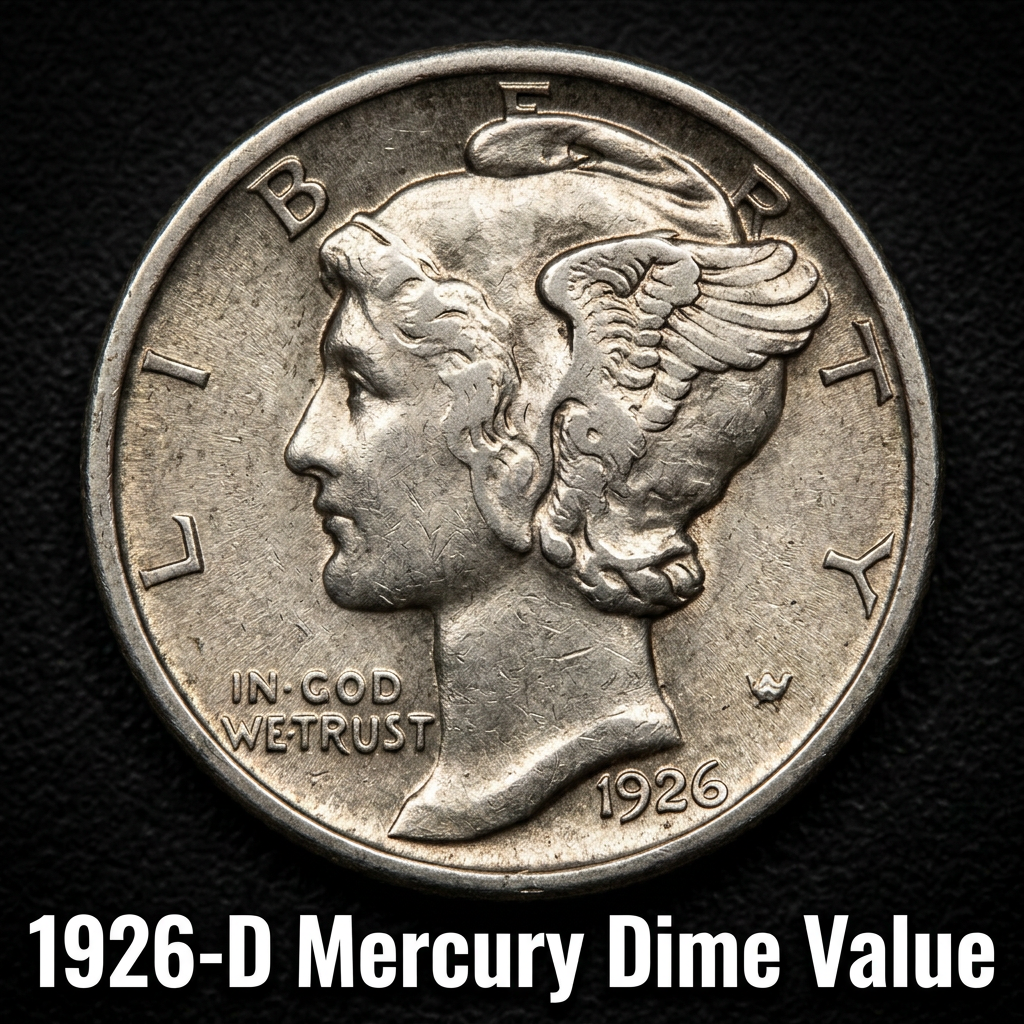
1926 D Mercury Dime Value and Price Guide for Collectors
The 1926-D Mercury Dime is worth anywhere from $8 in worn condition to over $1,200 in choice mint state. This classic silver coin is a favorite among treasure hunters because even heavily circulated examples carry a premium due to their high silver content and historical significance to the Denver Mint.
Understanding the History and Rarity of the 1926-D Mercury Dime
The 1926-D Mercury Dime was struck at the Denver Mint during a decade of economic growth and artistic flair. Designed by Adolph A. Weinman, the coin actually depicts Lady Liberty in a winged cap, symbolizing liberty of thought, though the public quickly nicknamed it “Mercury” after the Roman messenger god. In 1926, the Denver Mint produced just under 7 million of these dimes, which sounds like a lot until you realize how many were lost to the melting pots or heavy circulation during the Great Depression.
If you have stumbled upon one of these in an old jar or a family collection, using a free coin identifier app can help you confirm the “D” mint mark. This mark is located on the reverse side, near the bottom edge next to the word “ONE.” Identifying this specific mint mark is crucial because Denver coins from this era often carry a higher premium than those from Philadelphia. For an instant evaluation, many casual collectors turn to the CoinKnow app to get a real-time estimate of what their find might be worth before heading to a dealer.
How Condition and Grading Affect the Value
When determining the price of your 1926-D Mercury Dime, the physical condition—referred to as “grade” by numismatists—is everything. Most coins found today are in “Good” or “Very Good” condition, meaning the design is well-worn and the lines in Liberty’s hair or the feathers on her cap are blurred. These coins are still valuable, but they won’t reach the quadruple-digit prices seen at elite auctions.
A coin in “Uncirculated” or “Mint State” condition looks exactly as it did the day it left the Denver Mint. These rare specimens feature a lustrous shine and sharp details. If you believe your coin is in pristine condition, looking at the 1926-D Mercury Dime mint state auction records will show you that high-grade examples are highly sought after by investors. The CoinKnow app can also help you compare your coin’s luster and detail against high-resolution photos of graded coins to see where yours might fall on the scale.
Current Market Prices for the 1926-D Mercury Dime
The value of silver fluctuates, but the numismatic value of a 1926-D Mercury Dime remains relatively stable. Because this coin is composed of 90% silver, it will never be worth less than its “melt value.” However, because it is a semi-key date in the series, it almost always sells for significantly more than its raw metal weight.
You can check the comprehensive 1926 Mercury Dime price chart to see how the Denver mint mark compares to the Philadelphia and San Francisco versions. Generally, the Denver mint coins from 1926 are considered more desirable than the Philadelphia ones, making them a great find for any everyday American.
| Condition / Grade | Estimated Market Value |
|---|---|
| Good (G-4) | $8.00 – $12.00 |
| Fine (F-12) | $25.00 – $35.00 |
| Extremely Fine (EF-40) | $75.00 – $95.00 |
| Uncirculated (MS-60) | $250.00 – $320.00 |
| Choice Mint State (MS-65) | $1,200.00+ |
What to Look for: Full Bands and Errors
For those who want to know if they have a “lottery ticket” coin, the term “Full Bands” (FB) is essential. On the reverse of the Mercury Dime, there are horizontal bands holding the bundle of sticks (fasces) together. In very high-quality strikes, these bands are completely separated and distinct. A 1926-D with “Full Bands” can command a massive premium, sometimes selling for several thousand dollars because the Denver Mint was known for having slightly softer strikes that year.
Checking for errors is another way to find hidden value. While there are no major famous die errors for the 1926-D, collectors always look for “double dies” or “re-punched mint marks.” If you notice unusual thickening of the letters or a shadow behind the “D,” your coin might be an error variety. Many hobbyists use the CoinKnow app to zoom in on these details and compare them with known error databases to ensure they don’t sell a rare treasure for a common price.
Tips for Selling or Preserving Your Silver Dime
If you have decided to sell your 1926-D Mercury Dime, do not clean it! This is the most important rule in coin collecting. Even a light scrubbing with baking soda or a jewelry cloth can create microscopic scratches that destroy the coin’s numismatic value, often reducing its worth to just the price of the silver. Instead, handle the coin only by the edges and store it in a PVC-free plastic flip or a cardboard 2×2 holder.
To get the best price, consider visiting a local coin shop or a reputable auction house. Show them your research and mention the current market trends you’ve found. Knowing the specific details about the Denver mint’s production that year will show dealers that you are an informed seller. Whether you choose to keep it as a piece of American history or sell it to fund a new hobby, the 1926-D Mercury Dime remains a fascinating and valuable piece of our nation’s currency.
Q: How can I tell if my 1926 dime is from the Denver Mint?
A: Look on the reverse side of the coin, near the bottom. To the left of the base of the fasces (the bundle of sticks), you will see a small “D” mark. If there is no letter, it was minted in Philadelphia.
Q: Is a worn 1926-D Mercury Dime still worth more than 10 cents?
A: Yes, absolutely. Even in the worst condition, the silver content alone makes it worth nearly $2.00, but the scarcity of the 1926 Denver strike ensures it usually sells for at least $8.00 to $10.00.
Q: Should I get my 1926-D Mercury Dime professionally graded?
A: Professional grading by services like PCGS or NGC is usually only worth the cost if the coin is in “Uncirculated” condition or appears to have “Full Bands.” For common, circulated coins, the grading fee may be higher than the coin’s total value.
