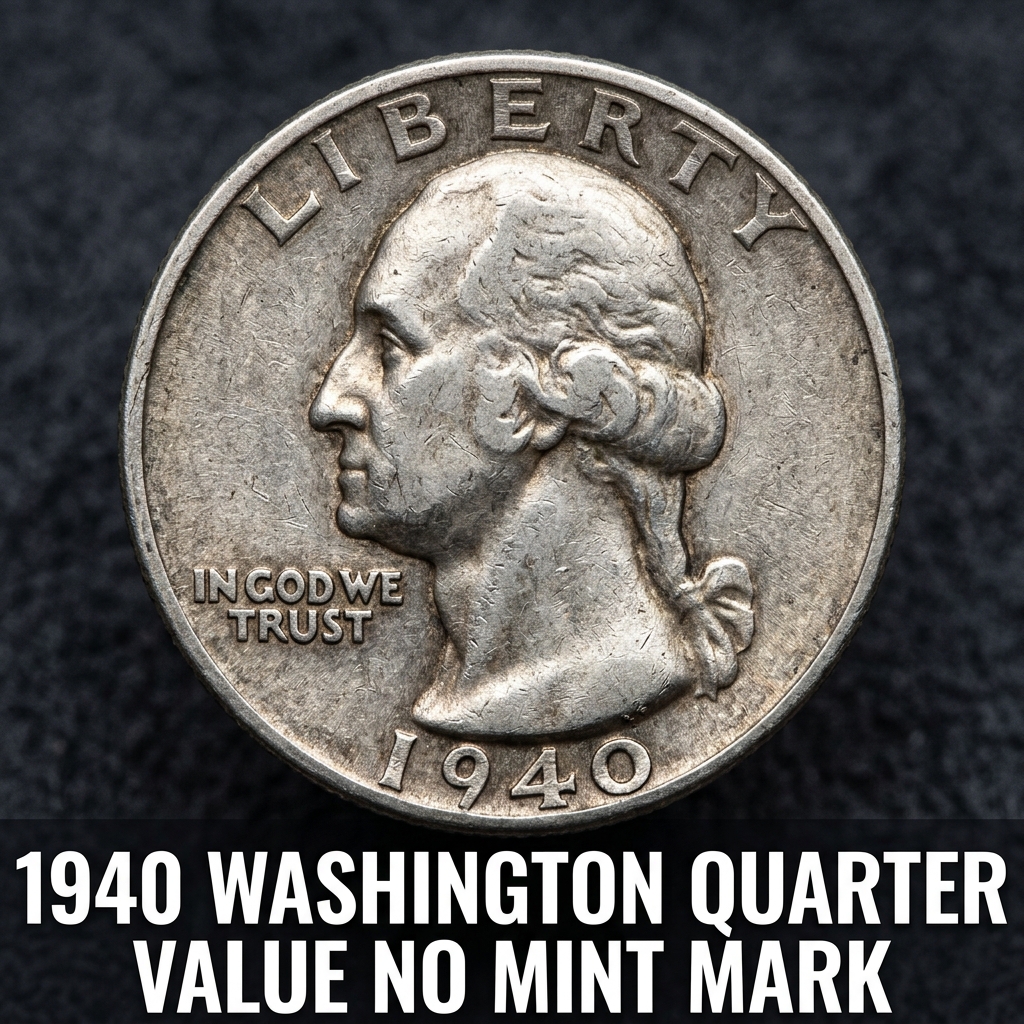
1940 Washington Quarter Value No Mint Mark Worth and Pricing Guide
The 1940 Washington Quarter is worth anywhere from $8 in worn condition to over $5,000 in high-grade mint state. Finding one of these silver treasures in your pocket change or an old jar from your grandparents is an exciting moment for any American interested in a bit of history.
What Makes the 1940 Washington Quarter Special
The year 1940 was a pivotal time for the United States as it watched the beginnings of World War II from across the Atlantic. During this period, the Philadelphia Mint was busily striking silver quarters for circulation. If you have a quarter from this year and you don’t see a small letter “S” or “D” on the back, it means it was minted in Philadelphia. These coins are 90% silver, which gives them inherent value regardless of their condition. Many everyday collectors start their journey with the 1940 quarter because it is both affordable and historically significant.
If you are unsure whether your coin is a genuine silver specimen or just a common worn-out piece, you can use a free coin identifier app to get instant feedback. Using modern technology like the CoinKnow app helps you distinguish between ordinary pocket change and a collectible item. Identifying the specific luster and strike quality of a Philadelphia-minted coin is the first step in determining if you have found something truly valuable.
How to Determine the Value of Your 1940 Quarter
The most important factor in the price of a 1940 quarter without a mint mark is its condition. In the numismatic world, this is called the “grade.” Because these coins were made of a softer silver alloy, they wore down quickly as they passed from merchant to consumer. Most quarters found today are in “Circulated” condition, meaning they show visible wear on George Washington’s hair or the eagle’s feathers on the reverse. Even in low grades, the 1940 Washington quarter value remains higher than its face value because of its silver content.
For those lucky enough to find a coin that looks like it just came from the bank—brilliant and shiny with no scratches—the value can skyrocket. Collectors look for “Mint State” (MS) coins, which are graded from 60 to 70. A 1940 quarter in an MS67 or MS68 grade is extremely rare and can sell for thousands of dollars at auction. You can check the current 1940 Philadelphia quarter price data to see how much premium grades are currently fetching on the market.
1940 Washington Quarter Pricing Table
To help you understand what your coin might be worth at a glance, we have compiled a price guide based on common market conditions. Remember that these values are estimates; the actual price can vary depending on the buyer and the official certification of the coin’s grade.
| Condition / Grade | Estimated Value (USD) |
|---|---|
| Good (G-4) | $7.50 – $9.00 |
| Fine (F-12) | $10.00 – $12.00 |
| Extremely Fine (XF-45) | $15.00 – $20.00 |
| Uncirculated (MS-60) | $35.00 – $50.00 |
| Choice Uncirculated (MS-65) | $110.00 – $150.00 |
| Gem Uncirculated (MS-67+) | $500.00 – $5,000+ |
Identifying Rare Variations and Errors
When examining your 1940 no mint mark quarter, keep an eye out for interesting errors. While the 1940 Philadelphia issue is known for having a generally high-quality strike, occasional “doubled die” errors can occur. A doubled die happens when the hub stamps the die twice at slightly different angles, creating a blurry or doubled appearance on the lettering or the date. These errors can turn a $10 coin into a $100 coin instantly.
If you suspect your coin has a unique feature, utilizing the CoinKnow app can help you zoom in on the details that the naked eye might miss. Professional collectors often use these tools to screen their collections before sending them to services like PCGS or NGC for official grading. Always handle your coins by the edges and avoid cleaning them, as cleaning can actually strip away the original finish and lower the value of a potentially expensive 1940 quarter.
The Silver Content Factor
One reason the 1940 Washington Quarter is so popular among everyday Americans is its “melt value.” Every quarter minted before 1965 contains 0.1808 troy ounces of pure silver. This means that even if the coin is incredibly worn out and barely recognizable, it will always be worth significantly more than 25 cents. When the price of silver goes up in the global market, the base value of your 1940 quarter goes up with it.
For many, these coins serve as a “mini” silver bar. Whether you are looking to sell to a local coin shop or just want to keep a piece of American history in your safe, the silver content provides a solid financial floor. To keep track of your growing collection and ensure you never miss a rare find, the CoinKnow platform is an excellent resource for staying updated on silver prices and numismatic trends.
Q: Where is the mint mark located on a 1940 Washington Quarter?
A: On the 1940 quarter, the mint mark (if present) is located on the reverse side (the back), directly below the center of the eagle’s wreath. If there is no letter there, it was minted in Philadelphia.
Q: Should I clean my 1940 silver quarter to make it worth more?
A: No, you should never clean a collectible coin. Cleaning creates microscopic scratches and removes the “patina” or “luster” that collectors value. A cleaned coin is almost always worth less than an uncleaned one, even if it looks shinier.
Q: Is a 1940 quarter without a mint mark rare?
A: The 1940 no mint mark quarter is not considered rare in circulated condition, as over 35 million were produced. However, it is highly sought after in “Mint State” condition (MS65 and higher), where the number of surviving specimens is much lower.
