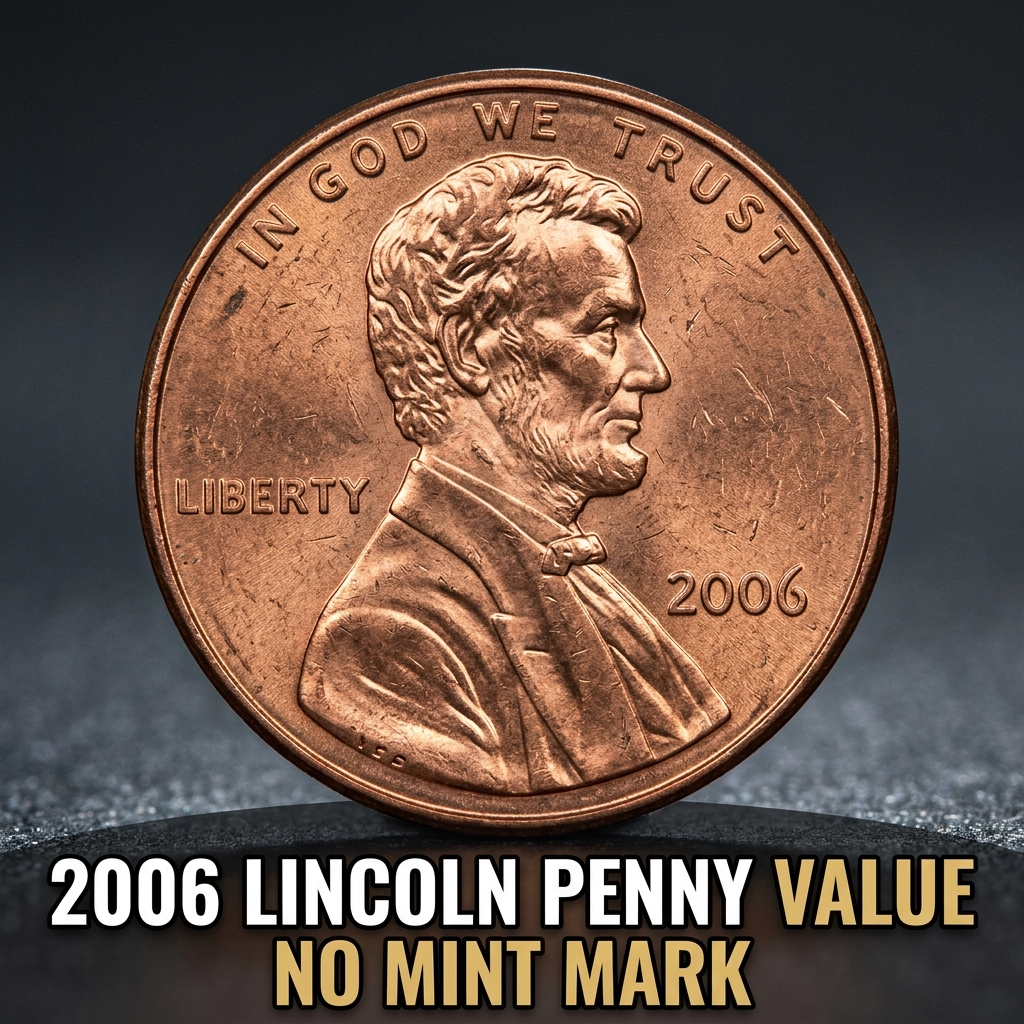
2006 Lincoln Penny Value No Mint Mark What It’s Worth and Why It Matters
The 2006 Lincoln penny with no mint mark is worth anywhere from 1 cent in circulated condition to around $8 or more in perfect uncirculated grades — and if you’ve got a roll of these sitting in a jar somewhere, a few might actually be worth holding onto.
What the No Mint Mark Actually Means on a 2006 Penny
If you’ve picked up a 2006 Lincoln cent and noticed there’s no mint mark on it, don’t worry — you didn’t find something broken or misprinted. The no mint mark simply means the coin was struck at the Philadelphia Mint. Philadelphia is one of the oldest mints in the U.S., and for most of its history, it didn’t bother putting a “P” on its pennies.
So a 2006 Lincoln penny with no mint mark is a Philadelphia issue, and it’s completely normal.
The Philadelphia Mint produced over 4.2 billion Lincoln cents in 2006. That’s a huge number, which is exactly why most circulated examples are only worth face value. But that doesn’t mean every single one is worthless — condition and errors can change everything.
If you’re not sure what mint mark you’re looking at or whether yours qualifies as an error coin, using a free coin identifier app can help you get a quick read on what you have before spending time researching.
How Much Is the 2006 Lincoln Penny Worth Today
For most people, the honest answer is: not much — unless the coin is in exceptional shape or has a mint error.
Circulated 2006 Lincoln pennies (the kind that went through pockets, cash registers, and couch cushions) are worth exactly one cent. There’s simply too many of them out there for worn examples to carry a premium.
The real value kicks in with uncirculated coins — those that were never used in commerce and still have their original mint luster. Here’s a quick breakdown:
| Condition | Grade | Estimated Value |
|---|---|---|
| Circulated (worn) | Good to Fine | Face value ($0.01) |
| Lightly Circulated | AU-50 to AU-58 | $0.05 – $0.25 |
| Uncirculated | MS-63 RD | $0.50 – $1.50 |
| Choice Uncirculated | MS-65 RD | $3 – $5 |
| Gem Uncirculated | MS-67 RD | $8 – $15+ |
For a deeper look at certified sale prices by grade, you can check out the 2006 Lincoln penny MS-RD price data at CoinHix, which tracks auction records across major grading services.
Error Coins and Why They Can Be Worth Real Money
This is where things get interesting. While the standard 2006 penny with no mint mark isn’t a big score, error coins from this year can fetch anywhere from $20 to several hundred dollars depending on the type and severity.
Some errors to look for on 2006 Lincoln pennies include:
Double Die Obverse (DDO): Look closely at Lincoln’s portrait, the lettering, or the date under magnification. If you see doubling — like letters or numbers appearing twice — you might have a DDO error.
Off-Center Strike: If the design is noticeably off-center (usually 10% or more), the coin becomes collectible. A 50% off-center 2006 penny with the date still visible can be worth $25–$50 or more.
Die Cap or Brockage Errors: These are rarer and can command higher prices. If one side of your penny looks smeared or has a mirror image of the other side, that’s a strong sign of an error worth investigating.
Using CoinKnow to scan your coins is one of the fastest ways to spot potential errors. The app gives you a detailed breakdown of what the coin should look like versus what you’re holding — great for beginners who don’t know what to compare against.
The Memorial Reverse Design in 2006
The 2006 Lincoln penny still features the classic Lincoln Memorial reverse that was used from 1959 all the way through 2008. The obverse shows Victor David Brenner’s iconic portrait of Abraham Lincoln, which has been on the penny since 1909.
In 2009, the cent switched to four rotating reverse designs to commemorate Lincoln’s bicentennial, and in 2010 the current “Union Shield” reverse was introduced. This makes 2006 one of the last few years of the long-running Memorial cent design.
For collectors who specialize in Memorial cents, a high-grade 2006 Philadelphia penny in MS-67 Red condition is actually somewhat harder to find than you’d expect, given that most were spent. Certified examples in that grade can attract attention at auction.
If you’re curious about all the details on the full 2006 penny value across all mint marks and grades, that resource breaks it down clearly and is worth a look before you decide whether to sell or hold.
Tips for Checking Your 2006 No Mint Mark Penny
Before you toss that penny back in the jar, take 60 seconds to check a few things:
First, look at the coin’s color. A 2006 penny in Red (RD) designation — meaning it still has most of its original copper-toned luster — is worth more than one that has turned brown or spotted.
Second, grab a magnifying glass and check the date and lettering for doubling. It sounds tedious, but a DDO error on an otherwise common penny can change its value dramatically.
Third, weigh the coin. A standard 2006 Lincoln cent should weigh 2.5 grams. If yours is off, it might indicate a planchet error.
CoinKnow makes all of this easier by letting you photograph your coin and compare it against a verified database of known errors and varieties. It’s a smart starting point whether you’re a casual finder or a serious collector.
—
FAQ
Q: Is a 2006 penny with no mint mark rare?
A: No, it’s not rare. Over 4.2 billion were minted in Philadelphia in 2006, making it one of the most common modern Lincoln cents. However, error varieties or high-grade uncirculated examples can still carry collector premiums.
Q: What does “RD” mean when grading a 2006 Lincoln penny?
A: RD stands for “Red,” which refers to the coin’s surface color. Copper cents that retain 95% or more of their original red-orange luster are designated RD, and they’re worth more than coins graded RB (Red-Brown) or BN (Brown). A 2006 penny graded MS-65 RD is worth significantly more than one graded MS-65 BN.
Q: Where can I sell my 2006 Lincoln penny if it’s in great condition?
A: For high-grade or error examples, your best options are eBay, coin shows, or working with a professional coin dealer. If you believe you have a gem uncirculated or error coin, consider getting it graded by PCGS or NGC first — a certified coin sells for more and is easier to price accurately. CoinKnow can help you assess the coin before you invest in professional grading.
