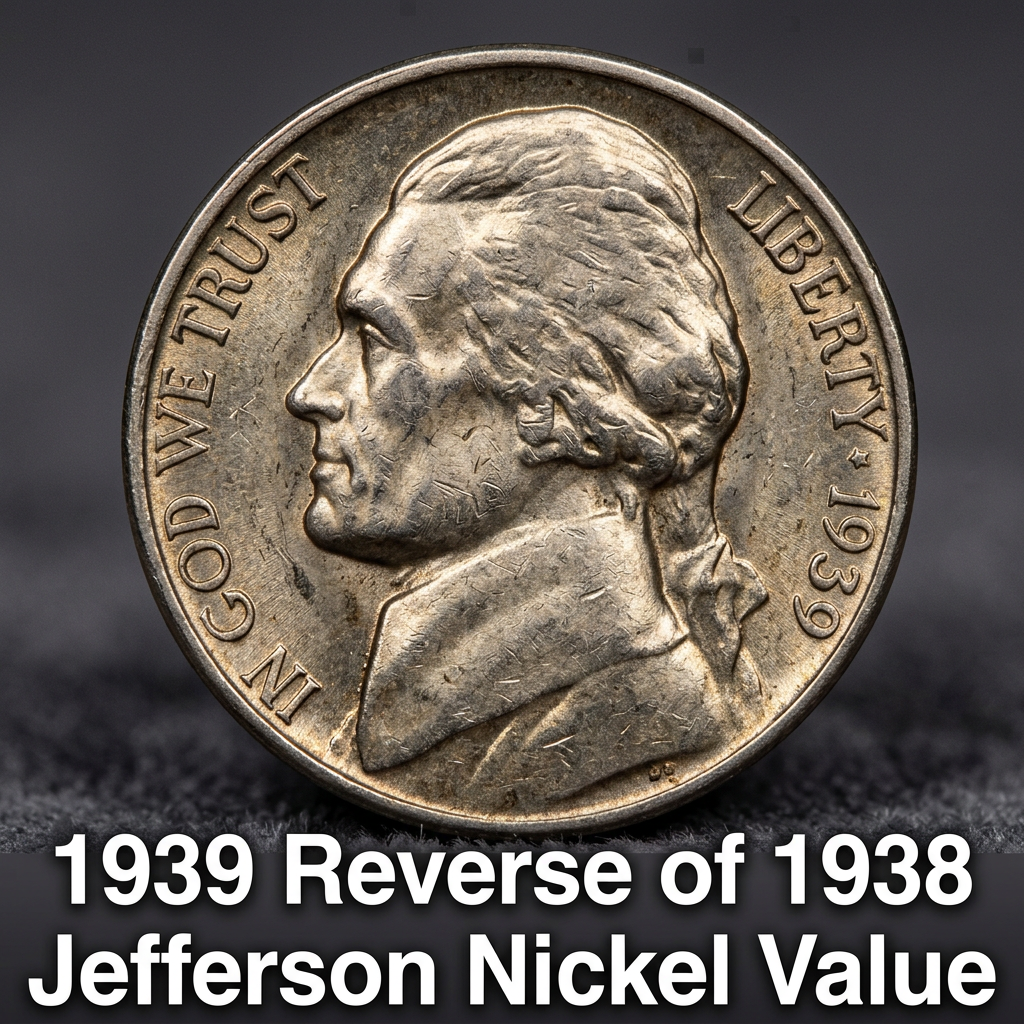
1939 Jefferson Nickel With Reverse of 1938 Value What Collectors and Curious Finders Should Know
The 1939 Reverse of 1938 Jefferson Nickel is worth anywhere from $2 in heavily worn condition to over $100 in mint state, with some certified examples fetching even more. If you just found one of these coins in an old jar or at a flea market, you may be sitting on something more interesting than a regular nickel — and this guide will help you figure out exactly what you have.
If you’re not sure what variety you’re looking at, a free coin identifier app can help you quickly confirm whether your coin is the standard 1939 Jefferson Nickel or the scarcer Reverse of 1938 variety. Knowing the difference matters quite a bit when it comes to value, and getting it right takes just a few seconds with the right tool.
What Is the 1939 Reverse of 1938 Jefferson Nickel?
The Jefferson Nickel series launched in 1938, replacing the Buffalo Nickel. When the 1939 coins were being struck, the U.S. Mint used two different reverse designs — one carried over from 1938 and a slightly updated version introduced the same year.
The “Reverse of 1938” variety features Monticello with thinner lettering and a slightly different architectural style compared to the Reverse of 1939. To the untrained eye, the two look nearly identical. But to collectors, this distinction is significant because the 1939 Reverse of 1938 is considered the scarcer of the two varieties.
Collectors who specialize in Jefferson Nickels actively seek out this variety, and it tends to command a modest but noticeable premium over the standard issue. Knowing which reverse you have is the first step toward understanding your coin’s real worth.
How to Identify the Reverse of 1938 on a 1939 Nickel
The easiest way to tell the two reverses apart is by examining the lettering on the back of the coin. On the Reverse of 1938, the letters in “MONTICELLO” and “FIVE CENTS” appear slightly thinner and more refined.
Look also at the dome of Monticello — the building depicted on the reverse. On the 1938-style reverse, the lines and details have a slightly different character compared to the bolder, more defined Reverse of 1939.
A magnifying glass or loupe (5x to 10x) makes this identification much easier. If you’re not confident in what you’re seeing, CoinKnow offers a visual comparison tool that can help you tell varieties apart without needing to be an expert. Many collectors use apps like this as a starting point before sending coins to a professional grading service.
1939 Reverse of 1938 Jefferson Nickel Value by Grade
Like all coins, condition is everything. A coin that looks shiny and sharp will always be worth more than one that’s been through decades of circulation. Here’s a general value breakdown:
| Grade | Condition | Estimated Value |
|---|---|---|
| G-4 (Good) | Heavy wear, major details visible | $2 – $4 |
| VF-20 (Very Fine) | Moderate wear, clear details | $5 – $12 |
| EF-40 (Extremely Fine) | Light wear on high points | $15 – $30 |
| MS-63 (Mint State) | Uncirculated, minor bag marks | $45 – $75 |
| MS-65 (Gem Mint State) | Brilliant, nearly flawless | $100+ |
For a deeper look at current market prices, you can check up-to-date 1939 Jefferson Nickel mint state price data based on recent auction results and dealer sales. Markets shift over time, so live data is always more reliable than static guides.
Is the 1939 Reverse of 1938 Nickel Worth Grading?
If your coin grades EF-40 or better and shows strong details, it may be worth submitting to a third-party grading service like PCGS or NGC. Professional grading adds credibility and can significantly increase what a buyer is willing to pay — especially for a recognized variety like this one.
For coins in circulated condition (below EF-40), professional grading probably won’t add enough value to justify the cost. In those cases, selling raw (ungraded) to a dealer or through an online marketplace is typically the better route.
Not sure where your coin stands? CoinKnow lets you get a preliminary condition estimate before you decide whether to spend money on professional grading. It’s a smart first step that can save you both time and money.
Where to Sell a 1939 Reverse of 1938 Jefferson Nickel
Once you know what you have and what it’s worth, the next question is where to sell it. Your main options include coin dealers, eBay, coin shows, and online auction platforms that specialize in numismatics.
For everyday sellers, eBay is often the most convenient option, and the competitive bidding process can sometimes push prices higher than you’d expect. Just make sure to photograph the coin clearly in good lighting, and be upfront about its condition.
For a comprehensive resource on what your 1939 Jefferson Nickel is worth across all grades and varieties, there are dedicated tools that compile real market data to help you price your coin fairly whether you’re buying or selling.
—
FAQ
Q: How do I know if my 1939 nickel has the Reverse of 1938?
A: Look closely at the lettering and architectural detail on the back of the coin. The Reverse of 1938 has thinner, slightly more delicate text and fine lines on Monticello compared to the bolder Reverse of 1939. A magnifying loupe and a side-by-side reference image will make the difference much clearer. You can also use CoinKnow to help identify the variety quickly.
Q: Is the 1939 Reverse of 1938 Jefferson Nickel rare?
A: It’s not considered rare in the traditional sense, but it is the scarcer of the two 1939 reverses and is recognized as a distinct collectible variety. In high grades, it becomes significantly harder to find, which is what drives up the value at the top end of the scale.
Q: Can I clean my 1939 nickel to make it worth more?
A: No — please don’t clean it. Cleaning a coin almost always reduces its value in the eyes of collectors and dealers. Even light polishing removes the natural surface and leaves marks that experts can easily spot. Leave the coin exactly as you found it and let its natural state speak for itself.
