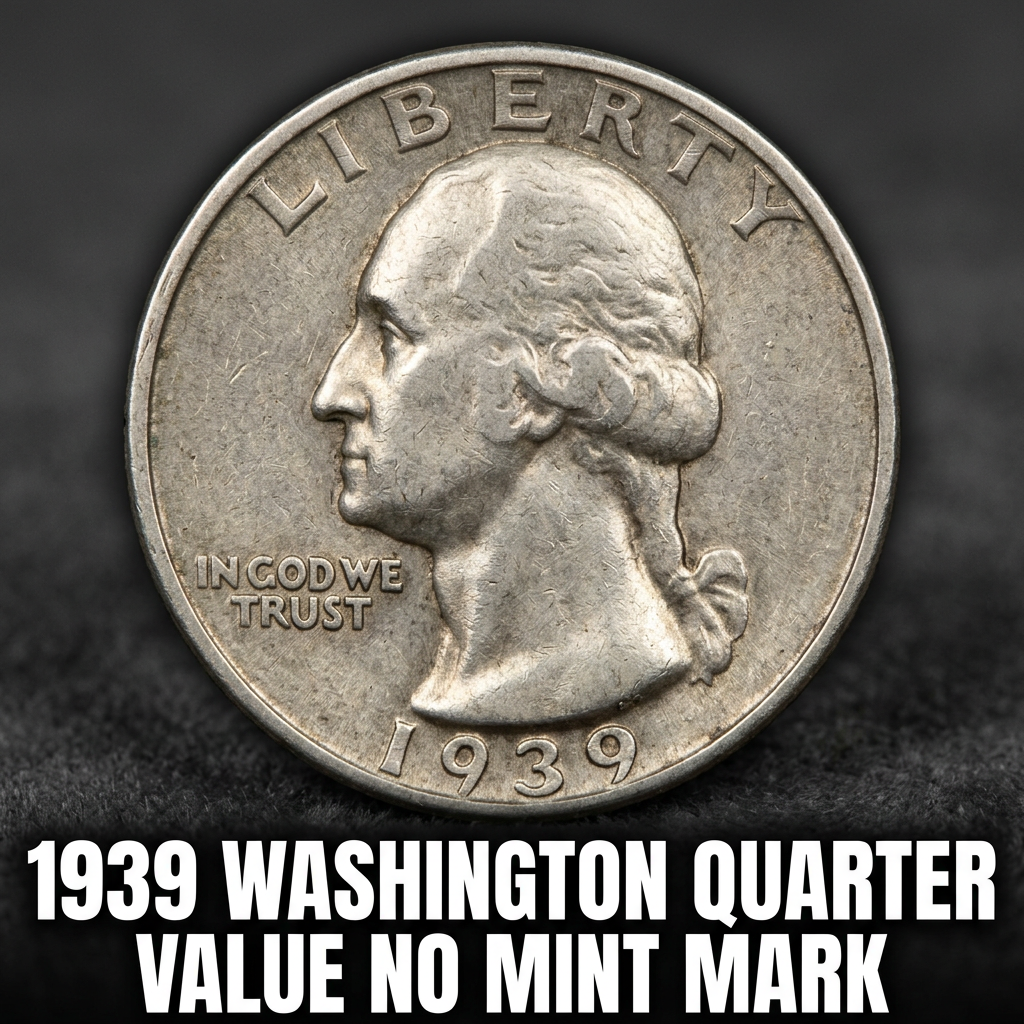
1939 Washington Quarter Value No Mint Mark What It’s Really Worth
The 1939 Washington Quarter with no mint mark is worth anywhere from $5 in heavily worn condition to over $200 or more in higher mint state grades — and some top-condition examples have sold for thousands at auction. If you found one of these silver quarters in an old jar or inherited coin collection, you’re in the right place to find out exactly what it’s worth.
Before we dive in, if you’re not sure what mint mark you’re looking at (or whether there is one), try using a free coin identifier app to get a quick read on your coin before doing anything else.
What Is the 1939 Washington Quarter No Mint Mark?
The 1939 Washington Quarter with no mint mark was produced at the Philadelphia Mint. Back in those days, Philadelphia didn’t put a mint mark on its coins — so a blank spot where the mint mark would be actually tells you something important: this coin was made in Philly.
In 1939, the U.S. Mint struck over 33 million of these quarters in Philadelphia alone. That makes them relatively common in lower grades, but finding a well-preserved example is a different story.
These coins are made of 90% silver, which alone gives them a base value above face value. As of current silver prices, the melt value of a 1939 Washington Quarter sits around $4 to $5 — but collector value can go much higher depending on condition.
1939 Washington Quarter No Mint Mark Value by Grade
Condition is everything when it comes to coin values. A coin that looks “old and silver” to most people might be worth $6, while a crisp, well-struck example can fetch hundreds. Here’s a quick breakdown of approximate values:
| Grade | Description | Estimated Value |
|---|---|---|
| Good (G-4) | Heavy wear, design visible | $5 – $7 |
| Fine (F-12) | Moderate wear, some detail | $7 – $10 |
| Extremely Fine (EF-40) | Light wear on high points | $12 – $20 |
| About Uncirculated (AU-55) | Slight wear, much luster | $25 – $45 |
| MS-63 | Mint state, minor marks | $75 – $150 |
| MS-65 and above | Gem quality, full luster | $200 – $500+ |
For the most current auction results and certified sale prices, you can check out detailed 1939 Washington Quarter price data by grade to see how the market is trending right now.
How to Tell If Your 1939 Quarter Is Worth More
Beyond just the grade, a few other factors can push the value of your 1939 Washington Quarter no mint mark higher than average.
Look at the strike quality. Some 1939 Philadelphia quarters were struck with exceptional sharpness, showing full, crisp detail on Washington’s hair above the ear and on the eagle’s breast feathers on the reverse. These are sometimes described as having a “Full Head” or strong strike, and collectors pay a premium for them.
Also check for any toning. Natural, rainbow-colored toning on silver coins is often valued by collectors, while dark, blotchy, or artificial-looking toning tends to lower the value. Original surfaces and original luster are key.
Finally, avoid cleaning your coin. A cleaned coin — even one that looks shiny and nice — is actually worth less to most collectors because the cleaning removes the original surface. If you’re unsure, CoinKnow is a great tool to help you assess your coin before making any decisions.
What Makes 1939 Philadelphia Quarters Special to Collectors
The 1939 Washington Quarter series is considered part of the classic pre-war coinage era, and collectors appreciate these coins both for their silver content and their historical significance. Washington quarters were first introduced in 1932, and by 1939 the series was well-established with a strong collector following.
The 1939 Philadelphia issue doesn’t carry the rarity of the San Francisco or Denver mint marks that year, but pristine examples are genuinely hard to find. With millions entering circulation during the Great Depression recovery period and World War II era, most coins from this time saw heavy use.
For a complete breakdown of 1939 quarter values across all mint marks and grades, including comparisons between Philadelphia, Denver, and San Francisco issues, it’s worth taking a few minutes to look at the full picture before selling or trading your coin.
Should You Get Your 1939 Washington Quarter Graded?
If your coin looks like it could be in the Uncirculated range — meaning it has no obvious wear and still has a natural shine to it — professional grading might be worth the investment. Coins certified by PCGS or NGC often sell for significantly more than raw (ungraded) coins of the same quality.
For coins below About Uncirculated condition, professional grading likely won’t be cost-effective since the grading fees can exceed the coin’s value. In those cases, knowing the approximate grade yourself is usually enough.
CoinKnow can help you get a fast, reliable estimate before spending money on a professional submission. It’s one of the easiest ways to understand what you’ve got in hand.
And if you’re still identifying what you have, remember that a simple CoinKnow scan can tell you the mint mark, date, and estimated grade range in seconds — saving you a lot of guesswork.
FAQ
Q: How much is a 1939 Washington Quarter worth with no mint mark?
A: A 1939 Washington Quarter with no mint mark (Philadelphia Mint) is worth roughly $5 to $7 in worn condition, $12 to $20 in Extremely Fine, and $75 to $500 or more in mint state grades. The exact value depends on the coin’s condition, strike quality, and whether it has been cleaned or altered.
Q: Is a 1939 quarter with no mint mark rare?
A: No, the 1939 Philadelphia quarter is not rare — over 33 million were minted. However, finding one in high-grade uncirculated condition is increasingly uncommon, and those examples do carry real collector value.
Q: Does the silver content affect the value of a 1939 quarter?
A: Yes. All Washington quarters made before 1965 are 90% silver, giving them an intrinsic melt value of around $4 to $5 based on current silver prices. This means even a heavily worn 1939 quarter is worth more than 25 cents — and condition upgrades only increase that further.
