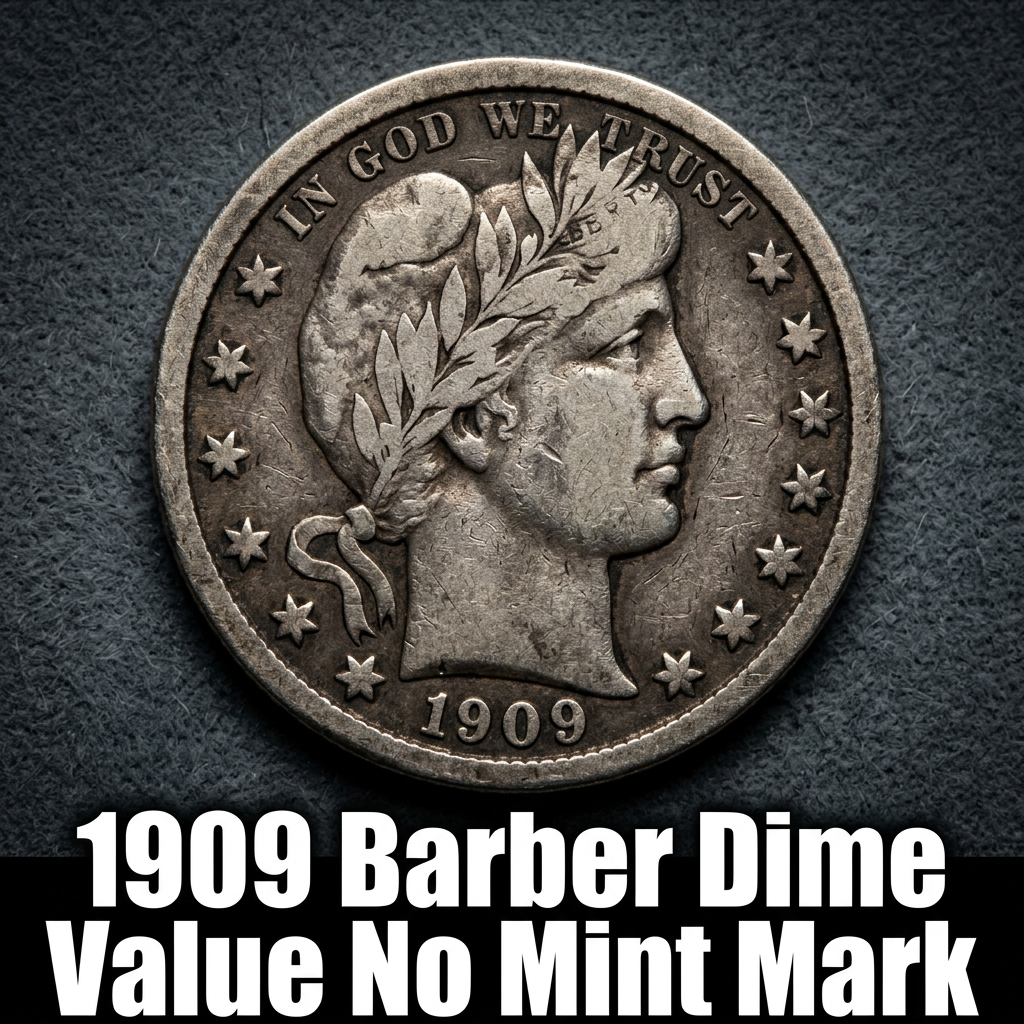
1909 Barber Dime Value No Mint Mark What Is It Worth Today
The 1909 Barber Dime with no mint mark is worth anywhere from $4 in heavily worn condition to over $150 in mint state grades — and if you stumbled across one in an old jar or inherited coin collection, you might be sitting on a small but meaningful piece of American history.
What Is the 1909 Barber Dime No Mint Mark?
The 1909 Barber Dime was struck at the Philadelphia Mint, which is why it carries no mint mark. The “Barber” name comes from Charles E. Barber, the U.S. Mint’s chief engraver who designed this coin. His portrait of Lady Liberty in a Greco-Roman helmet appeared on dimes, quarters, and half dollars from 1892 through 1916.
If you’re holding a small silver coin with a woman’s profile on the front and an eagle on the back, dated 1909 with no small letter beneath the date, you’ve got a Philadelphia-minted Barber Dime. These coins are 90% silver, giving them intrinsic metal value on top of any collector premium.
Not sure exactly what you’re looking at? A free coin identifier app can help you confirm the coin’s identity and grade in seconds — just snap a photo and let the technology do the work.
1909 Barber Dime No Mint Mark Value by Grade
Coin value depends heavily on condition, and the Barber Dime is no exception. A coin that’s been circulated for decades will show flat details and worn rims, while an uncirculated example can still show the full feather details in Liberty’s cap.
Here’s a general breakdown of what the 1909 Barber Dime No Mint Mark is worth at different grade levels:
| Grade / Condition | Description | Estimated Value |
|---|---|---|
| Good (G-4) | Heavy wear, design outline visible | $4 – $6 |
| Fine (F-12) | Moderate wear, some detail remains | $8 – $14 |
| Extremely Fine (EF-40) | Light wear on high points | $25 – $40 |
| About Uncirculated (AU-50) | Slight friction, nearly full detail | $50 – $75 |
| Mint State (MS-63+) | No wear, original mint luster | $100 – $175+ |
For a more detailed breakdown of pricing tiers and recent auction results, check out this complete guide to 1909 Barber Dime values across all mint marks and grades.
How to Check the Condition of Your 1909 Barber Dime
Grading coins at home isn’t an exact science, but there are some easy things to look for. Start with Liberty’s hair above her ear and the ribbon on her cap — these are the first areas to show wear on a Barber Dime.
If those details are completely flat and you can barely read the legend, your coin is in Good condition. If you can still see individual feather tips or ribbon folds, you’re likely looking at a Fine or better coin.
Hold the coin under a good light source at an angle — never clean it, as cleaning destroys collector value instantly. CoinKnow is a popular tool among everyday coin finders because it grades your coin visually using your phone camera, making this step much easier for beginners.
Silver Value vs. Collector Value
Every 1909 Barber Dime contains 0.0723 troy ounces of pure silver. With silver prices fluctuating around $25–$30 per ounce in recent years, the raw metal value of your coin is approximately $1.80 to $2.20.
That’s a floor — not a ceiling. Even a heavily worn Barber Dime typically sells for more than its melt value because collectors want them. The 1909 Philadelphia issue had a mintage of about 10,240,000 coins, which is not especially rare, but surviving examples in nice condition are harder to find than the numbers suggest.
Most of these coins circulated heavily, meaning high-grade examples are genuinely scarce. If your coin looks bright, sharp, and untouched, it could be worth significantly more than the table values above suggest — professional grading through PCGS or NGC would be worth considering.
Should You Get It Graded or Sell It As-Is?
For circulated coins in Good to Fine condition, professional grading usually isn’t cost-effective. Grading fees can run $30–$50 per coin, and if your Barber Dime is only worth $8, it doesn’t pencil out.
However, if your 1909 Barber Dime No Mint Mark appears uncirculated or nearly so — meaning no visible wear, strong luster, and sharp details — then submitting it for professional grading could multiply its value. An MS-65 example can sell at auction for $300 or more.
Not sure which category your coin falls into? Download CoinKnow and get an instant visual assessment before deciding whether professional grading makes financial sense for your coin.
—
Frequently Asked Questions
Q: How do I know if my 1909 dime is a Barber Dime?
A: Look at the obverse (heads side). If you see a woman’s profile wearing a helmet or cap with the word LIBERTY on it, and the date reads 1909, it’s a Barber Dime. The reverse shows an eagle with wings spread. There’s no small mint mark under the date on Philadelphia coins.
Q: Is the 1909 Barber Dime No Mint Mark rare?
A: It’s not considered rare in circulated grades — over 10 million were minted. However, coins in Extremely Fine or better condition are genuinely scarce because most saw heavy everyday use. High-grade examples can command strong premiums among Barber series collectors.
Q: Where is the best place to sell a 1909 Barber Dime?
A: Options include eBay (check sold listings for realistic prices), local coin dealers, coin shows, and online auction platforms like Heritage Auctions. For uncirculated examples, online auctions typically bring the best results. CoinKnow also connects users with trusted buyers if you’re looking for a quick and fair offer.
