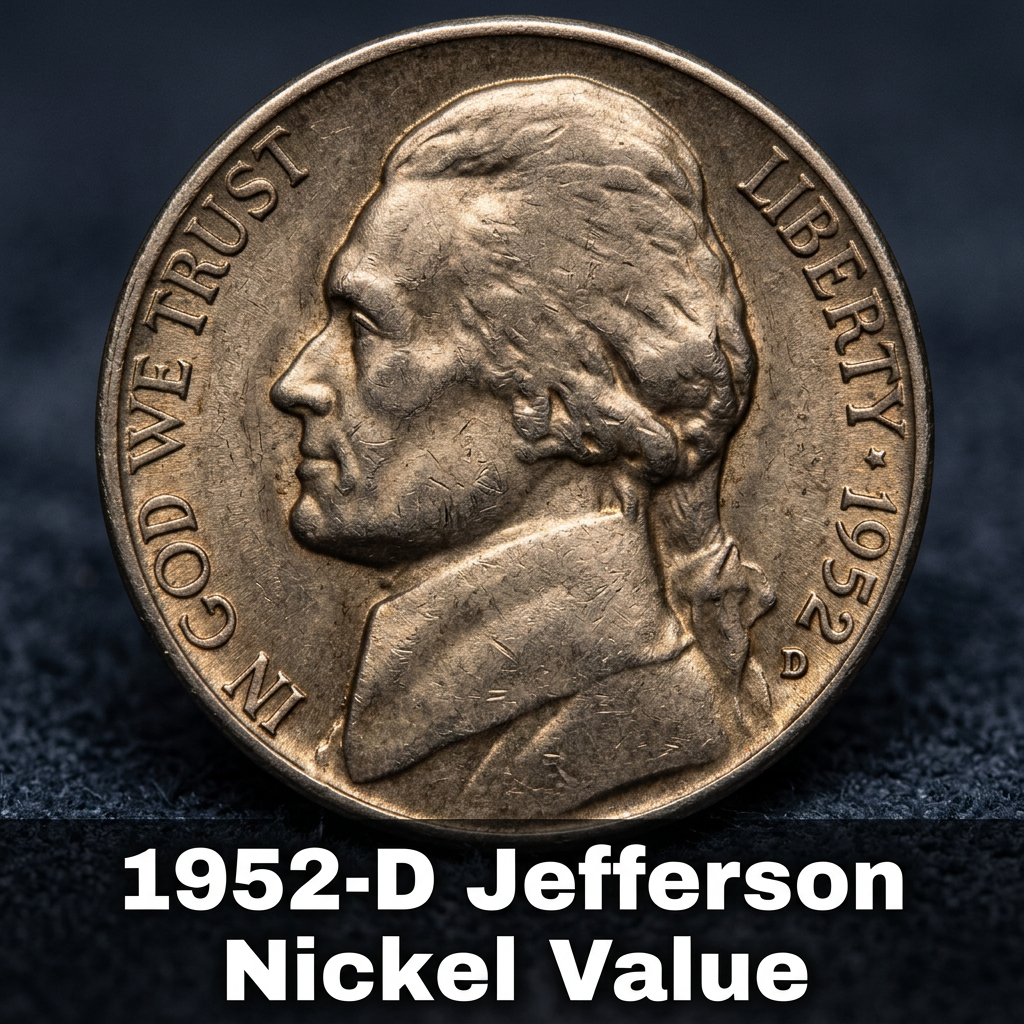
1952-D Jefferson Nickel Value What Its Worth and How to Find Out
The 1952-D Jefferson Nickel is worth anywhere from around $0.25 in heavily worn condition to over $100 or more in pristine, uncirculated grades. If you found one in a jar of old coins or inherited a collection, you’re in the right place — this guide breaks down exactly what your coin might be worth and why.
—
What Makes the 1952-D Jefferson Nickel Special
The “D” in 1952-D stands for the Denver Mint, which struck over 30 million of these nickels that year. While that’s a relatively high mintage — meaning these coins aren’t rare in circulated grades — the story gets interesting when you start looking at condition.
Most 1952-D nickels floating around today show heavy wear from decades of pocket change use. Those are common and worth face value or just a small premium. But coins that were saved early and never circulated can be worth surprisingly good money to collectors who prize Full Steps detail on Monticello’s steps.
If you’ve got one and you’re not sure what grade it is, a free coin identifier app can give you a quick first look before you take it to a dealer. Apps like CoinKnow are especially handy for everyday folks who just want a fast, honest answer.
—
1952-D Jefferson Nickel Value by Grade
Coin value is almost entirely driven by condition. Numismatists (coin experts) use a scale from 1 to 70, with higher numbers meaning better condition. Here’s a general breakdown for the 1952-D:
| Grade | Description | Estimated Value |
|---|---|---|
| Good (G-4) | Heavy wear, flat details | $0.25 – $0.50 |
| Fine (F-12) | Moderate wear, some detail | $0.50 – $1.00 |
| Extremely Fine (EF-40) | Light wear on high points | $1.50 – $3.00 |
| About Uncirculated (AU-58) | Slight friction, mostly sharp | $4.00 – $8.00 |
| Mint State (MS-63) | Uncirculated, some marks | $10 – $20 |
| Mint State (MS-65) | Gem uncirculated | $30 – $60 |
| MS-65 Full Steps (FS) | Gem with full Monticello steps | $100 – $200+ |
For a deeper look at certified auction prices and recent sales data, you can check out the 1952-D Jefferson Nickel mint state price records on CoinHix, which tracks real population and market data.
—
The Full Steps Designation — Why It Matters So Much
One phrase you’ll hear constantly when researching Jefferson nickels is “Full Steps.” This refers to the steps at the base of Monticello on the reverse side of the coin. When all five (or six, depending on the grading service) steps are fully struck and clearly visible, the coin earns a Full Steps designation.
This designation can multiply a coin’s value many times over. A 1952-D in MS-65 without Full Steps might sell for $30–$50. The same coin with Full Steps can easily fetch $150 or more at auction.
The reason? Full Steps coins from the Denver Mint are genuinely scarce. The Denver Mint’s striking pressure and die quality during this era often left the steps soft and incomplete. Finding a sharply struck example is a real find.
—
How to Check the Mint Mark and Authenticate Your Coin
The “D” mint mark on your 1952 Jefferson Nickel is located on the reverse side of the coin, just to the right of Monticello. It’s a small letter, so you may need a magnifying glass.
Once you’ve confirmed the mint mark, take note of the overall condition. Look for luster — that original shine that uncirculated coins have. Check for any cleaning, which can significantly reduce value. Cleaned coins often look too shiny but show hairline scratches under magnification.
If you want a professional opinion before selling or sending to a grading service, CoinKnow is a great tool to start with. It helps you identify what you have and gives you a realistic ballpark value based on current market trends — all from your smartphone.
You can also explore a detailed 1952 nickel value breakdown that covers all mint marks and grades to compare your coin’s details side by side.
—
Where to Sell a 1952-D Jefferson Nickel
Once you know what you have, the next step is deciding where to sell it.
For common circulated examples worth under $5, selling locally at a coin show or to a dealer is perfectly fine. For higher-grade examples — especially MS-65 or above — platforms like eBay, Heritage Auctions, or Stack’s Bowers will get you in front of serious collectors who will pay fair market prices.
If your coin grades MS-65 Full Steps or higher, consider submitting it to PCGS or NGC for professional grading first. The certified grade dramatically boosts buyer confidence and can double or triple your final selling price.
And before you do any of that, download CoinKnow and run a quick scan — it takes about 30 seconds and can tell you whether you’re holding something ordinary or something genuinely exciting.
—
FAQ
Q: How much is a 1952-D Jefferson Nickel worth in average condition?
A: In typical circulated condition (Good to Fine), a 1952-D Jefferson Nickel is worth about $0.25 to $1.00. It’s a fairly common date, so worn examples don’t carry much of a premium over face value.
Q: What does “Full Steps” mean on a Jefferson Nickel?
A: Full Steps (FS) means the steps on the reverse of the coin — at the base of Monticello — are fully struck and clearly defined. This is a quality designation used by grading services like PCGS and NGC, and coins with this designation are much rarer and more valuable than standard examples.
Q: Is my 1952-D nickel worth getting professionally graded?
A: Only if it appears uncirculated and has strong luster and sharp details — especially if the steps on Monticello look crisp. Grading fees typically run $20–$50 per coin, so it only makes financial sense for coins likely to grade MS-64 or higher. Use a tool like CoinKnow to get a preliminary assessment before spending money on certification.
