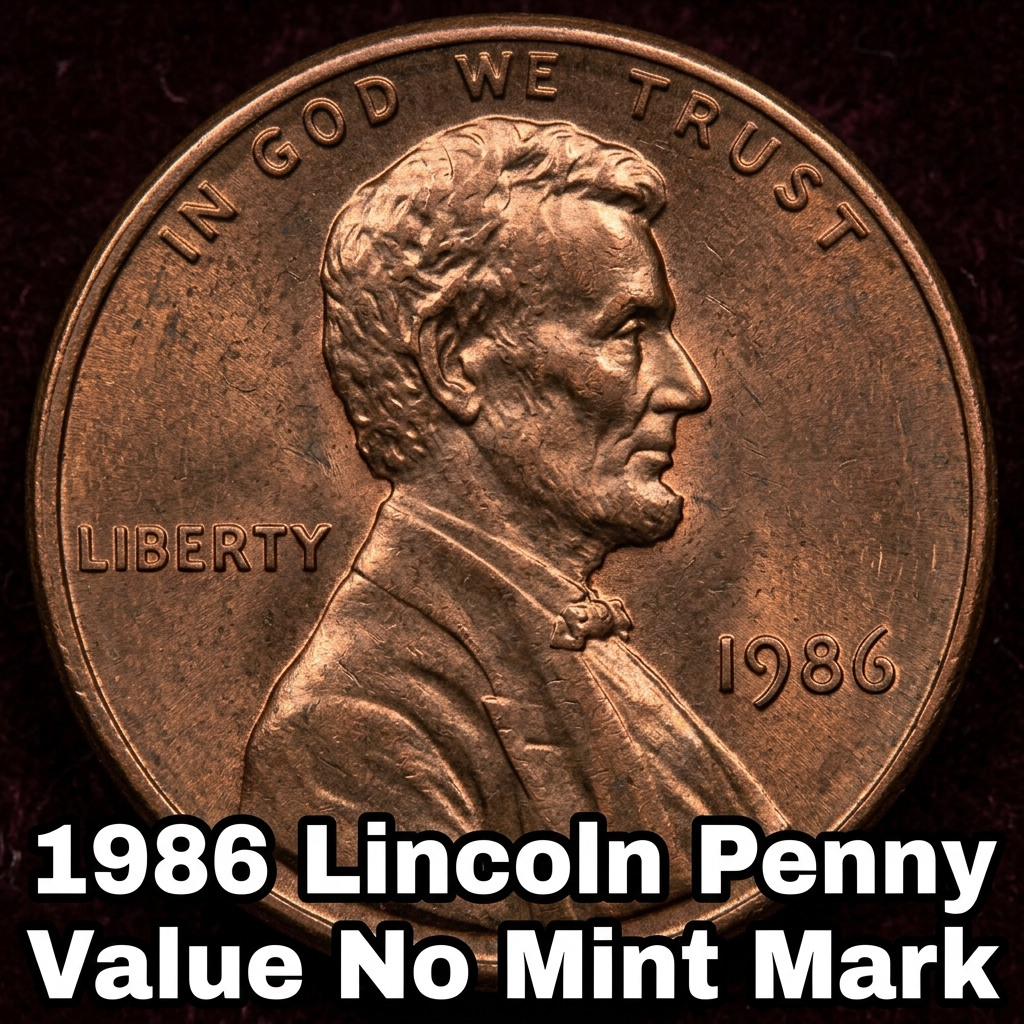
1986 Lincoln Penny Value and Mint Error Guide for Collectors
The 1986 Lincoln Penny with no mint mark is generally worth its face value of $0.01 in circulated condition, but high-grade specimens and rare errors can sell for $10 to over $2,500. For most people who find one of these copper-plated zinc coins in their pocket change, it is a common piece of American history, yet certain details can make it a prize for collectors.
Understanding the 1986 No Mint Mark Penny
If you are looking at a 1986 penny and don’t see a small letter under the date, that means it was minted in Philadelphia. During this era, the Philadelphia Mint did not use a “P” mint mark on one-cent coins. While millions of these were produced, finding one in pristine, “red” condition is what truly drives the value up for enthusiasts.
If you are unsure whether your coin is a common spender or a hidden gem, you can use a free coin identifier app to get an instant assessment. Many people are surprised to find that a coin they assumed was worth nothing actually has a distinct surface quality that collectors crave. By using tools like the CoinKnow app, you can quickly differentiate between a dirty old penny and a valuable numismatic specimen.
The 1986 penny is made of a zinc core with a thin outer layer of copper. This makes them prone to “zinc rot” or bubbling, which usually hurts the value. However, if you find a coin that has survived without these blemishes, it becomes much more desirable. Serious collectors often look for the 1986 Lincoln Penny MS68 RD price trends to see how much the highest-quality examples are fetching at auction today.
Determining the Value of Your 1986 Penny
Most 1986 pennies you find in circulation are only worth one cent. Because they were minted in such high volumes (over 4.4 billion in Philadelphia alone), they are not considered rare in a general sense. However, the condition, or “grade,” is the most important factor in determining if your coin is worth more than its weight.
Coins are graded on a scale from 1 to 70. A coin with no scratches, original mint luster, and a bright red color is classified as “Mint State” (MS). These are the coins that sell for a premium. You can check the current market data for a 1986 penny value in various grades to see where your coin fits on the spectrum.
If your penny looks like it just came out of a fresh roll from the bank, it might be worth sending it to a professional grading service like PCGS or NGC. If the coin has any brown toning or obvious wear from being handled, it is likely only worth face value. The CoinKnow app can help you examine the fine details of the coin’s surface to look for signs of wear that might not be visible to the naked eye.
| Condition / Grade | Estimated Value |
|---|---|
| Circulated (Average Wear) | $0.01 |
| Uncirculated (MS63) | $0.15 – $0.50 |
| Choice Uncirculated (MS65 Red) | $1.00 – $5.00 |
| Superb Gem (MS67 Red) | $15.00 – $40.00 |
| Auction Record (MS68 Red) | $2,500+ |
Valuable Errors on 1986 Pennies
Beyond just the condition, error hunters look for specific mistakes made during the minting process. While the 1986 Philadelphia penny doesn’t have a famous variety like the 1955 Doubled Die, there are still interesting errors that can make a coin worth $20, $50, or even $100.
Common errors to look for include “Off-Center Strikes,” where the design is not centered on the coin. If a significant part of the design is missing but the date and mint mark (or lack thereof) are still visible, these can be quite valuable. Another common discovery is the “Broadstruck” error, where the coin appears flatter and wider than a normal penny because the retaining collar failed during striking.
You should also keep an eye out for “Die Cracks” or “Cuds.” A die crack appears as a raised line of metal on the coin’s surface. While minor cracks are common and don’t add much value, a large “Cud” (a blob of metal attached to the rim) can attract significant interest from error collectors. Identifying these requires a steady hand and a good magnifying glass, or better yet, the high-resolution scanning features of the CoinKnow app.
How to Start Your Penny Collection
Starting a coin collection is as easy as checking your pockets. Many Americans have found rare coins simply by paying attention to the change they receive at the grocery store. The 1986 penny is a great starting point because it is affordable, easy to find, and teaches you the importance of coin condition and grading.
To preserve the value of any old penny you find, never clean it. Cleaning a coin with chemicals or even a soft cloth can leave microscopic scratches that ruin its numismatic value. Instead, handle your coins by the edges and store them in a cool, dry place inside a protective flip or folder.
Whether you have a single 1986 penny or a whole jar of old coins, the thrill of the hunt is what makes coin collecting so rewarding. You never know when a simple penny might turn out to be a rare high-grade survivor worth hundreds of dollars.
Q: Is a 1986 penny with no mint mark rare?
A: No, the absence of a mint mark simply means it was minted in Philadelphia. Over 4.4 billion were produced, so they are very common in circulation.
Q: How can I tell if my 1986 penny is worth more than one cent?
A: Your penny is likely only worth face value unless it is in perfect, uncirculated condition with a bright red color, or if it features a significant mint error like an off-center strike.
Q: What is the highest price ever paid for a 1986 penny?
A: A 1986 Lincoln Penny graded MS68 Red by PCGS sold at auction for over $2,500. This is because it is extremely rare to find a zinc-based penny from the 1980s in such perfect condition.
