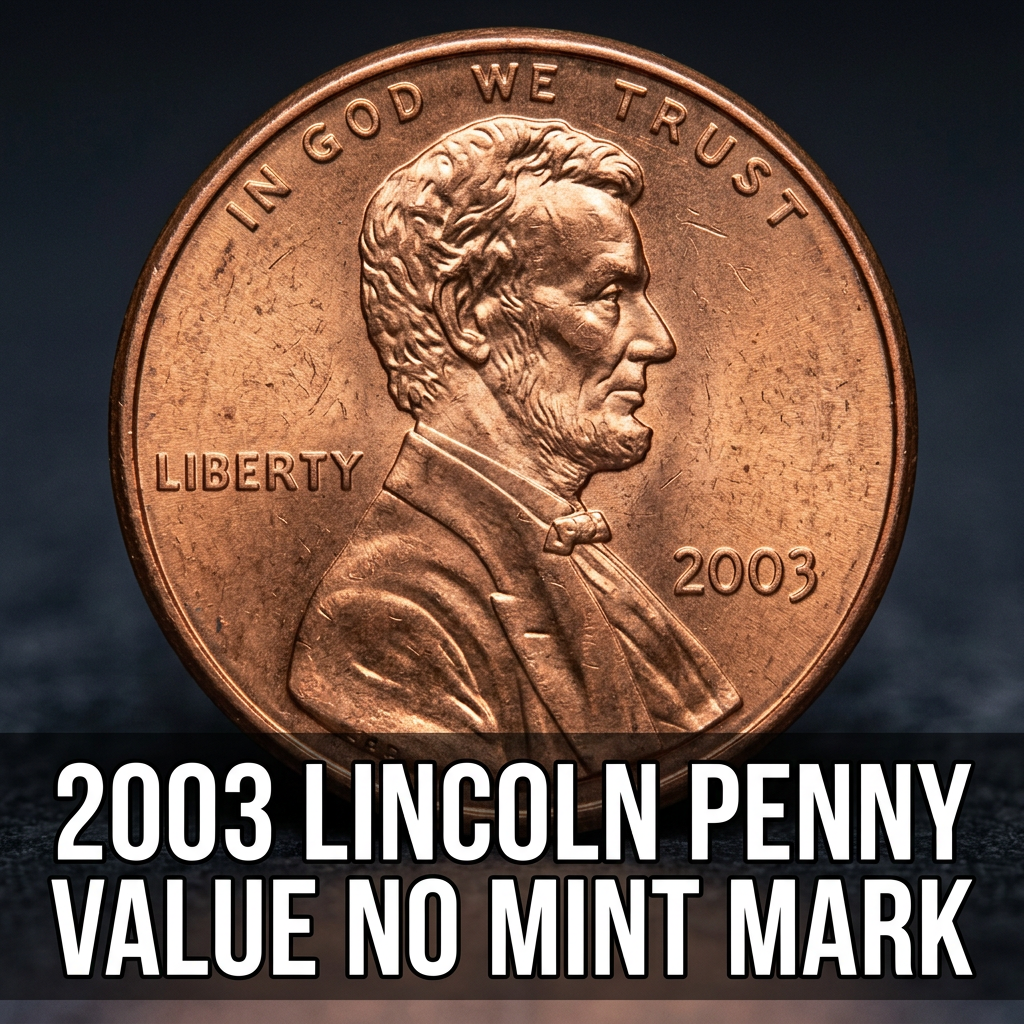
2003 Lincoln Penny Value and Rarity Guide for No Mint Mark Memorial Cents
The 2003 Lincoln Penny with no mint mark is generally worth its face value of one cent in circulated condition, but uncirculated specimens can sell for $1 to $25 or even thousands at auction. If you found one of these copper-plated zinc coins in your pocket change, it is likely a common “Philadelphia” strike.
Understanding the 2003 Penny With No Mint Mark
If you are looking at your 2003 penny and notice there is no small letter under the date, don’t worry—your coin isn’t a mistake. In the world of U.S. coinage, the absence of a mint mark signifies that the coin was struck at the Philadelphia Mint. During 2003, the Philadelphia Mint produced over 3.3 billion of these pennies, making them incredibly common in everyday circulation. Because so many were made, most of the coins you find in your jars or wallet are only worth their face value.
However, many collectors still hunt for these coins to complete their sets or to find high-grade “Mint State” examples. To quickly check if your pocket change has any hidden gems, you can use a free coin identifier app to get an instant appraisal of your collection. While most 2003 pennies are common, collectors pay a premium for coins that look like they just came off the press. Professionals use the CoinKnow app to keep track of their discoveries and stay updated on market trends.
Grading and 2003 Penny Value Factors
The value of a 2003 Lincoln Penny is heavily dependent on its condition and its “color designation.” Since these pennies are made of a zinc core with a thin copper plating, they react to the environment quickly. Collectors categorize them as Red (RD), Red-Brown (RB), or Brown (BN). A “Red” coin is one that retains at least 95% of its original mint luster and orange-copper color. These are the most sought-after versions.
For those curious about the market specifics, the 2003 Lincoln Penny MS RD price guide shows that coins in MS68 or MS69 condition are exceptionally rare. While a typical uncirculated penny might fetch a few dollars, a nearly perfect specimen can go for hundreds. Even a slight scratch or a fingerprint can drop the value significantly. If you aren’t sure where your coin falls on the scale, the CoinKnow platform provides high-resolution references to help you compare your coin to professionally graded ones.
| Condition / Grade | Estimated Value (USD) |
|---|---|
| Circulated (Good to About Uncirculated) | $0.01 |
| Uncirculated (MS63 Red) | $0.20 – $1.00 |
| Choice Uncirculated (MS65 Red) | $2.00 – $5.00 |
| Superb Gem (MS68 Red) | $30.00 – $100.00 |
| Auction Record (MS69 Red) | $2,000+ |
Valuable Errors on 2003 Lincoln Cents
While the standard strikes are common, error hunters look for specific anomalies that occurred during the minting process. One of the most common things people look for is a “Double Die,” though no major, high-value doubled dies have been widely recognized for the 2003 Philadelphia issue yet. Instead, look for mechanical errors like “Off-Center” strikes. If a 2003 penny was struck while the blank was not properly centered in the press, it could be worth $10 to $50 depending on how much of the design is missing.
Another interesting find is the “Die Crack” or “Die Chip.” These appear as small raised bumps of metal on the surface of the coin. While usually not worth a fortune, they are fun additions to a collection. You can find more details in this comprehensive 2003 penny valuation guide. Taking a clear photo of your coin and uploading it to CoinKnow can help you identify if that weird mark on Lincoln’s head is a valuable error or just post-mint damage.
Should You Save Your 2003 Pennies?
For the average person, a 2003 penny without a mint mark is safe to spend. Unless the coin is in perfect, shiny, “like-new” condition, it likely won’t appreciate in value significantly over the next few decades. Because these coins are composed mostly of zinc, they are also prone to “zinc rot,” where bubbles form under the copper plating. This actually makes finding a pristine, “clean” 2003 penny harder as time goes on.
If you happen to find a roll of 2003 pennies that looks like it was never opened, it might be worth keeping. Uncirculated rolls can sometimes be sold for a small premium to collectors who enjoy “bank roll hunting” for high grades. Always keep an eye out for coins that look different from the rest—unusual colors, missing parts of the letters, or extreme luster are all signs that your penny might be worth more than one cent.
Q: Why does my 2003 penny have no letter under the year?
A: The lack of a mint mark means the coin was minted in Philadelphia. Philadelphia did not use a “P” mint mark on pennies in 2003.
Q: What is the most expensive 2003 penny ever sold?
A: A 2003 Lincoln Penny graded MS69 Red by PCGS sold at auction for over $2,400. This is rare because almost no coins survive in such perfect condition.
Q: Are there any 2003 pennies made of pure copper?
A: No. All 2003 pennies were struck on copper-plated zinc planchets. They weigh approximately 2.5 grams, whereas pre-1982 copper pennies weigh 3.11 grams.
