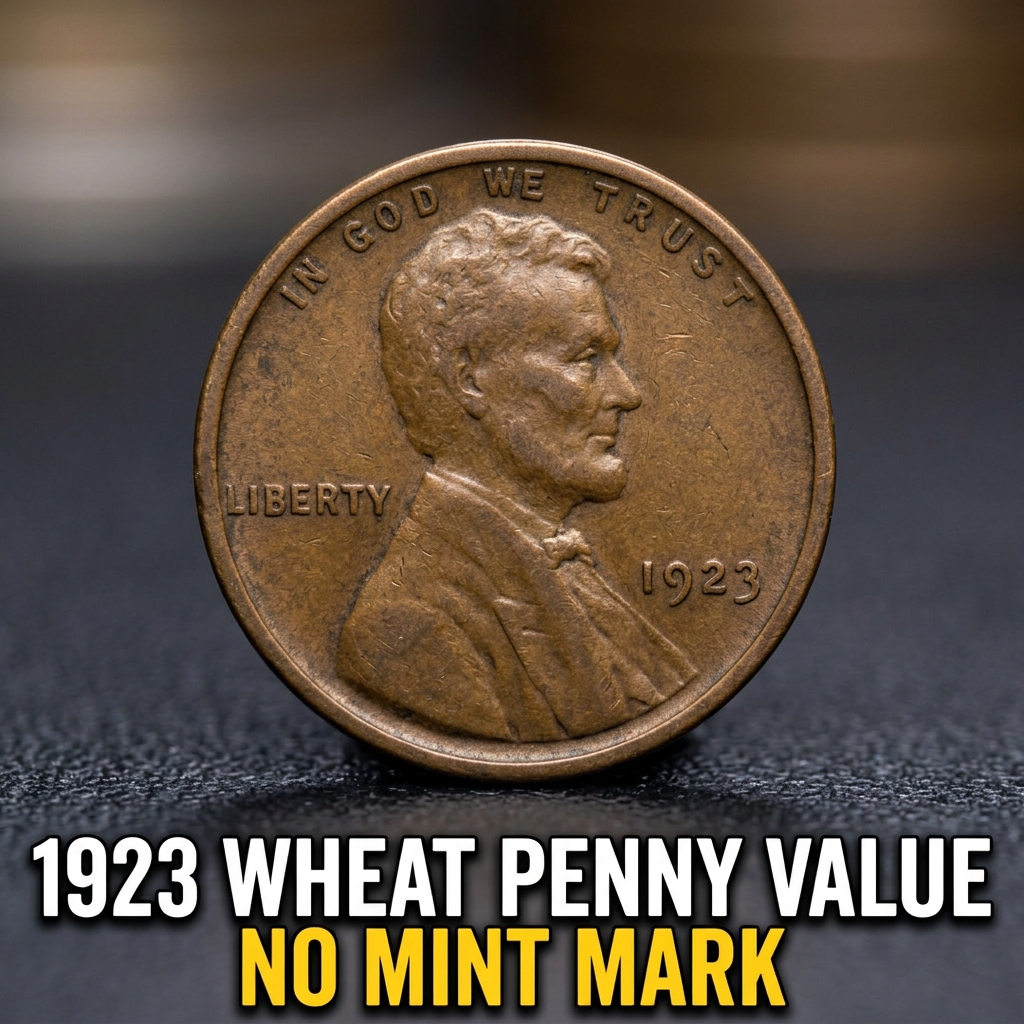
1923 Wheat Penny Value No Mint Mark and What You Can Sell It For Today
The 1923 Wheat Penny is worth anywhere from $0.15 in worn condition to over $350 in high-grade mint state. While most of these pennies found in jars today have a modest value, discovering a well-preserved specimen can lead to a surprising payday for everyday collectors.
Understanding the Philadelphia 1923 Wheat Penny
If you have a 1923 penny without a small letter under the date, you have a coin minted in Philadelphia. During that year, the Philadelphia Mint produced over 74 million of these copper coins. Because there is no mint mark, many people mistakenly think they have a rare error, but it simply indicates its origin. If you are unsure about the details of your coin, using a free coin identifier app can help you confirm the variety and year in seconds.
While millions were made, most went straight into circulation. After nearly a century of passing through hands and pockets, many have become heavily worn. However, the 1923 issue is particularly interesting to collectors because it is one of the “early” years of the Lincoln Wheat cent series. Most people who use the CoinKnow app find that their 1923 pennies are the “Brown” variety, which is the most common color for circulated copper.
How Grading Affects the 1923 Penny Value
The physical condition, or “grade,” of your coin is the most important factor in determining its price. For a non-mint mark 1923 penny, a coin in “Good” condition will show a flat silhouette of Lincoln and a smooth wheat wreath. As you move up the scale to “Extremely Fine,” the lines in the wheat ears become distinct. The highest values are reserved for “Uncirculated” coins that still look like they just left the mint.
For those looking for specific market data, checking the 1923 Wheat Penny price guide for Mint State Red coins shows that high-grade specimens are quite rare. Most everyday finds are Brown (BN) or Red-Brown (RB), but a full “Red” (RD) coin—one that retains its original copper luster—is the ultimate prize. Using tools like CoinKnow can help you compare your coin’s color to these standard numismatic categories.
1923 Wheat Penny Value Comparison Chart
To get a better idea of what your coin might be worth, refer to the table below. Note that these are average market prices for the Philadelphia (no mint mark) variety.
| Condition / Grade | Estimated Value (USD) |
|---|---|
| Good (G-4) | $0.15 – $0.25 |
| Fine (F-12) | $0.50 – $0.85 |
| Extremely Fine (EF-40) | $3.00 – $5.50 |
| Uncirculated (MS-63 Brown) | $25.00 – $40.00 |
| Gems (MS-65 Red) | $150.00 – $450.00+ |
What to Look for: 1923 Penny Errors and Rarities
While the standard 1923 penny is common, certain errors can drive the price up significantly. Look for “Double Dies,” where the letters or numbers appear to be doubled. Although the 1923 is not famous for a major doubled die like the 1955 or 1972, minor doubling on the date or the word “LIBERTY” can still add a premium. You should also check for “Off-Center” strikes, where the design is shifted to one side.
For many casual hunters, the goal is to find a coin that has survived without scratches or corrosive spots. Even a common 1923 penny can be a great addition to a collection if it has a pleasing “eye appeal.” If you want a deeper dive into the technical details of this year, you can explore this comprehensive 1923 penny value analysis to see how recent auction trends are shaping the market.
Selling Your 1923 Wheat Cent
If you decide you want to sell your penny, don’t clean it! Cleaning a coin actually destroys its numismatic value by scratching the surface and removing the original patina. Instead, keep it in a protective sleeve and consult with a local coin shop or a reputable online auction site. Collectors are always looking for authentic, original coins.
The CoinKnow app is a great way to keep an inventory of your finds and stay updated on price fluctuations. Whether you have a single coin or a whole jar of 1920s wheaties, knowing which ones to pick out for professional grading can save you a lot of time and potentially make you a nice profit.
Frequently Asked Questions
Q: Why does my 1923 penny have no mint mark?
A: This means your coin was minted in Philadelphia. In 1923, the Philadelphia Mint did not use a mint mark on pennies. Only coins from Denver (D) or San Francisco (S) had letters below the date.
Q: Is a 1923 Wheat Penny actually rare?
A: In circulated condition, it is not rare. However, finding one in “Mint State” (meaning it looks brand new) is quite rare and valuable because most of them were used in daily commerce nearly 100 years ago.
Q: How can I tell if my 1923 penny is worth more than a few cents?
A: Look at the “wheat stalks” on the back. If you can see the individual lines in the grains of wheat, your coin is in better condition than most and might be worth several dollars or more.
