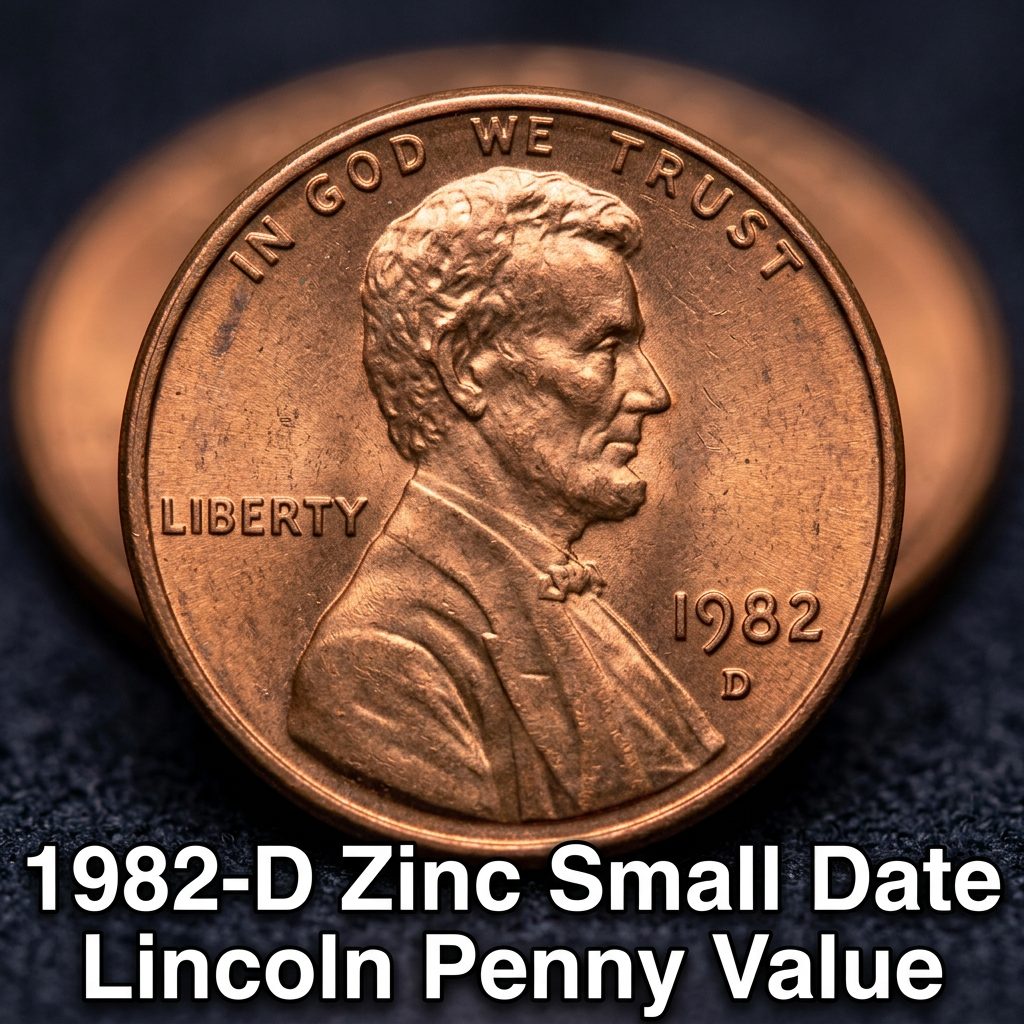
1982 D Zinc Small Date Lincoln Penny Value and How to Identify This Rare Variety
The 1982-D Zinc Small Date Lincoln Penny is worth anywhere from its face value of $0.01 in circulated condition to over $18,000 for specimens in exceptional mint state. For most everyday collectors, finding this specific copper-plated zinc variety means you have a common coin, but the hunt for the rare error version keeps everyone checking their change.
Why the 1982 Penny is a Numismatic Mystery
The year 1982 was a transitional period for the United States Mint. Due to the rising costs of raw copper, the Mint switched from a 95% copper composition to a core of 99.2% zinc plated with a thin layer of copper. This change happened mid-year, resulting in seven different major varieties of the Lincoln Cent. These include Large Date and Small Date versions struck in both copper and zinc at the Philadelphia and Denver mints.
If you are struggling to sort through a handful of change, using a free coin identifier app can help you distinguish the subtle differences between these strikes. It is essential to download the CoinKnow app if you want to quickly scan your coins and see if they match the high-value characteristics of rare 1982 pennies. Most people find the zinc versions, which are very common, but the hunt for the “wrong metal” strikes is what drives the market.
Distinguishing the Small Date from the Large Date
The most important step in determining the value of your 1982-D penny is identifying the “Small Date” features. On a Small Date penny, the numbers in the date are further from the rim than on the Large Date. Specifically, look at the number “8.” On the small date, the top loop of the 8 is significantly smaller than the bottom loop. Furthermore, the “2” has a different shape; the Small Date “2” has a delicate, curved neck, whereas the Large Date “2” has a straight, thick neck.
If you find a 1982-D Small Date that is exceptionally shiny and shows no wear, you should check the 1982-D Small Date penny price charts to see if your coin warrants professional grading. While the zinc versions are usually only worth face value, a zinc coin in perfect Mint State 68 or higher can still fetch a respectable premium. Using the CoinKnow app can help you compare your coin’s luster and strike quality against high-grade auction examples.
Understanding the Zinc Composition and Weight
Because the Mint was switching materials, you must determine if your 1982-D Small Date is made of zinc or copper. A zinc penny weighs about 2.5 grams, while a copper penny weighs 3.11 grams. You can easily test this with a small digital milligram scale. The 1982-D Zinc Small Date is the “common” version for that mint mark and date combination. However, if you happen to find a 1982-D Small Date that weighs 3.1 grams, you have found one of the most valuable “contransitional” errors in American history.
Even if your coin is the standard zinc version, it is worth keeping if it is in “Red” (RD) condition with no spots or oxidation. You can find more detailed 1982 Lincoln cent value information to help you decide which coins to keep in your jar and which to spend at the store. Most zinc pennies from 1982 will show “zinc rot” or small bubbles under the copper plating, which lowers their collectible appeal.
| Condition / Grade | Estimated Value (Zinc) | Estimated Value (Copper Rare Error) |
|---|---|---|
| Circulated (F-VF) | $0.01 | N/A |
| Uncirculated (MS63) | $1.00 – $3.00 | $5,000+ |
| Gem Mint (MS67+) | $15.00 – $50.00 | $18,000+ |
How to Maximize the Value of Your Find
If you believe you have found a high-grade 1982-D Zinc Small Date, preservation is key. Zinc is highly reactive to moisture and skin oils. Handle your coin only by the edges and store it in a PVC-free plastic flip or a coin capsule. Most of these coins are found in pocket change, meaning they have likely been scratched or “dinged,” which significantly drops the value.
Before spending money on professional grading services like PCGS or NGC, leverage tools like the CoinKnow app to get a preliminary idea of the grade. Grading can cost $20-$50 per coin, so it only makes sense to submit a zinc penny if it is virtually flawless. If you discover that your 1982-D Small Date is actually copper (weighing 3.1g), you should immediately seek a professional appraisal, as this is a high-figure rarity that has only been discovered a handful of times.
Frequently Asked Questions
Q: How can I tell if my 1982-D penny is a Small Date?
A: Look at the number “2” in the date. If the neck of the 2 is curved and flamboyant, it is a Small Date. If the neck is a straight line, it is a Large Date. Additionally, the Small Date sits further away from the coin’s edge.
Q: Is every 1982-D Small Date penny worth thousands of dollars?
A: No. The vast majority of 1982-D Small Date pennies are made of zinc and are worth only one cent. Only the extremely rare “Copper” 1982-D Small Date (which shouldn’t technically exist) is worth large sums of money.
Q: Will a magnet tell me if my 1982 penny is zinc or copper?
A: No, a magnet will not work because neither copper nor zinc is magnetic. You must use a jewelry scale to check the weight or use a “drop test” (though the drop test is risky as it can damage the coin). Copper pennies weigh 3.11g and zinc pennies weigh 2.5g.
