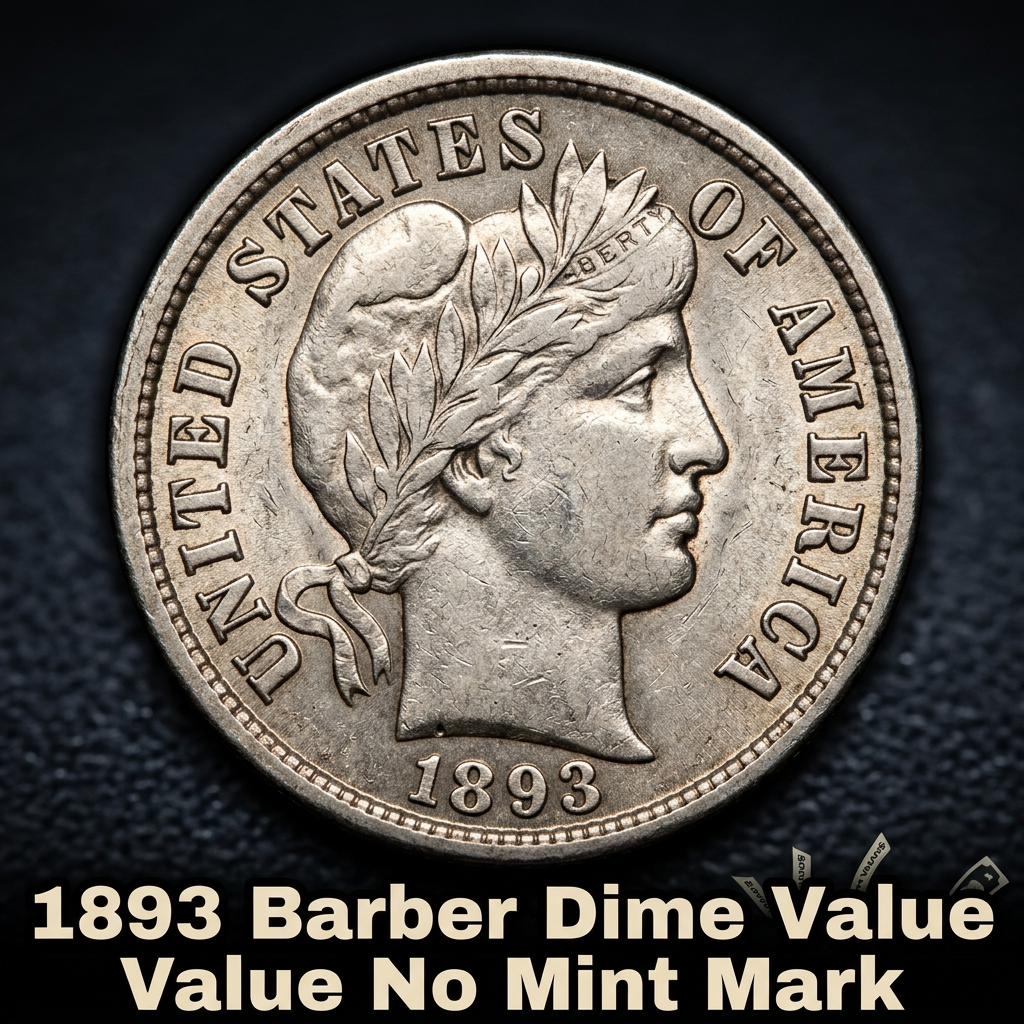
1893 Barber Dime Value Guide for Coins With No Mint Mark
The 1893 Barber Dime with no mint mark is worth anywhere from $5 in worn condition to over $600 in premium uncirculated grades. If you’ve just discovered an old silver dime in a jar or a rediscovered collection, you are holding a genuine piece of 19th-century American history that still carries significant value today.
Understanding the 1893 Barber Dime With No Mint Mark
The 1893 Barber Dime is a classic silver coin designed by Charles E. Barber, who served as the Chief Engraver of the US Mint. When you look at your coin and notice there is no small letter “S” or “O” on the reverse side, it means your coin was struck at the Philadelphia Mint. In the world of numismatics, Philadelphia-minted coins from this era typically lacked a mint mark.
Finding one of these in your change or an old drawer is exciting because they are composed of 90% silver. If you are unsure if your coin is genuine or want a quick digital appraisal, using a free coin identifier app can help you confirm the date and variety in seconds. While the Philadelphia Mint produced over 3.7 million of these dimes in 1893, many were lost to heavy circulation or melted down for their silver content during the 20th century. Today, collectors, often using tools like CoinKnow, search for well-preserved examples to complete their sets.
Evaluating the Condition and Grade of Your Silver Dime
The most important factor in determining the 1893 Philadelphia dime market price is the “grade” or physical condition of the coin. Most 1893 dimes found by everyday Americans are in “Good” or “Very Good” condition. In these states, the goddess Liberty on the front will look quite flat, and the word “LIBERTY” in her headband might be faded or completely worn away.
If you can clearly see the letters in Liberty’s crown, your coin is likely in “Fine” or “Very Fine” condition, which significantly boosts the price. Collectors pay a premium for “About Uncirculated” or “Mint State” coins that still have the original shiny luster from the day they were minted. To get a better sense of where your coin stands, the CoinKnow app can provide visual comparisons to help you identify wear patterns that impact the final sale price.
Current Market Value Table for 1893 No Mint Mark Dimes
Values for the 1893 Barber Dime fluctuate based on the current price of silver and collector demand. Below is a breakdown of what you can expect to receive for a specimen with no mint mark based on its condition.
| Coin Condition / Grade | Estimated Market Value |
|---|---|
| Good (G-4) | $5.00 – $7.00 |
| Fine (F-12) | $15.00 – $22.00 |
| Extremely Fine (EF-40) | $45.00 – $65.00 |
| Uncirculated (MS-60) | $160.00 – $190.00 |
| Choice Uncirculated (MS-65) | $550.00 – $750.00+ |
Why the 1893 Date Matters to Collectors
The early 1890s were an interesting time for the US Mint. 1893 was only the second year of the Barber design, making it a “type coin” that many collectors want for their historical collections. While the San Francisco (S) and New Orleans (O) mint marks for this year are generally rarer and more expensive, the Philadelphia (no mint mark) version is the foundation of any serious Barber Dime collection.
If you happen to find an 1893 dime that looks exceptionally crisp with very sharp details, do not clean it! Cleaning a coin with chemicals or cloth can actually destroy its numismatic value. Instead, use CoinKnow to check for any rare die varieties or errors that might be hidden to the naked eye. Even a common Philadelphia strike can fetch hundreds of dollars if it has survived over 130 years without being damaged or heavily worn down in commerce.
Frequently Asked Questions About 1893 Barber Dimes
Q: Where is the mint mark located on an 1893 Barber Dime?
A: On the reverse (back) of the coin, look at the bottom, just above the “E” in “DIME” and below the wreath. If that area is blank, your coin was minted in Philadelphia.
Q: Is my 1893 dime made of real silver?
A: Yes, all Barber Dimes minted between 1892 and 1916 are made of 90% silver and 10% copper. This means that even if the coin is heavily damaged, it is still worth at least its weight in silver.
Q: Should I get my 1893 Barber Dime professionally graded?
A: Generally, it is only worth paying for professional grading (like PCGS or NGC) if the coin is in “Uncirculated” condition. If the coin shows significant wear, the cost of grading may exceed the actual value of the dime.
