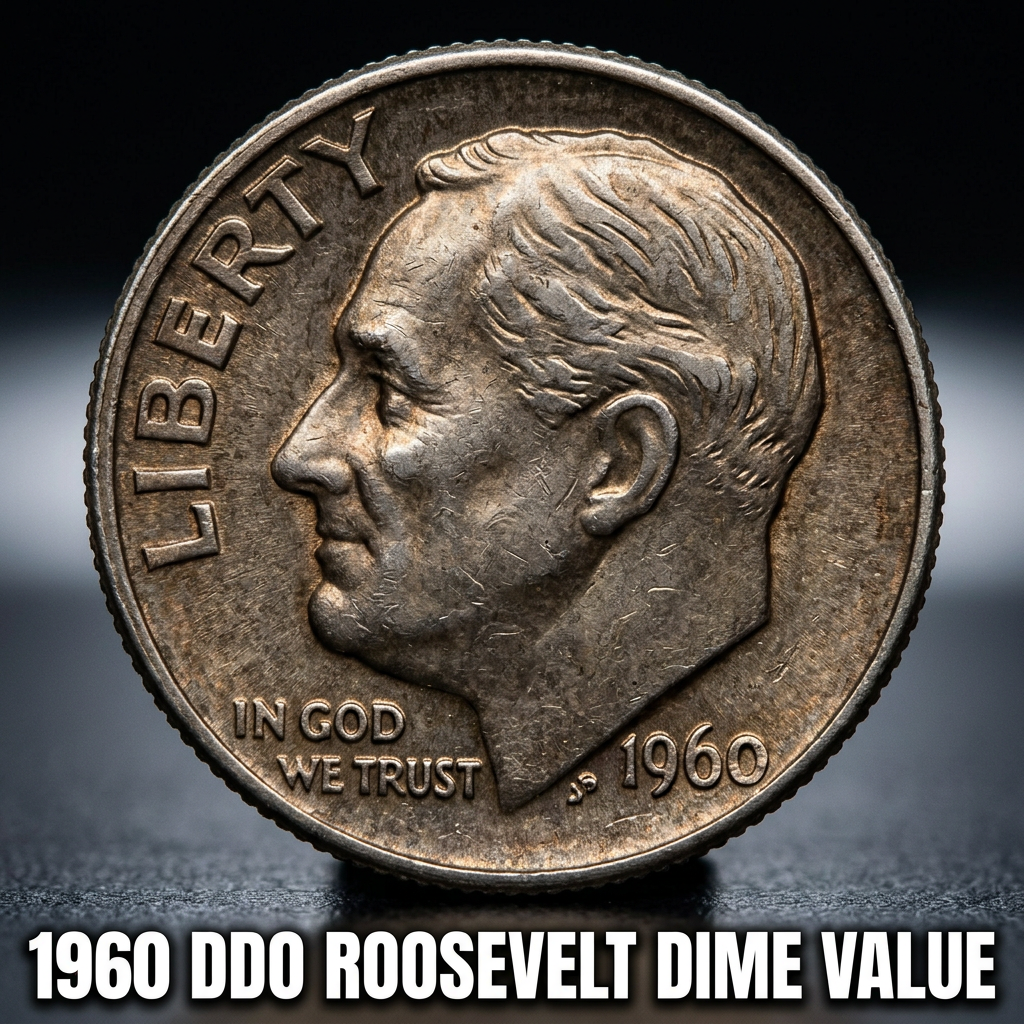
1960 DDO Roosevelt Dime Value Guide and Mint Error Worth
The 1960 DDO Roosevelt Dime is worth anywhere from $15 in circulated grades to over $800 in high-grade mint state condition. Finding one of these rare doubled die obverse errors in your pocket change or a family collection can turn a common ten-cent piece into a valuable collector’s item.
Understanding the 1960 Doubled Die Obverse Roosevelt Dime
If you have stumbled upon a shiny silver coin from 1960, you might be holding more than just ten cents. While most dimes from this era are valued primarily for their silver content, the “DDO” or Doubled Die Obverse variety is a special error that commands a significant premium among hobbyists. To accurately identify this piece, you might want to use a free coin identifier app to confirm the doubling before taking it to a dealer. These errors occurred during the minting process when the coin die was hubbed incorrectly, resulting in a duplicate image of certain design elements on the front of the coin.
In the case of the 1960 dime, the doubling is most prominent on the word “LIBERTY” and the date “1960.” To the naked eye, it might look like a slight blur, but under a magnifying glass, you can clearly see distinct, overlapping lines. For the everyday person who isn’t a professional numismatist, using tools like the CoinKnow app can help bridge the gap between curiosity and profit by providing instant visual references for known errors.
How to Identify the DDO Error on Your 1960 Dime
Identifying a genuine 1960 DDO Roosevelt Dime requires a keen eye. You should look specifically at the date and the inscriptions on the obverse (the side with President Roosevelt’s profile). The doubling on this specific year is often found on the digits “1960” and the “TY” of Liberty. Unlike common “machine doubling,” which looks flat and shelf-like, a true doubled die will show rounded, Hub-doubled features that appear as two distinct strikes.
If you are unsure whether your coin features this specific mint error, checking the CoinKnow database can provide high-resolution images for comparison. This is crucial because a standard 1960 dime is mostly valued for its 90% silver composition, whereas the DDO variety is sought after by specialists. To get a better sense of market trends, reviewing the latest 1960 Roosevelt Dime auction records for mint state coins can show you just how much collectors are willing to pay for top-tier examples.
Current Market Value and Price Guide
The value of a 1960 DDO Roosevelt Dime depends heavily on its “grade,” which is a measure of how much wear and tear the coin has endured. Coins that have been spent in grocery stores and gas stations are “circulated” and worth less, while those tucked away in rolls since 1960 are “uncirculated” or “Mint State.” Because these are made of 90% silver, even a damaged one has a “melt value,” but the DDO error adds a significant collector’s premium on top of that metal value.
In today’s market, a 1960 DDO dime in about-uncirculated condition typically sells for around $25 to $50. However, if the coin is in pristine condition with a “Full Band” (FB) designation—meaning the horizontal bands on the torch on the reverse are fully detailed—the price can skyrocket. For those looking for a comprehensive breakdown, this detailed 1960 silver dime value report covers both standard and error versions to help you estimate your find’s worth.
| Condition / Grade | Estimated Value (USD) |
|---|---|
| Circulated (Good to Fine) | $15 – $25 |
| About Uncirculated (AU) | $35 – $60 |
| Mint State 63 (Uncirculated) | $100 – $150 |
| Mint State 65 (Gem Quality) | $300 – $450 |
| Mint State 67+ (Superb Gem) | $800+ |
Tips for Selling and Preserving Your 1960 Error Dime
When you discover you have a 1960 DDO Roosevelt Dime, your first instinct might be to clean it to make it look shiny. Never do this! Collectors prefer coins with their original “patina” or “luster.” Cleaning a coin with chemicals or cloths can actually strip away its value, leaving microscopic scratches that professional graders will notice immediately. Instead, handle the coin only by its edges and place it in a protective PVC-free flip or holder.
For most casual finders, selling through a reputable auction house or an authorized coin dealer is the safest route to ensure you get a fair price. Before you meet with a buyer, use the CoinKnow app to track recent sales of similar error coins so you have a realistic expectation of what your dime is worth. Knowledge is power in the numismatic world, and knowing exactly which variety of 1960 dime you hold is the first step toward a successful sale.
Frequently Asked Questions
Q: How can I tell if my 1960 dime is made of silver?
A: All Roosevelt dimes minted in 1964 and earlier are made of 90% silver. If you look at the edge of the coin, you will see a solid silver color rather than the copper-colored stripe found on modern “clad” dimes.
Q: Is every 1960 dime a Doubled Die Obverse?
A: No, the Doubled Die Obverse is a rare mint error. The vast majority of 1960 dimes are “normal” and are usually valued between $2 and $5 based on their silver content and condition.
Q: Where is the mint mark on a 1960 dime?
A: On the 1960 Roosevelt Dime, the mint mark (if there is one) is located on the back of the coin, near the bottom left of the torch. A “D” indicates Denver, while no mint mark means it was minted in Philadelphia.
