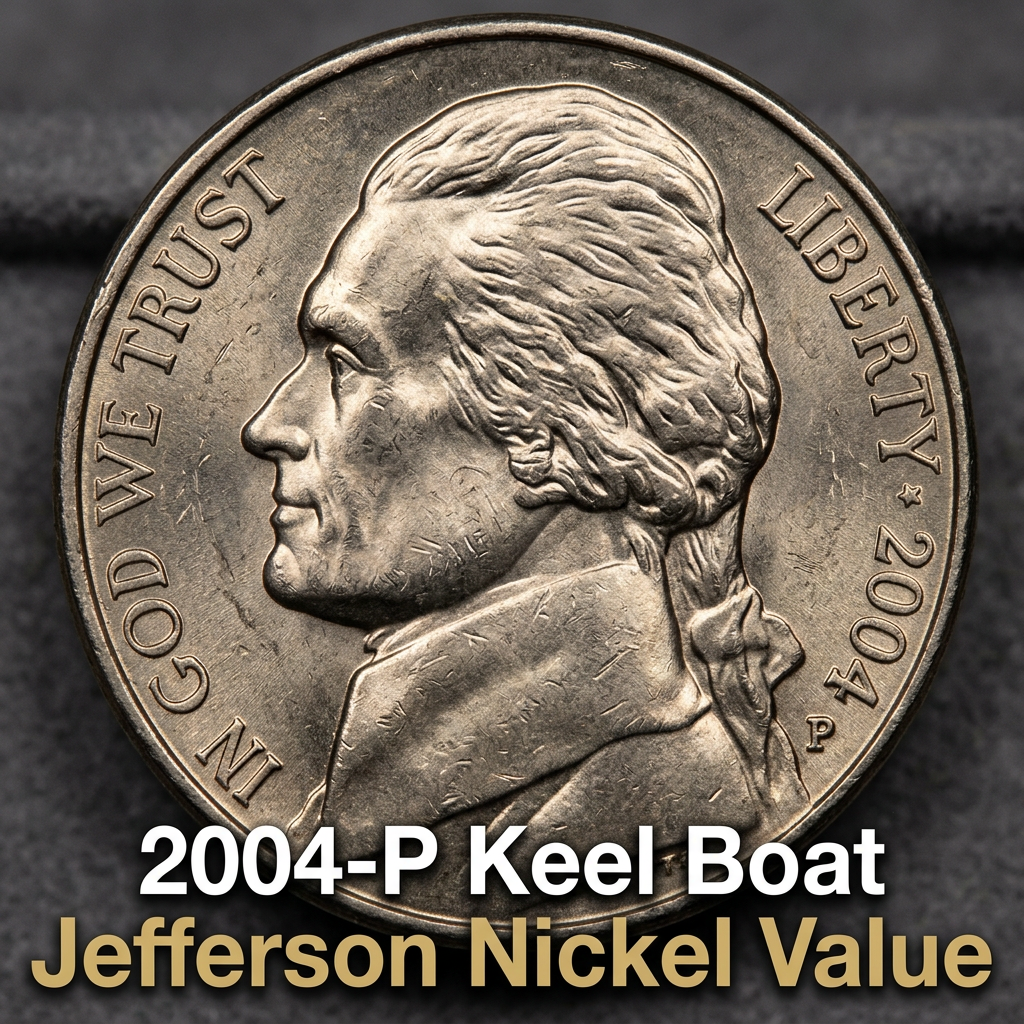
2004 P Keel Boat Jefferson Nickel Value and History Guide
The 2004-P Keel Boat Jefferson Nickel is worth anywhere from its face value of $0.05 in circulated condition to over $1,200 for high-grade specimens in pristine mint state. If you have found one of these unique nickels in your change, you are looking at a special piece of American history.
What Makes the 2004 P Keel Boat Nickel Special
The 2004-P Keel Boat nickel was the second of four designs released as part of the Westward Journey Nickel Series. This series was commissioned by the U.S. Mint to commemorate the bicentennial of the Louisiana Purchase and the Lewis and Clark expedition. Unlike the traditional Monticello reverse we saw for decades, this coin features a detailed depiction of the keel boat that transported the Corps of Discovery through the rivers of the American West.
Because these coins were minted in huge quantities—over 360 million at the Philadelphia mint alone—most of the ones you find in your pocket change today are only worth five cents. However, the numismatic community looks for specific quality markers. If you are unsure if your coin is a common circulation find or a rare gem, using a free coin identifier app can help you distinguish between a beat-up nickel and a high-grade specimen.
Collectors often use the CoinKnow app to keep track of their Westward Journey sets. While billions of nickels circulate every year, the 2004 designs were a breath of fresh air for the public, leading many people to set them aside in jars and piggy banks, which has actually kept the supply of high-grade coins relatively high.
Understanding the Market Value of 2004 P Nickels
When determining vertical value, the “P” mint mark under the date tells us the coin was struck in Philadelphia. For everyday Americans, the most important factor is the “Grade.” A coin that has been clinking around with keys and other change will show scratches and dullness, making it worth face value. However, coins that were tucked away immediately after being minted can fetch a premium.
For those looking for specific data, the 2004-P Keel Boat Nickel price chart shows that coins hitting the MS67 grade offer a significant jump in profit. While an MS65 (typical uncirculated) might sell for $5 to $10, an MS67 or higher can reach hundreds of dollars at auction because they are exceptionally rare in such perfect condition.
To get an instant estimate on your collection, the CoinKnow app allows you to photograph your coins and compare them against auction records. This is particularly helpful for the Westward Journey series where subtle luster differences change the price significantly. You can also view comprehensive 2004 Jefferson Nickel value information to see how the Keel Boat design compares to the “Peace Medal” design released earlier that same year.
| Condition / Grade | Estimated Market Value |
|---|---|
| Circulated (Average Wear) | $0.05 – $0.10 |
| Uncirculated (MS60 – MS63) | $1.00 – $3.00 |
| Choice Uncirculated (MS65) | $8.00 – $15.00 |
| Gem Uncirculated (MS67) | $40.00 – $100.00 |
| Superb Gem (MS68+) | $400.00 – $1,200.00+ |
Mint Errors to Look For in the Keel Boat Series
If you want to find the real “treasures” in your change, you need to look for errors. Because the U.S. Mint produces coins at such high speeds, mistakes happen. For the 2004-P Keel Boat nickel, collectors look for “die cracks” or “cuds,” which look like raised blobs of extra metal on the surface of the coin.
Another common error is the “Double Die,” where the letters or numbers appear to have a faint ghost image or shadow. These errors can turn a five-cent coin into a fifty-dollar coin instantly. If you think you’ve spotted an error, many hobbyists use the CoinKnow app to verify the error type before sending it to a professional grading service like PCGS or NGC.
It is also worth checking the “Full Steps” on the reverse. Historically, Jefferson nickels are valued higher if the steps on Monticello are clearly defined. Since the Keel Boat design does not feature the building, collectors instead look for complete detials in the rigging of the boat and the oars. Sharp, crisp strikes are much more valuable than mushy or weak strikes.
How to Store and Protect Your 2004 Nickels
If you discover a 2004-P Keel Boat nickel that looks incredibly shiny and scratch-free, stop touching it with your bare fingers! The oils from your skin can cause permanent damage and discoloration over time. Instead, handle the coin by its edges or wear cotton gloves.
The best way to preserve the value of your Keel Boat nickel is to place it in a PVC-free plastic flip or a cardboard 2×2 holder. Storing them in a cool, dry place prevents “toning” (changing color), which some collectors love but others avoid. For most people who find these in circulation, the value is sentimental or educational, but for the lucky few who find an error or a high-grade gem, proper storage is the difference between a big payday and a missed opportunity.
Q: Is the 2004 Keel Boat nickel rare?
A: No, it is not rare in a general sense, as over 700 million were minted across both the Philadelphia and Denver mints. However, it is rare to find one in perfect, uncirculated condition or with a significant mint error.
Q: Where is the mint mark on a 2004 Keel Boat nickel?
A: The mint mark is located on the obverse (front) of the coin, just below the date “2004.” A “P” indicates it was minted in Philadelphia, and a “D” indicates Denver.
Q: Can I spend a 2004 Keel Boat nickel at the store?
A: Yes, it is legal tender and worth five cents. Most coins found in circulation today have enough wear that they are only worth their face value, so you can spend them without worry unless they look brand new or have an obvious error.
