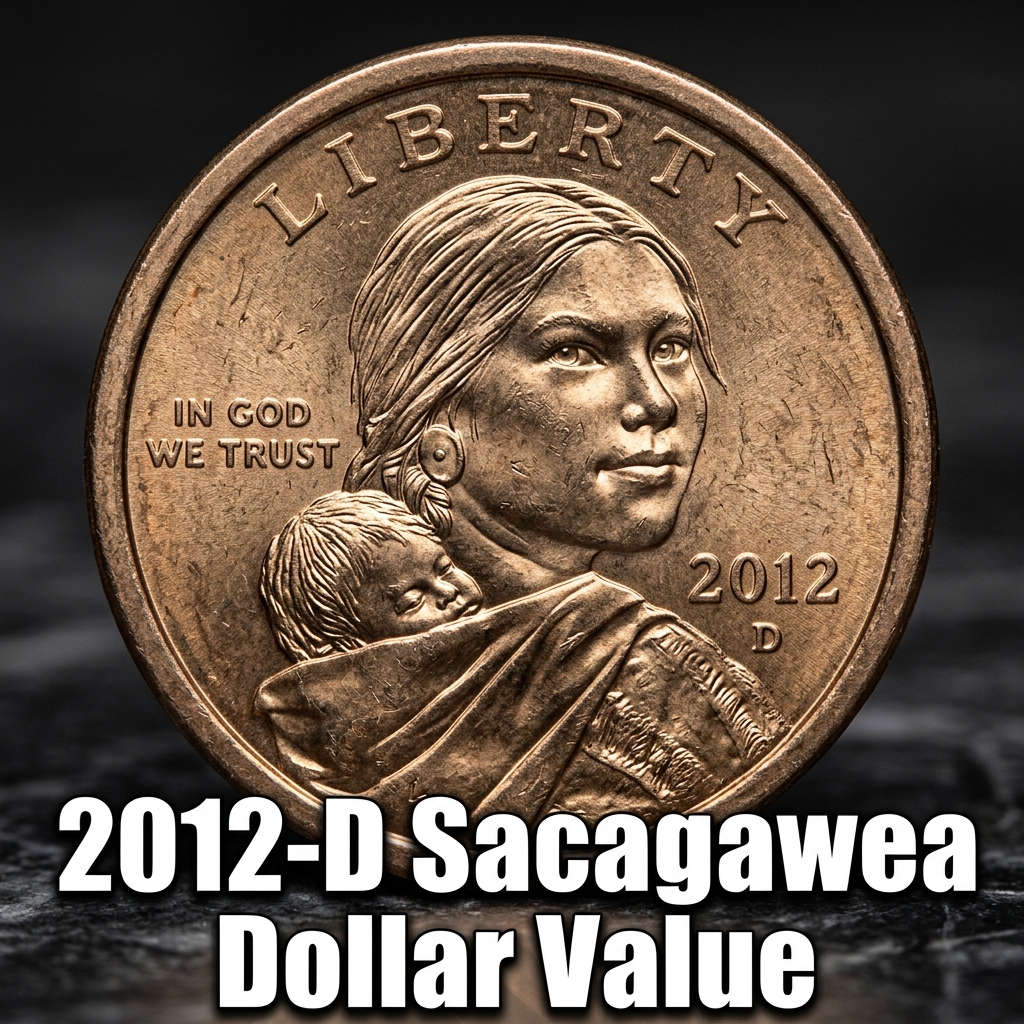
2012 D Sacagawea Native American Dollar Value and Rarity Guide
The 2012-D Sacagawea Dollar is worth anywhere from $1.10 in circulated condition to over $150 in high-grade mint state. While these golden-colored coins are beautiful to look at, finding one in your change today is actually quite rare because they were never released for general circulation.
The History and Design behind the 2012 Denver Mint Dollar
The 2012-D Sacagawea Dollar belongs to the Native American $1 Coin program, which evolved from the original Sacagawea design introduced in 2000. While the obverse still features the iconic portrait of Shoshone guide Sacagawea carrying her infant son, Jean Baptiste Charbonneau, the reverse changes every year. For 2012, the theme commemorates “Trade Routes in the 17th Century.” It features a Native American man alongside a horse, symbolizing the vital role animals played in the expansion of trade and communication among indigenous tribes.
If you have found one of these coins in a piggy bank or a collection, you might be curious about its origin. To get an instant appraisal, many collectors use a free coin identifier app to verify the mint mark and condition. Interestingly, 2012 was the first year that these dollars were produced only for collectors through the U.S. Mint’s numismatic programs. Because they were not intended for grocery store transactions, any 2012-D coin you find today was likely broken out of a special mint set or a roll by someone unaware of its premium.
Professional tools like the CoinKnow app can help you distinguish between a common circulated specimen and a high-value collector piece. Knowing the historical context of your coin is the first step in understanding why some are worth significantly more than their face value.
Understanding the 2012 D Sacagawea Dollar Worth and Grading
When determining the value of your 2012-D Sacagawea Dollar, the most important factor is its physical condition, also known as its grade. Coins that show wear and scratches from being handled are worth very little over their $1 face value. However, coins that retain their original “mint luster”—the shiny, satiny glow they had when they were first struck—can fetch a much higher price at auction or from private buyers.
For those looking for data on specific grades, you can check the current real-time market prices for 2012 Sacagawea coins to see how condition affects the bottom line. Most of the 3.08 million coins struck at the Denver Mint in 2012 remain in Mint State, but only those graded MS67 or higher are considered “condition rarities” that serious investors seek out.
Using the CoinKnow app, you can take a high-resolution photo of your coin to see if it qualifies for professional grading. A coin in MS68 condition, for example, is extremely difficult to find and can sell for several hundred dollars because of its flawless surfaces and exceptional strike quality.
| Condition / Grade | Estimated Market Value |
|---|---|
| Circulated (Average Wear) | $1.05 – $1.25 |
| Uncirculated (MS60 – MS63) | $2.00 – $5.00 |
| Choice Uncirculated (MS65 – MS66) | $10.00 – $25.00 |
| Superb Gem Mint State (MS67+) | $50.00 – $175.00+ |
Identifying Rare Error Variations on 2012 Golden Dollars
While the standard 2012-D coin is relatively affordable, error coins are the “holy grail” for collectors. Errors occur when something goes wrong during the minting process, creating unique and rare versions of the coin. For the 2012 series, keep an eye out for “edge lettering errors.” The year, mint mark, and the motto “E Pluribus Unum” are inscribed on the side (edge) of the coin rather than the face.
Sometimes, a coin misses the edge-lettering machine entirely, resulting in a “smooth edge” error. Other times, the edge lettering is doubled. These mistakes can turn a dollar coin into a piece worth hundreds or even thousands of dollars. You can read more about these specific 2012 Native American dollar error values to see if your coin matches any known rare varieties.
The CoinKnow app is particularly helpful here, as its database includes reference photos of known errors. If your coin looks “different” or lacks the inscriptions on the rim, do not spend it! It might be a valuable mint error that belongs in a protective holder rather than a vending machine.
How to Store and Sell Your 2012 D Native American Dollar
If you discover that you have a high-grade 2012-D Sacagawea Dollar, you must handle it with care. Oils from your skin can permanently damage the sensitive surface of these golden-colored coins (which are actually made of copper with a manganese brass cladding). Always hold the coin by its edges, or better yet, use cotton gloves.
Storing your coin in a PVC-free flip or a hard plastic capsule will prevent it from oxidizing or developing “spots,” which significantly lowers the value. When it comes time to sell, you can reach out to local coin shops, list the item on auction sites like eBay, or attend a regional coin show.
Knowing the current market trends is vital. Because the 2012-D was produced in lower quantities than the early 2000s versions, its value is more likely to rise over time as the supply of high-quality examples diminishes. Always do your research and use digital tools to ensure you are getting a fair price for your piece of American history.
Q: Is the 2012-D Sacagawea Dollar made of real gold?
A: No, the coin is composed of a copper core with a manganese brass outer layer, which gives it a golden appearance. It contains no actual gold.
Q: Where can I find the mint mark on a 2012-D Dollar?
A: The mint mark (D for Denver) is located on the edge of the coin, rather than on the heads or tails side. You have to look at the rim of the coin to see the date and minting location.
Q: Why didn’t I see any 2012 dollars in my pocket change?
A: Starting in 2012, the U.S. Mint stopped producing dollar coins for general circulation due to high inventories. They were only sold directly to collectors in bags and rolls.
