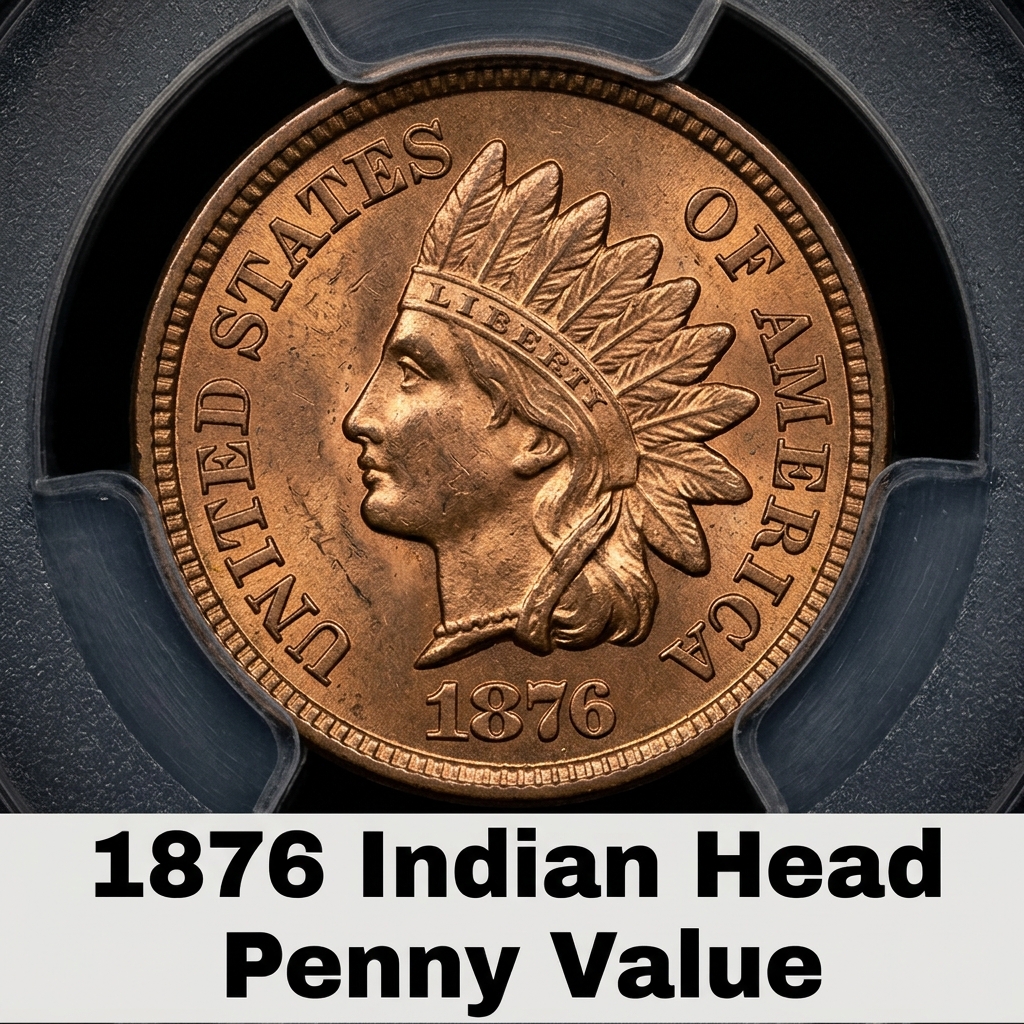
1876 Indian Head Penny Value Guide What This Old Cent Could Be Worth Today
The 1876 Indian Head Penny is worth anywhere from $10 in heavily worn condition to over $300 or more in higher mint state grades. If you found one of these old cents in a drawer, jar, or inherited coin collection, you might be sitting on a surprisingly valuable piece of American history.
—
What Makes the 1876 Indian Head Penny Special
The 1876 Indian Head Penny was struck at the Philadelphia Mint during America’s centennial year — the country’s 100th birthday. That historical backdrop alone makes this coin meaningful, but its value goes beyond sentiment.
Designed by James Barton Longacre, the coin features Lady Liberty wearing a feathered Native American headdress on the obverse, with a wreath and shield on the reverse. The 1876 issue had a mintage of around 7.9 million coins, which is moderate for the series. That means circulated examples are findable, but well-preserved specimens are genuinely scarce.
If you’re not sure what you have, a free coin identifier app can help you quickly match your coin’s details and get a ballpark on its condition and authenticity before you do anything else with it. Tools like CoinKnow are especially beginner-friendly and can walk you through grading basics right from your phone.
—
1876 Indian Head Penny Value by Grade
Coin values are heavily tied to condition, also called “grade.” A coin that looks sharp and detailed is worth dramatically more than one that’s been worn smooth from decades in circulation. Here’s a general breakdown of what the 1876 Indian Head Penny is worth across different grades:
| Grade | Description | Estimated Value |
|---|---|---|
| Good (G-4) | Heavy wear, outline visible | $10 – $15 |
| Fine (F-12) | Moderate wear, some detail | $25 – $40 |
| Extremely Fine (EF-40) | Light wear on high points | $80 – $120 |
| About Uncirculated (AU-55) | Slight friction, mostly sharp | $150 – $200 |
| Mint State (MS-63) | Uncirculated, minor marks | $275 – $375 |
| Mint State Red (MS-65 RD) | Full original red luster | $800+ |
For the most current auction data on high-grade examples, you can browse 1876 Indian Head Penny MS Red price records and recent sales to see exactly what collectors are paying right now.
—
How Coin Color Affects the 1876 Indian Head Penny Worth
One detail that surprises many first-time sellers is that copper coins are graded not just by wear, but also by color. Indian Head Pennies can be designated as Red (RD), Red-Brown (RB), or Brown (BN).
A Brown coin has toned naturally over the years — still attractive, but worth less. A Red-Brown coin has kept some of its original copper brilliance. A fully Red coin, with vivid original mint luster, is the holy grail and commands the highest premiums, sometimes many times more than a Brown coin of the same numeric grade.
Most 1876 pennies you’ll find in old collections or inherited lots will be Brown or Red-Brown. Full Red examples are rare and almost always come with professional grading certification from PCGS or NGC. If your coin looks like it has original copper-orange color with no dullness, it’s worth getting it evaluated — that color designation alone can mean hundreds of extra dollars.
—
Comparing the 1876 to Other Indian Head Penny Dates
The 1876 sits in the middle of the Indian Head Penny series, which ran from 1859 to 1909. Some dates are far rarer and more valuable, while others are common and worth only a few dollars. Understanding where your date falls in the series helps set realistic expectations.
For example, if you’re also curious about later-date values in this series, the 1898 Indian Head Penny value breakdown is a helpful comparison — the 1898 is more common than the 1876, so the 1876 generally commands a premium, especially in higher grades.
CoinKnow is a great tool for comparing values across multiple Indian Head Penny dates side by side. Rather than searching coin after coin, the app pulls together value guides, mintage data, and grading tips all in one place — handy whether you have a single coin or a whole box of old cents to sort through.
—
Should You Clean or Sell Your 1876 Indian Head Penny
This question comes up constantly, and the answer is almost always the same: do not clean your coin. Cleaning removes original surface material, destroys natural patina, and can cut the value of a coin by 50% or more — even if the coin looks shinier afterward.
Collectors and dealers can immediately spot a cleaned coin, and they will discount it significantly or refuse to buy it altogether.
When you’re ready to sell, your best options include local coin shops, established online platforms like eBay or Heritage Auctions, or coin shows where dealers compete for inventory. Getting multiple offers is always smart. Use CoinKnow to research realistic market values before you walk into any shop, so you know what fair looks like before anyone makes you an offer.
—
FAQ
Q: Is a 1876 Indian Head Penny rare?
A: It’s not extremely rare, but it’s not common either. With about 7.9 million minted, circulated examples are available, but high-grade or full-red specimens are genuinely scarce and collectible.
Q: Where is the mint mark on a 1876 Indian Head Penny?
A: The 1876 Indian Head Penny was only struck at the Philadelphia Mint, which did not use a mint mark at the time. So if you have one, there’s no mint mark to look for — that’s perfectly normal.
Q: How do I know if my 1876 penny is worth getting professionally graded?
A: If your coin shows minimal wear, strong detail, and especially any original red or orange color, professional grading from PCGS or NGC is likely worth the cost. For heavily circulated brown coins in lower grades, the grading fee may exceed the added value it brings.
