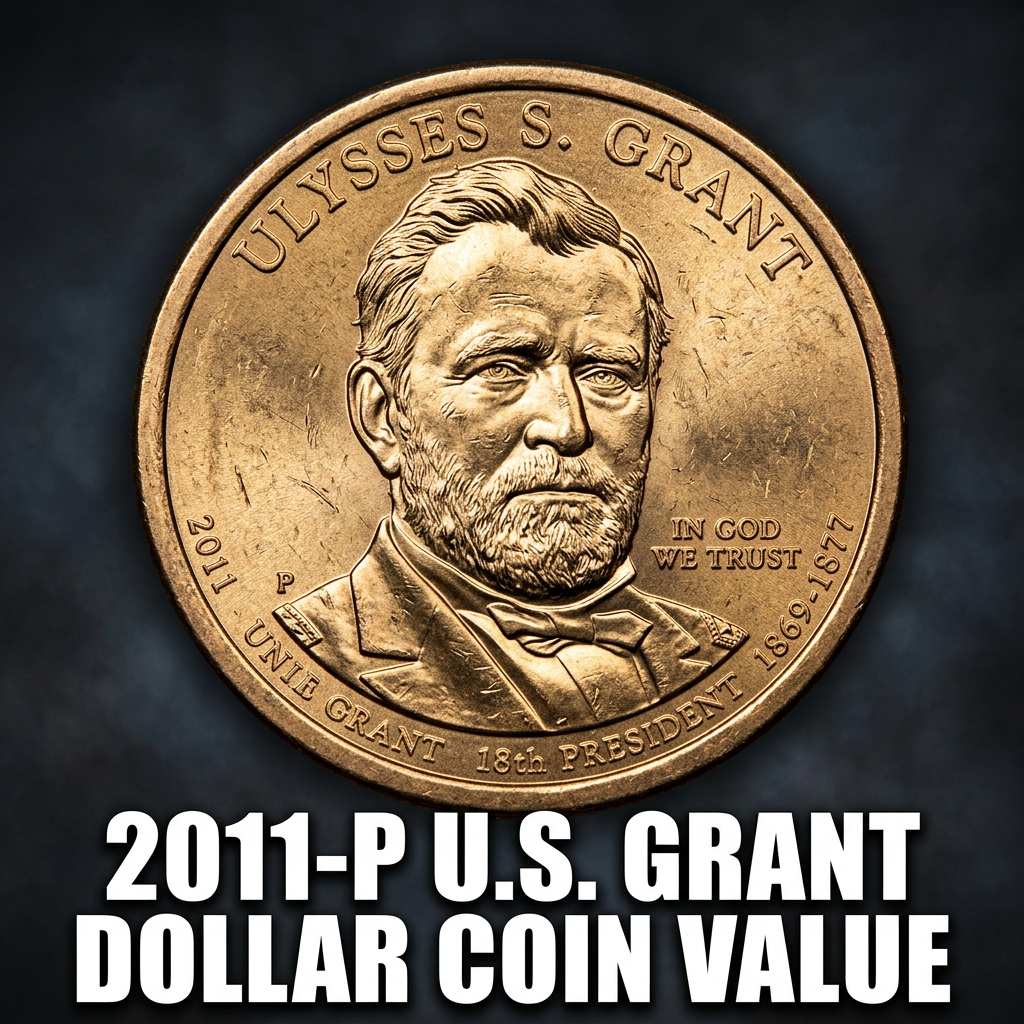
How Much is a 2011 P Ulysses S Grant Presidential Dollar Worth Today
The 2011-P U.S. Grant Dollar Coin is worth anywhere from its $1 face value in circulated condition to over $50 in high-grade mint state. While most of these golden-colored coins found in change are common, certain specimens held in private collections can fetch a surprising premium among enthusiasts.
Determining the Market Price of Your Grant Presidential Dollar
If you just discovered a shiny gold-colored coin featuring the 18th President, you are likely wondering if you have found a small fortune. For most everyday Americans, the 2011-P Ulysses S. Grant coin remains a common piece of currency. Since these were produced in the millions by the Philadelphia Mint, most coins spent in daily transactions are only worth their face value of one dollar. However, if the coin is still in its original packaging or looks like it just came off the press, you might want to use a free coin identifier app to check its specific surface quality.
The value spikes significantly when we look at “uncirculated” examples. Collectors are often willing to pay $3 to $8 for coins that have never been touched by human hands or rubbed against other metal in a pocket. If you are tech-savvy, using the CoinKnow app can help you distinguish between a coin that is simply shiny and one that truly possesses “Mint State” luster, which is crucial for determining the final price tag.
Key Features and Minting Details of the 2011 P Grant Coin
The 2011-P Grant Dollar is part of the Presidential $1 Coin Program, which ran from 2007 to 2016. The “P” mint mark located on the edge of the coin indicates it was struck at the Philadelphia Mint. Unlike older American coins where the date and mint mark are on the face, these modern dollars feature “edge-incused” lettering. This means you have to look at the rim of the coin to see the year 2011, the mint mark, and the motto “E Pluribus Unum.”
Many beginners mistake these coins for being made of real gold because of their distinct yellow hue. In reality, they are composed of a copper core with a manganese brass cladding. This unique metal composition tends to spot or turn brown quickly when exposed to the oils on your fingers. To keep your 2011 Presidential dollar value information accurate, it is vital to handle the coin only by its edges to prevent tarnishing, as “spotted” coins lose their collector appeal instantly.
Value Guide for 2011 P Ulysses S Grant Dollars
The pricing for these coins is dictated by the “MS” (Mint State) scale, which ranges from 60 to 70. A coin graded MS 65 is considered a “Gem,” while an MS 67 or higher is a rarity that collectors fight over at auctions. Most coins found in bank rolls fall into the lower MS categories.
| Condition / Grade | Estimated Market Value |
|---|---|
| Circulated (Average Condition) | $1.00 |
| Uncirculated (MS 63) | $2.50 – $4.00 |
| Choice Uncirculated (MS 65) | $8.00 – $12.00 |
| Superb Gem (MS 67+) | $45.00 – $110.00+ |
When researching the current 2011-P dollar price data, you will notice that professional grading by companies like PCGS or NGC can make a massive difference. A certified coin in a plastic slab always sells for more than a “raw” coin because the grade is guaranteed. If your coin looks perfect, the CoinKnow tool can be a great starting point to see if it is worth the cost of professional grading.
Common Errors and Rare Varieties to Look For
While the standard 2011-P Grant dollar is common, errors are where the real money is made. Collectors actively search for coins with “missing edge lettering.” Because the date and mint mark are applied in a separate step from the main design, some coins accidentally skipped the second machine. If you find a Grant dollar with a completely smooth edge, you could be looking at a coin worth $50 to $100 depending on its condition.
Another interesting aspect of the 2011 series is the variety of strike quality. Because the Philadelphia Mint was producing these in high volumes, the dies often wore down, leading to “mushy” details on Grant’s beard or hair. Coins that exhibit a very sharp, crisp strike are much more desirable. Always check the hair lines above Grant’s ear; if they are sharp and distinct, you have a high-quality strike that might push the value toward the upper end of our chart.
How to Identify and Store Your 2011 Presidential Coin
To identify this coin, look at the “heads” side (obverse) for the portrait of Ulysses S. Grant and his years in office (1869-1877). The reverse features a stunning image of the Statue of Liberty. If you believe your coin is a high-grade specimen, do not clean it. Cleaning a coin with chemicals or a cloth creates tiny scratches that professionals can see under a microscope, which can ruin the value of a potentially expensive coin.
Instead, place the coin in a cardboard flip or a plastic capsule. This protects the luster from humidity and skin oils. The CoinKnow app can help you catalog your find and keep track of price fluctuations over time. Remember that while most of these coins won’t fund a retirement, they are a fantastic piece of American history and a great way to start a family coin collection.
Q: Is the 2011 P Grant Dollar made of real gold?
A: No, the coin is made of a copper core coated with manganese brass. It contains no actual gold, despite its golden appearance.
Q: Where can I find the mint mark on my Grant Dollar?
A: Unlike most coins, the mint mark “P” is found on the edge (rim) of the coin, along with the date and the motto “E Pluribus Unum.”
Q: Are there any high-value errors for this specific year?
A: The most valuable errors for 2011 Presidential dollars are coins with missing edge lettering or “doubled edge lettering” caused by the coin passing through the edging machine twice.
