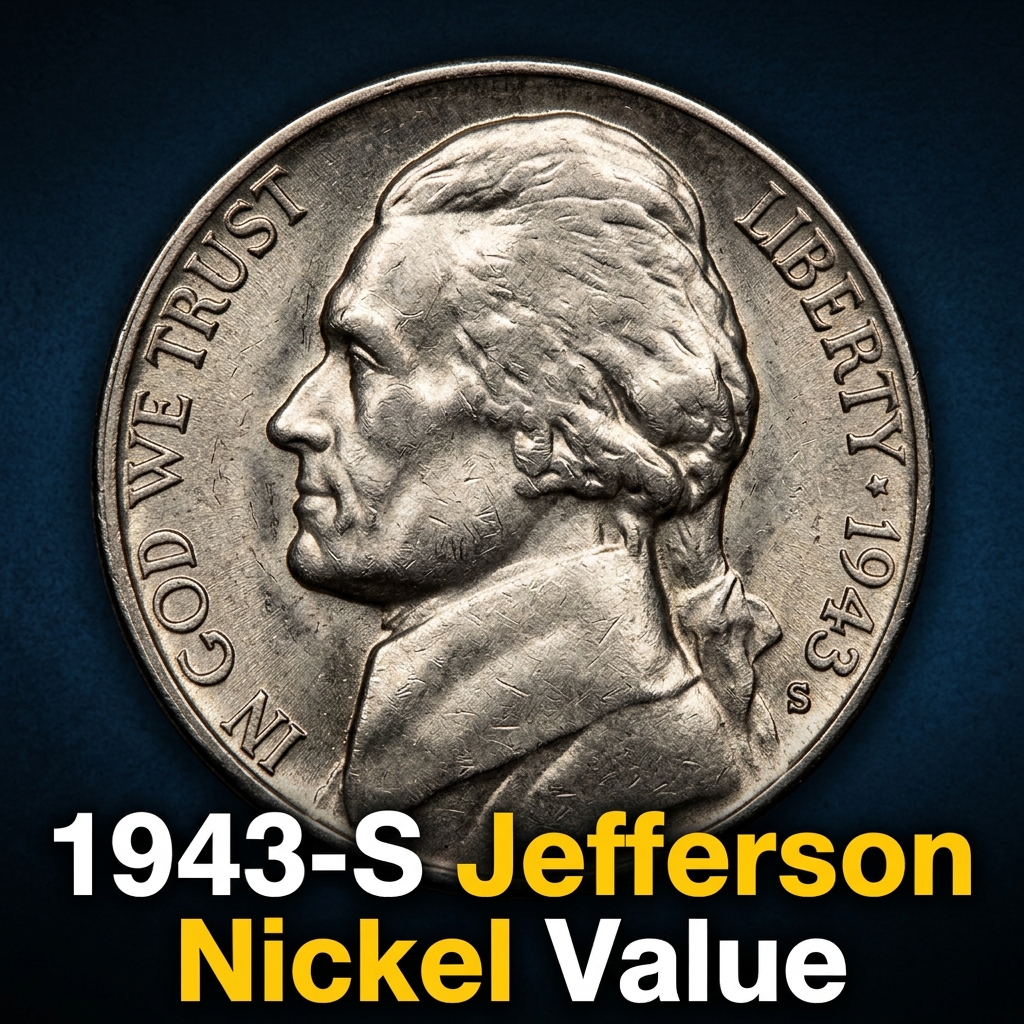
1943 S Jefferson Nickel Value Guide and History
The 1943-S Jefferson Nickel is worth anywhere from $1.50 in worn condition to over $1,200 in high-grade mint state. Finding one of these in your change is an exciting moment for any casual collector because it represents a unique era in American history when coins were made with precious silver.
Identifying the 1943-S Silver War Nickel
If you have just discovered a dull, slightly greasy-feeling nickel from the 1940s, you might be holding a piece of World War II history. During the war, nickel was a critical material used for armor plating and other military supplies. To save this metal for the front lines, the U.S. Mint changed the composition of the five-cent piece. From 1942 to 1945, nickels were struck in 35% silver, 56% copper, and 9% manganese. Because of this metal content, even a heavily circulated coin is worth more than its face value today based on the silver price alone. To find professional help identifying your coins, you can use a free coin identifier app to instantly see what you have in your hand.
Before you get too excited, check the back of the coin above the dome of Monticello. Unlike standard nickels, silver war nickels feature a large mint mark in that specific spot. A large “S” indicates it was struck at the San Francisco Mint. If you are unsure about the clarity of the mint mark, the CoinKnow app can help you zoom in and identify these small details. These silver coins often take on a darker, yellowish or blackish tarnish over time compared to the bright white of modern cupro-nickel coins, making them stand out in a handful of change.
Market Value of the 1943-S Jefferson Nickel
The value of your 1943-S nickel depends heavily on its physical condition and “eye appeal.” Most coins found in jars or old piggy banks are considered “Circulated.” These typically sell for $1.50 to $5.00 depending on the current market price of silver. However, if the coin looks like it just came from the bank—with a bright luster and no scratches—the price jumps significantly. Investors and collectors often look for the 1943 silver nickel auction results to see how much pristine examples are fetching.
For those looking for high-end collectibles, “Full Steps” (FS) versions are the prize of the series. This designation means the steps on the Monticello building are crisp and fully defined. A 1943-S with Full Steps in a high grade can easily reach several hundred dollars. If you want to track the daily fluctuations of your collection’s worth, the CoinKnow app provides real-time updates on coin market trends. You can also research the 1943-S nickel price trends to understand the premium paid for silver war coinage.
| Condition / Grade | Estimated Market Value |
|---|---|
| Circulated (Average Wear) | $1.50 – $4.00 |
| About Uncirculated (AU50) | $6.00 – $12.00 |
| Mint State (MS63) | $25.00 – $45.00 |
| Gem Mint State (MS65+) | $80.00 – $250.00 |
| Superb Gem with Full Steps | $1,000+ |
Rare Errors and Varieties to Look For
While most 1943-S nickels are worth a few dollars, certain errors can make your coin worth a fortune. The San Francisco Mint was known for high-quality production, but mistakes did happen. One of the most sought-after varieties is the “Doubled Die Obverse” (DDO). If you notice doubling in the lettering of “In God We Trust” or on the date, you might have an error coin worth hundreds of dollars. Many of these errors are difficult to see with the naked eye, which is why serious hunters use tools like CoinKnow to identify microscopic discrepancies.
Another interesting aspect of the 1943-S is the presence of lamination errors. Because the wartime alloy was a new and experimental mix of silver and manganese, the metals didn’t always bond perfectly. This sometimes resulted in the surface of the coin “peeling” or flaking off. While minor lamination doesn’t always add much value, large or dramatic “peels” can attract specialized error collectors. Always check both sides of the coin carefully before assuming it is just a standard silver nickel.
Collecting and Preserving Your Silver Nickels
Because the 1943-S Jefferson Nickel contains silver, it is softer than the standard nickel-copper coins we use today. This means it scratches easily. If you find one, avoid cleaning it! Cleaning a coin with chemicals or a cloth can actually strip away its numismatic value, even if it looks “shinier” afterward. Natural toning—the colorful oxidation that happens over time—is actually preferred by many collectors and can increase the price.
Storing your coin in a PVC-free flip or a specialized coin album is the best way to maintain its current state. Many everyday Americans have started “roll hunting,” where they buy boxes of nickels from the bank specifically to look for these silver war nickels. It is a fun and low-cost hobby that can occasionally yield a high-value find. Keeping your collection organized digitally with an app is a great way to monitor your progress as you find more of these wartime treasures.
Q: How can I tell if my 1943 nickel is silver?
A: Check the back of the coin. If there is a large letter (P, D, or S) above the building, it is a silver war nickel consisting of 35% silver. All nickels dated 1943 are silver.
Q: Is a 1943-S nickel worth more than a 1943-P?
A: Generally, they are similar in value for circulated grades. However, the 1943-S had a lower mintage than the 1943-P, making it slightly more desirable for collectors in high-grade or “Full Steps” condition.
Q: Should I sell my silver nickels now or wait?
A: The value of these coins is tied to both the price of silver and the collector market. If silver prices rise, the “melt value” of the coin goes up, but high-grade specimens usually appreciate steadily over time regardless of silver prices.
