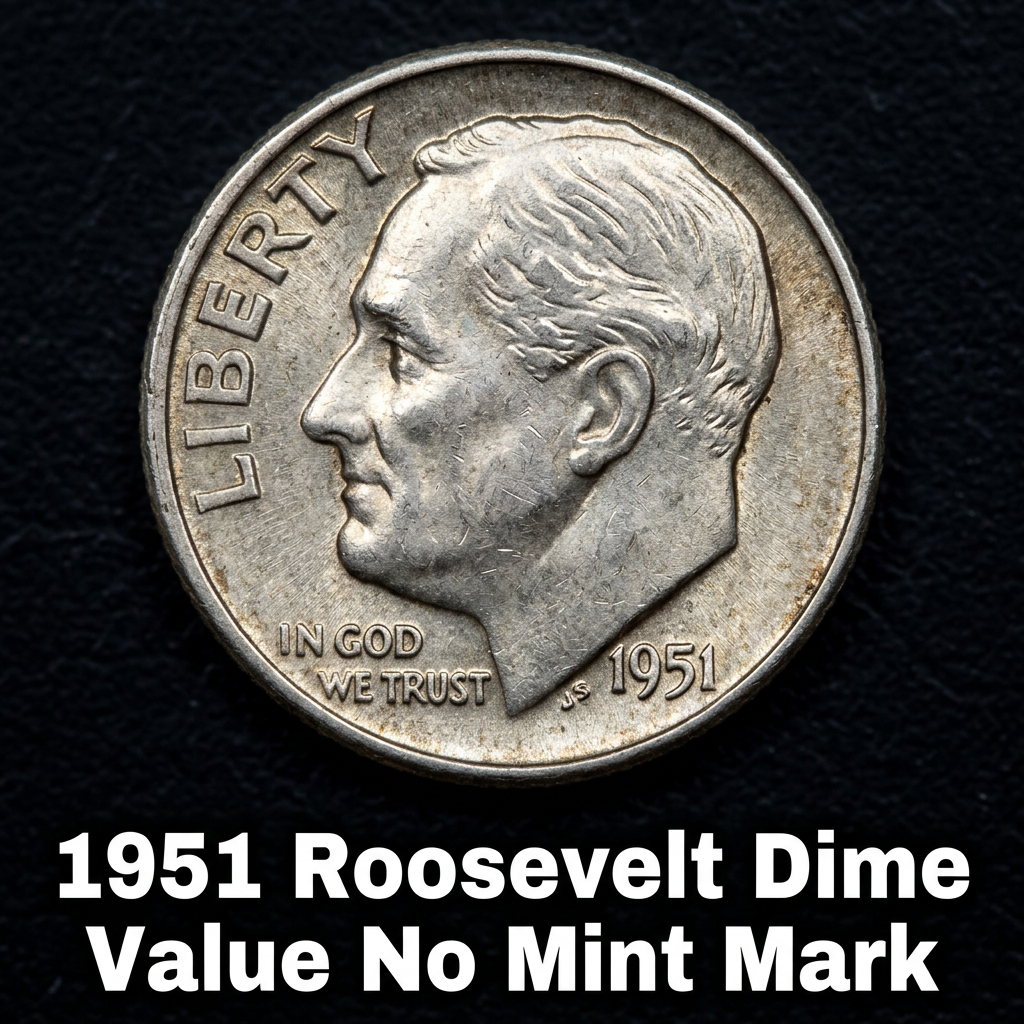
1951 Roosevelt Dime Value No Mint Mark What It’s Really Worth Today
The 1951 Roosevelt Dime with no mint mark is worth anywhere from $2 in heavily worn condition to over $50 or more in uncirculated grades — and if you’ve got one in pristine mint state, it could be worth significantly more. Whether you found this little silver dime in a jar, a drawer, or tucked inside an old wallet, you’re in the right place to find out exactly what it’s worth.
What Makes the 1951 Roosevelt Dime Special
The 1951 Roosevelt Dime was struck at the Philadelphia Mint, which is why it carries no mint mark — Philadelphia coins from this era didn’t use one. This coin is part of the Roosevelt Dime series, which began in 1946 following the death of President Franklin D. Roosevelt.
One of the most important things to know right away: this coin is made of 90% silver. That alone gives every 1951 no mint mark dime real melt value, regardless of condition. Even a heavily circulated coin is worth more than face value simply because of its silver content.
If you’re not sure what you’ve got, a free coin identifier app can help you quickly confirm the coin’s year, mint mark (or lack of one), and estimated value — right from your phone.
How Much Is the 1951 Roosevelt Dime Worth Today
Value depends heavily on condition. A coin that has been in circulation for decades will show wear on the high points — Roosevelt’s cheek, hair details, and the torch design on the reverse. These details matter a lot to collectors.
Here’s a quick breakdown of typical values:
| Grade | Description | Estimated Value |
|---|---|---|
| Good (G-4) | Heavy wear, design visible | $2 – $3 |
| Fine (F-12) | Moderate wear, clear details | $3 – $4 |
| Extremely Fine (EF-40) | Light wear on high points | $4 – $6 |
| Uncirculated (MS-63) | No wear, some bag marks | $12 – $20 |
| Gem Uncirculated (MS-65) | Sharp strike, minimal marks | $30 – $55+ |
| MS-67 Full Bands | Rare high grade with full bands | $200+ |
For a more detailed look at 1951 Roosevelt Dime prices across all mint state grades, it’s worth checking certified auction records to see what buyers are actually paying today.
The Full Bands Designation and Why It Matters
You may come across the term “Full Bands” (FB) when researching this coin. This refers to the horizontal bands on the torch design on the reverse side of the dime. When those bands are sharply and completely struck with no blending, the coin receives a Full Bands designation — and that can dramatically increase its value.
A standard MS-65 1951 no mint mark dime might sell for around $30–$55. But an MS-65 Full Bands example can command $100 or more. At the top of the grading scale, an MS-67 Full Bands coin has sold for several hundred dollars at auction.
This is why condition and strike quality are so critical for Roosevelt Dimes specifically. Two coins that look similar to the untrained eye can differ wildly in value based on these fine details. CoinKnow is a great tool for learning how to spot these differences before you head to a dealer or auction.
Silver Value and Its Role in 1951 Dime Pricing
Even if your 1951 Roosevelt Dime is worn smooth, it still has real value because of its silver content. Each dime contains approximately 0.0723 troy ounces of pure silver. When silver prices are around $25–$30 per ounce, the melt value of your coin is roughly $1.80–$2.20.
That means even the most beat-up example is still worth more than 10 cents. Most dealers will pay at least melt value for circulated silver dimes, and many coin shops buy them in bulk from people cleaning out old collections.
If you’re sitting on a roll or bag of old Roosevelt Dimes, CoinKnow can help you sort through them quickly to identify which ones might be worth grading and which are better sold for silver. It’s a smart first step before visiting a coin dealer.
For a comprehensive overview of 1951 Roosevelt Dime value across all mint marks and grades, including the Philadelphia, Denver, and San Francisco issues, you’ll find current market data that reflects real collector demand.
Tips for Selling or Holding Your 1951 No Mint Mark Dime
If your coin appears uncirculated or close to it, consider getting it professionally graded by PCGS or NGC before selling. A certified grade adds buyer confidence and can significantly increase what you’re offered.
For circulated coins, your best options are local coin shops, online marketplaces like eBay, or coin shows. Silver dimes in any condition have a reliable buyer base because of their precious metal content.
Hold onto any coins that show sharp, well-defined details — especially the Full Bands on the torch. These are the ones with real upside potential in the collector market. And if you’re new to all of this, using CoinKnow as a starting point is one of the easiest ways to understand what you have before making any decisions.
—
FAQ
Q: Is the 1951 Roosevelt Dime with no mint mark rare?
A: Not particularly. The Philadelphia Mint produced over 103 million of these dimes in 1951, making it a common date in circulated grades. However, high-grade examples — especially those with Full Bands — are genuinely scarce and valuable.
Q: How do I know if my 1951 dime is silver?
A: If it was made before 1965 and is a Roosevelt Dime, it is 90% silver. You can confirm by looking at the edge — silver dimes have a solid silver edge with no copper stripe running through the middle.
Q: Where’s the mint mark on a 1951 Roosevelt Dime?
A: On 1951 dimes, the mint mark appears on the reverse side above the “E” in “ONE.” If there’s no letter there, the coin was made in Philadelphia. A “D” means Denver and an “S” means San Francisco. Philadelphia coins from this period intentionally carried no mint mark.
