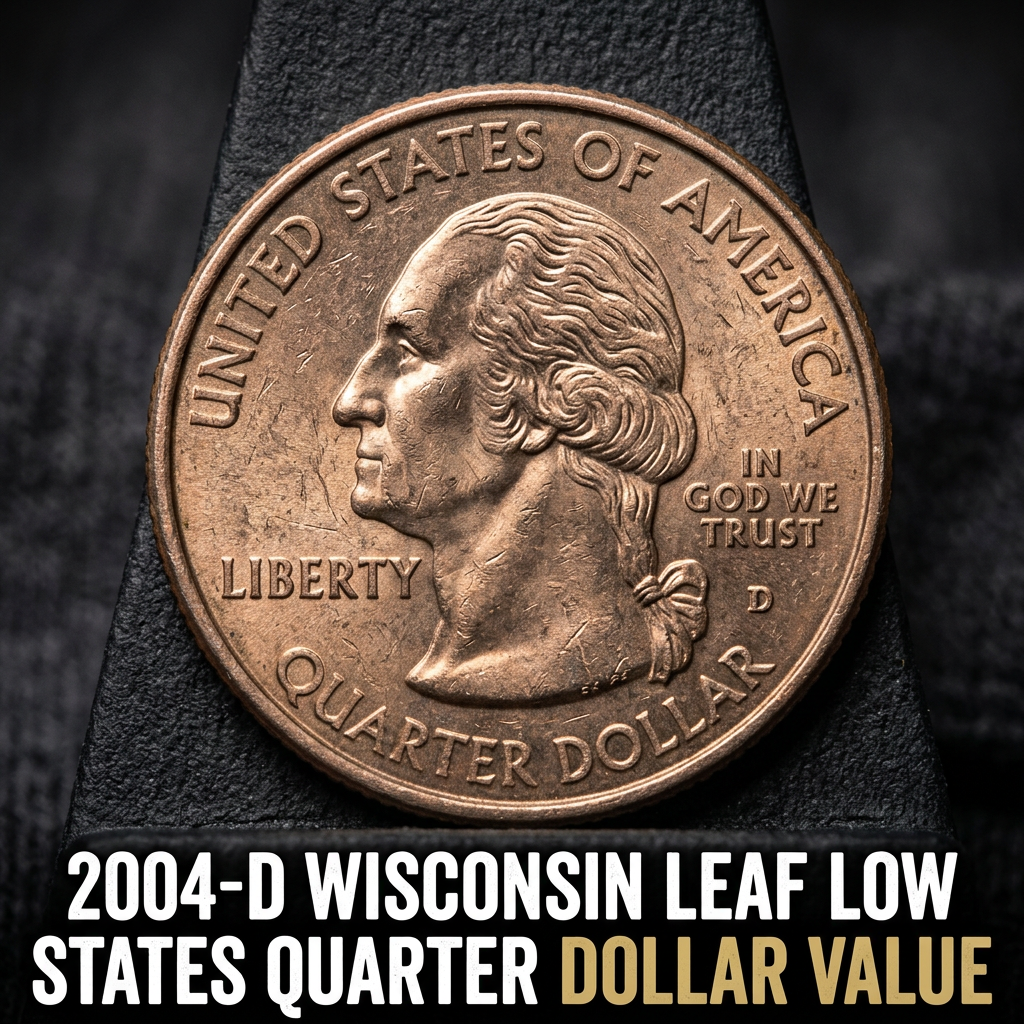
How Much Is a 2004 D Wisconsin Low Leaf Quarter Worth Today
The 2004-D Wisconsin Leaf Low States Quarter Dollar is worth anywhere from $50 in circulated condition to over $1,500 in pristine mint state grades. If you have just discovered this unique coin in your pocket change, you might be holding one of the most famous modern “error” coins in American history.
What Is the 2004-D Wisconsin Extra Low Leaf Variety
The 2004 Wisconsin State Quarter was part of the United States Mint’s highly successful 50 State Quarters Program. Under normal circumstances, these coins depict a cow, a round of cheese, and an ear of corn. However, a small number of coins struck at the Denver Mint featured a mysterious “extra leaf” on the corn stalk. On the “Low Leaf” variety, this extra line appears below the left-side leaf, seemingly pointing toward the cheese.
Many collectors believe this was a deliberate addition by a mint employee, though the official stance remains that it was a die defect. Regardless of how it happened, the rarity was caught quickly by the numismatic community, sparking a massive hunting craze. If you are unsure if your coin is the rare variety, you can use a free coin identifier app to zoom in on the corn stalk and compare it with known error images.
Identifying this coin requires a sharp eye. Unlike the “High Leaf” version, where the extra line is positioned higher and touches the husk, the Low Leaf is more distinct and separate from the primary design. Because these were found in circulation, many are scratched or worn, but even a dirty one is still worth significantly more than its twenty-five-cent face value. For serious collectors, the CoinKnow app can help you track these discoveries in your personal inventory.
Market Value and Pricing for the Low Leaf Quarter
The value of the 2004-D Wisconsin Low Leaf Quarter varies wildly based on its physical condition. Most coins found in change are “circulated,” meaning they show signs of wear, lost luster, or scratches. These typically sell for $40 to $80. However, if the coin is “uncirculated”—meaning it looks as fresh as the day it was minted—the price can jump into the hundreds or even thousands.
Professional grading by services like PCGS or NGC is essential for maximizing the value of high-end specimens. A grade of MS67 is exceptionally rare for this variety and can command prices north of $1,000 at major auctions. When researching the market, you can find current auction results for high-grade 2004 quarters to see what the most recent sales have fetched.
It is important to remember that markets fluctuate. While the initial “hype” of 2004 has settled, the Wisconsin Low Leaf remains a stable “must-have” for state quarter enthusiasts. To stay updated on the latest market trends and shifts in collector demand, many hobbyists rely on the CoinKnow app to receive real-time updates on modern error coins.
| Condition / Grade | Estimated Market Value |
|---|---|
| Circulated (Average Wear) | $45 – $75 |
| About Uncirculated (AU55-AU58) | $90 – $150 |
| Mint State (MS63-MS65) | $200 – $450 |
| Choice Mint State (MS66+) | $600 – $1,500+ |
Comparing the Low Leaf vs High Leaf Scarcity
When searching through your 2004 quarters, you might come across another version called the “High Leaf.” While both are valuable, they are two distinct errors. The High Leaf version features an extra mark that touches the upper leaf and points upward. Generally, the Low Leaf version is considered slightly more common than the High Leaf, but it is actually more popular among casual collectors because the “extra leaf” is easier to see without a magnifying glass.
Historical price data shows that both varieties often move in tandem. If one goes up in value, the other usually follows. For those interested in deeper research, you can look up specific detailed 2004 Wisconsin error price guides to see the historical price gap between the two. Collecting both is often the goal for serious numismatists looking to complete a “Master Set” of State Quarters.
Don’t forget to check the mint mark! The extra leaf errors are exclusively found on quarters with the “D” mint mark, signifying they were produced in Denver. If you find a quarter from the Philadelphia mint (“P”) or San Francisco (“S”), it will not have this specific error, though it may have other interesting characteristics worth noting in your CoinKnow digital collection.
How to Sell Your Rare Wisconsin Quarter
If you believe you have found a 2004-D Wisconsin Low Leaf Quarter, your first step should be protection. Place the coin in a PVC-free plastic holder or a cardboard flip to prevent further damage. Even a tiny fingerprint can lower the grade and the selling price. Since this is a modern coin, buyers are very picky about the “eye appeal.”
Selling your coin can be done through local coin shops, online marketplaces, or specialty auctions. For lower-grade circulated coins, eBay is often the most convenient route. For high-grade specimens that appear flawless, it is highly recommended to get them professionally certified before selling. This third-party verification provides buyers with the confidence they need to pay a premium price.
Finally, always do your homework before accepting an offer. Knowledge is power in the coin world. By tracking recent sales and understanding the nuances of the Low Leaf variety, you ensure that you aren’t leaving money on the table. This coin is more than just change—it’s a piece of modern American history that represents one of the most intriguing errors ever to leave a US Mint facility.
Q: Can I still find the Wisconsin Low Leaf quarter in my change?
A: Yes, although it is becoming increasingly rare. Most of these coins were pulled from circulation within a few years of their release, but they still occasionally turn up in jars of change or rolls from the bank.
Q: Is every 2004 Wisconsin quarter worth money?
A: Unfortunately, no. The standard 2004 Wisconsin quarter without the extra leaf is only worth twenty-five cents in circulated condition. Only the “High Leaf” and “Low Leaf” varieties carry a significant premium.
Q: How can I tell for sure if my coin is a “Low Leaf” error?
A: Look at the left side of the corn stalk, just above the cheese wheel. If you see a distinct curved line that looks like a small leaf pointing toward the cheese (and not touching the leaf above it), you have found the Low Leaf variety.
