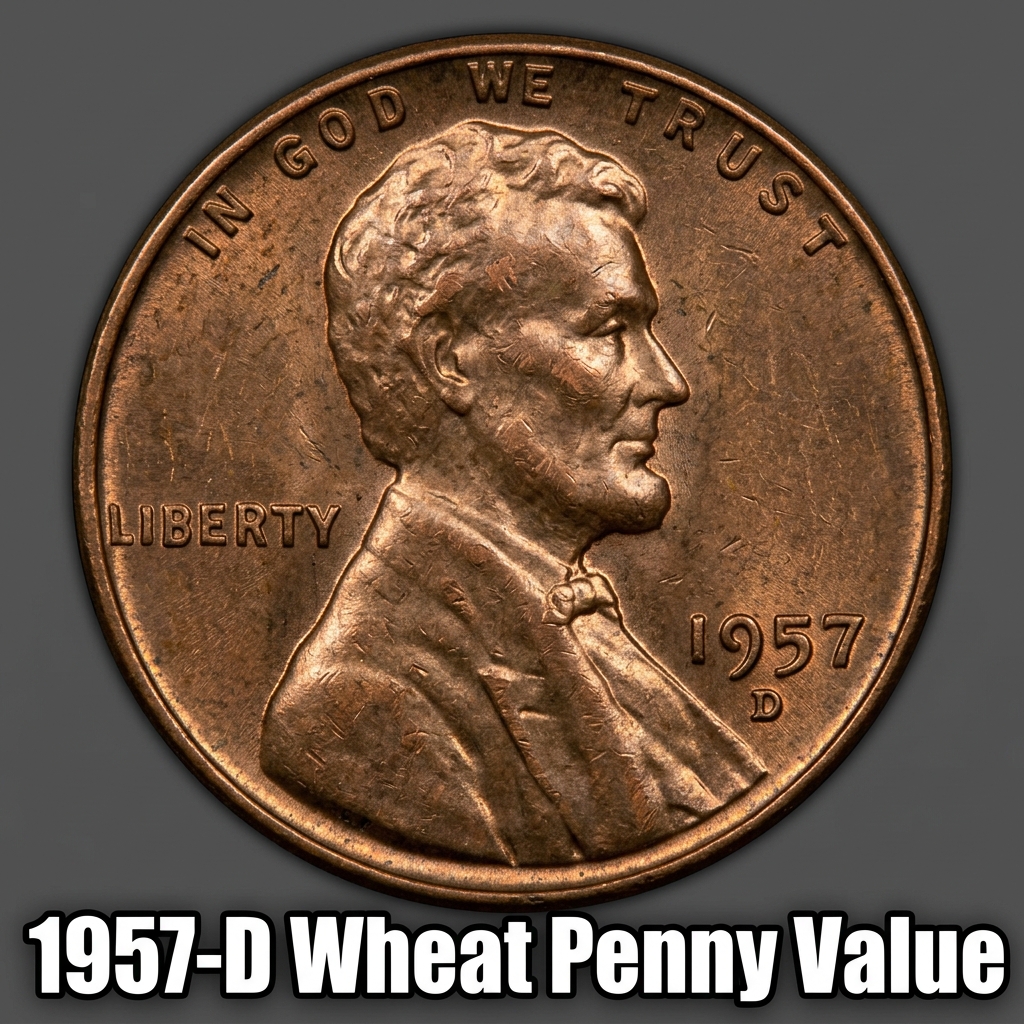
1957 D Wheat Penny Value Guide and Price Chart for Collectors
The 1957-D Wheat Penny is worth anywhere from $0.05 in circulated condition to over $500 in high-grade mint state. Whether you found a dusty copper jar in the attic or received an old penny in your pocket change, this classic Lincoln cent remains a favorite for everyday Americans looking to start a collection.
How to Determine the Value of Your 1957-D Penny
Finding an old penny with the “D” mint mark and the iconic wheat stalks on the back is always an exciting moment. While most of these coins were minted in massive quantities at the Denver Mint—over one billion, to be exact—their value depends heavily on their physical condition and color. If you are unsure about what you have, using a free coin identifier app can help you distinguish between a common spender and a valuable keepsake. Most 1957-D pennies found in circulation are considered “common date” coins, but those that have retained their original red luster can command much higher prices among enthusiasts.
When you look at your coin, check the “D” below the date, which signifies it was struck in Denver. If the coin looks brown and worn, it is likely worth its weight in copper (about 2 to 3 cents) or a small premium to a collector. However, high-quality specimens with no scratches are the ones that drive the market. To get a better sense of the market, you can check the latest 1957-D Lincoln cent market data to see what similar coins are selling for on auction sites today. Many collectors use the CoinKnow app to quickly scan their coins and get instant valuations based on current auction trends.
Understanding the 1957-D Wheat Penny Grading and Color
In the world of coin collecting, the color of a copper penny is just as important as the details on Lincoln’s face. 1957-D pennies are categorized into three color grades: Brown (BN), Red-Brown (RB), and Red (RD). A “Red” coin is one that looks like it just came off the printing press, glowing with a bright orange-copper hue. These are the most valuable. For those looking for precise technical details, you can view the current prices for 1957-D Red Wheat Pennies to see how much a “Mint State” version is worth.
If your coin has been handled frequently, it will likely be brown. While these aren’t “get rich quick” coins, they represent a piece of American history from the late 1950s. If you aren’t sure which category your coin falls into, the CoinKnow app provides a visual grading guide that helps you compare your coin to professional standards. Remember that even a small scratch or a fingerprint can drop a coin’s grade significantly, so always handle your 1957-D penny by the edges.
| Condition Grade | Estimated Value (USD) |
|---|---|
| Circulated (Average Wear) | $0.05 – $0.15 |
| About Uncirculated (AU58) | $0.50 – $1.00 |
| Mint State Brown (MS63 BN) | $2.00 – $5.00 |
| Mint State Red-Brown (MS65 RB) | $10.00 – $25.00 |
| Mint State Red (MS67 RD) | $150.00 – $600.00+ |
Valuable Errors to Look for on a 1957-D Penny
One way that a standard 1957-D Wheat Penny becomes significantly more valuable is through minting errors. During the high-speed production at the Denver Mint, things occasionally went wrong, resulting in “clipped planchets,” “off-center strikes,” or “die cracks.” These mechanical errors are highly sought after by specialists. One common thing people look for is a “BIE” error, which is a small vertical die crack that appears between the letters “B” and “E” in the word “LIBERTY,” making it look like there is an “I” in the middle.
Another interesting anomaly is the “re-punched mint mark” (RPM). This happens when the punch used to place the “D” on the coin was struck twice, leaving a slight shadow or secondary image of the letter. To catch these tiny details, many hobbyists use the CoinKnow app’s high-resolution identification features to zoom in on the date and mint mark. While an average 1957-D penny might only be worth a few cents, a verified major error can sell for $50 to $100 or more depending on the severity of the mistake.
Is It Worth Getting My 1957-D Penny Professionally Graded?
For most people, the answer is usually no, but there are exceptions. Professional grading by companies like PCGS or NGC costs money—often between $30 and $50 per coin including shipping. If your 1957-D penny is brown or shows signs of wear, the cost of grading will be much higher than the value of the coin itself. However, if you find a coin that looks absolutely perfect, with deep red color and no visible marks even under a magnifying glass, it could potentially be worth hundreds.
Collectors typically only grade 1957-D pennies if they believe the coin will achieve a grade of MS66 or higher. At these elite levels, the scarcity of the coin increases dramatically. Before spending money on professional services, try using a digital tool to get a “ballpark” estimate. Keeping your pennies in protective flips or cardboard holders is a great way to preserve their value for the future without spending a fortune on grading.
Q: How can I tell if my 1957-D penny is rare?
A: A 1957-D penny is generally not rare because over 1 billion were made. However, it is considered rare if it is in “Red” Mint State condition (MS67 or higher) or if it features a significant mint error like an off-center strike.
Q: What does the “D” stand for on a 1957 penny?
A: The “D” stands for the Denver Mint. Pennies from 1957 with no letter under the date were minted in Philadelphia. Generally, Philadelphia and Denver pennies from this year have similar values.
Q: Are 1957 Wheat Pennies made of gold?
A: No, 1957-D Wheat Pennies are made of 95% copper and 5% tin and zinc. They sometimes have a bright orange shine that can be mistaken for gold, but they are strictly copper coins.
