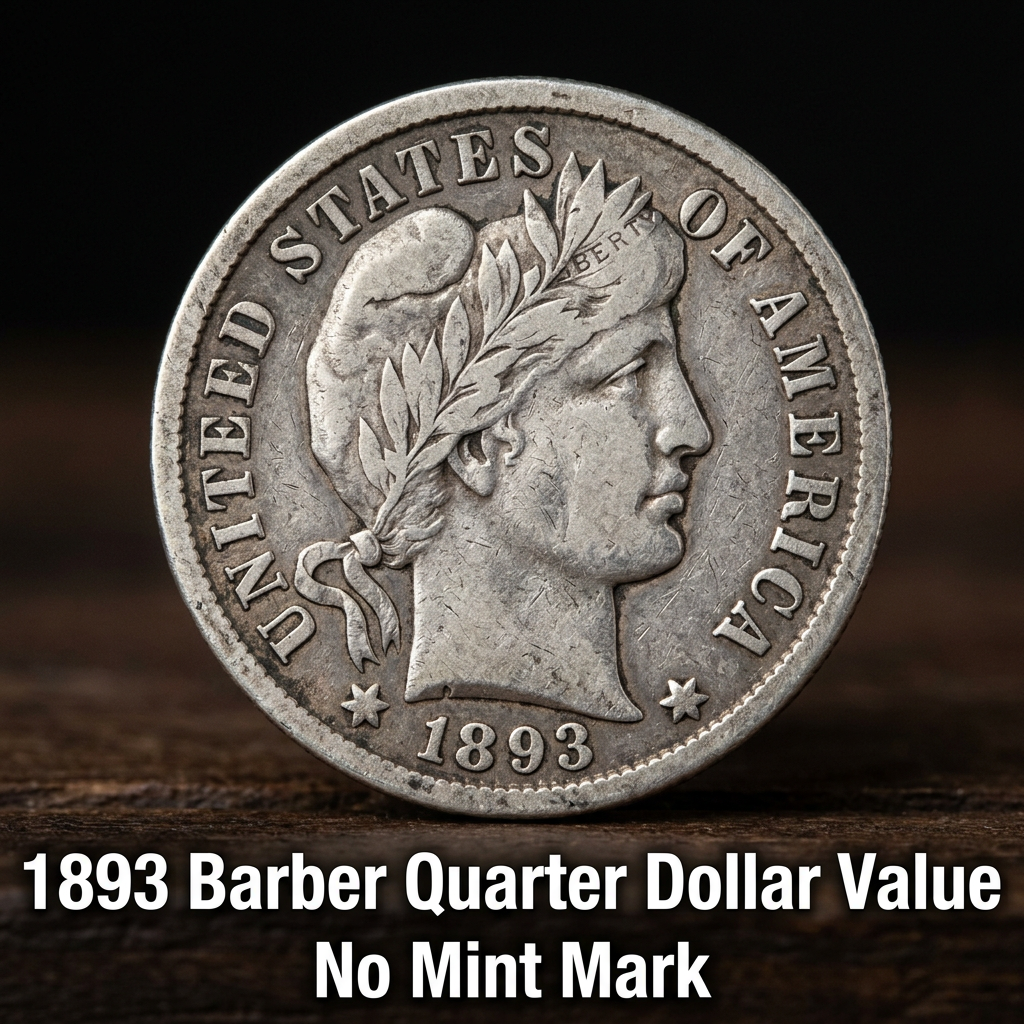
1893 Barber Quarter Dollar Value Guide and Price Chart for Coins with No Mint Mark
The 1893 Barber Quarter is worth anywhere from $15 in heavily worn condition to over $600 in high-grade uncirculated mint state. Finding one of these classic silver coins in your pocket change or an old family collection is an exciting discovery that connects you directly to 19th-century American history.
History and Identification of the 1893 Philadelphia Barber Quarter
The 1893 Barber Quarter was designed by Charles E. Barber, who served as the Chief Engraver of the US Mint. This specific coin features a stoic Lady Liberty on the obverse and a heraldic eagle on the reverse. If you are looking at your coin and cannot find a small letter below the eagle’s tail, it means it was struck at the Philadelphia Mint. At the time, Philadelphia was the main minting facility and did not use mint marks. Identifying your coin correctly is the first step in determining its market value. While millions were minted, many were lost to heavy circulation or melted down for their silver content over the last 130 years.
If you aren’t sure about the condition or authenticity of your find, using a free coin identifier app can help you get immediate clarity. Many collectors today rely on the CoinKnow app to quickly scan their coins and get a ballpark estimate of what they might be worth before heading to a local coin shop. Because the 1893 issue is over a century old, the silver luster is often replaced by a dark grey patina, which is perfectly normal for a coin of this age.
Understanding the 1893 Barber Quarter Grade and Condition
The value of an 1893 Barber Quarter is almost entirely dependent on its “grade,” which refers to how much wear and tear the coin has endured. Most coins found by everyday Americans are in “Good” or “Very Good” condition. In these lower grades, the word “LIBERTY” in Lady Liberty’s headband will be worn away or only partially visible. If those letters are crisp and clear, you might be holding a coin worth significantly more than the average find.
As you evaluate your collection, you might also be interested in other denominations from the same era, such as the 1893 silver dollar value details which often fetch much higher prices due to their larger silver content. For the Barber Quarter, collectors look at the fine details in the eagle’s feathers on the back. If the feathers are distinct, the coin is likely in “Extremely Fine” or “About Uncirculated” condition, which sees a massive jump in price.
Current Market Value and Price Chart for 1893 Quarters
When pricing your 1893 Barber Quarter with no mint mark, you must consider the current demand among “type set” collectors. These are hobbyists who want one example of every coin design. Because 1893 is a relatively common year for Philadelphia, it is a popular choice for people looking to represent the Barber series in their collection. However, “common” in the world of antique silver still means the coin is worth many times its 25-cent face value.
The table below outlines the current market expectations for an 1893 Barber Quarter based on its physical condition. It is always a good idea to confirm these prices using the CoinKnow platform, as silver spot prices can fluctuate and impact the “melt value” of the coin.
| Condition / Grade | Estimated Value (USD) |
|---|---|
| Good (G-4) | $12.00 – $18.00 |
| Very Good (VG-8) | $22.00 – $30.00 |
| Fine (F-12) | $45.00 – $60.00 |
| Very Fine (VF-20) | $85.00 – $110.00 |
| Extremely Fine (EF-40) | $150.00 – $190.00 |
| Uncirculated (MS-60+) | $350.00 – $650.00+ |
Tips for Preserving Your 1893 Barber Quarter
If you find an 1893 Barber Quarter, the most important rule is: Do not clean it. Many people think that polishing an old coin to make it shiny will increase its value, but the opposite is true. Collectors value the original “skin” or patina of the metal. Scratches from cleaning brushes or chemicals can drop the value of a high-grade coin by 50% or more. Instead, keep the coin in a soft flip or a PVC-free plastic holder to prevent further wear.
For those who enjoy the hunt of coin collecting, the CoinKnow app can serve as a digital inventory for your finds. As you build your collection of Barber silver, keeping digital records and high-quality photos helps you track the total value of your investment. Remember that while the 1893 Philadelphia issue is affordable for many, it remains a 90% silver treasure that is getting harder to find in the wild every year.
Q: Is the 1893 Barber Quarter made of real silver?
A: Yes, all Barber Quarters minted between 1892 and 1916 consist of 90% silver and 10% copper. This gives them “intrinsic value” based on the price of silver, even if the coin is too worn to be highly collectible.
Q: Where is the mint mark on an 1893 quarter?
A: The mint mark is located on the back of the coin, just below the eagle’s tail feathers and above the letters “QUAR”. If the space is blank, it was minted in Philadelphia. If you see an “S” or an “O”, it was minted in San Francisco or New Orleans, respectively.
Q: How can I tell if my 1893 Barber Quarter is a rare error coin?
A: While there are no major famous errors for the 1893 P quarter, you should look for “doubled dies” or “re-punched dates” under a magnifying glass. If you see signs of a double image on the numbers or letters, your coin could be worth significantly more to a specialist.
