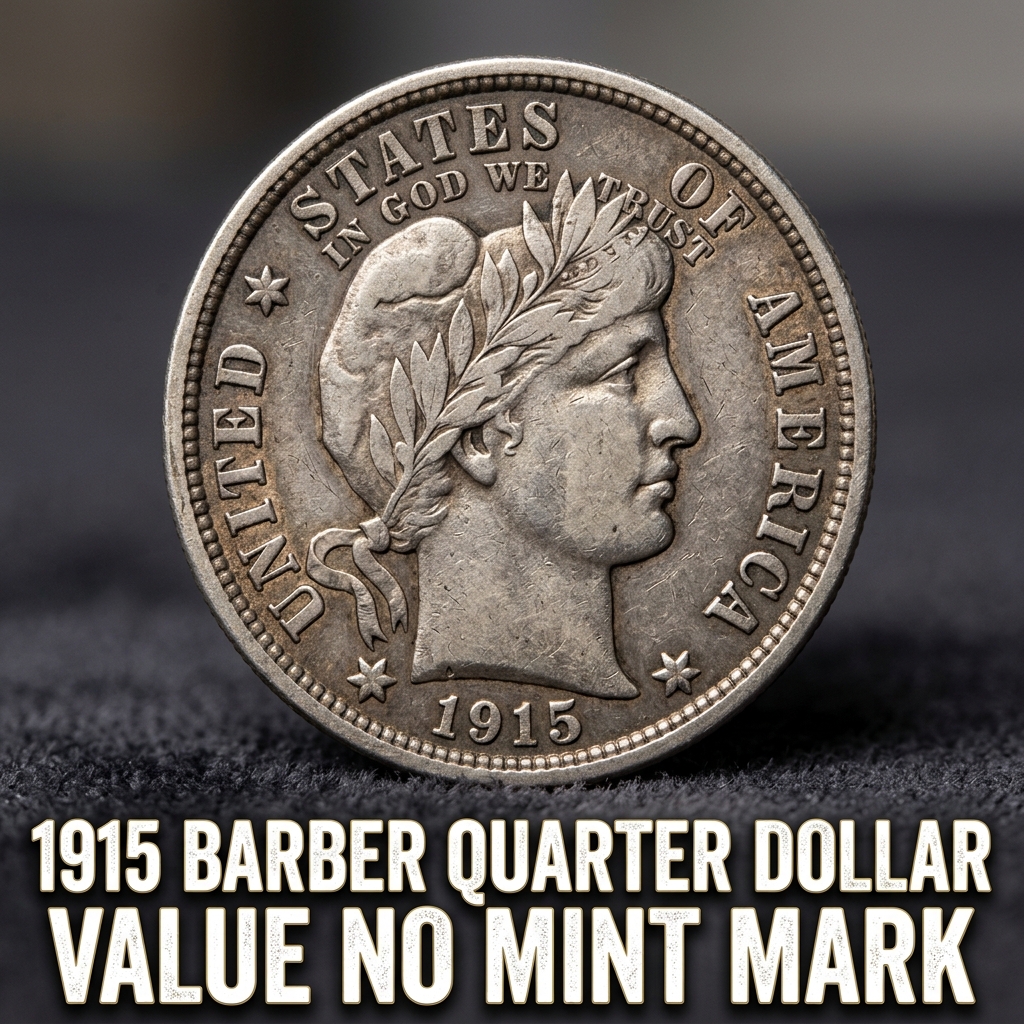
1915 Barber Quarter Value Guide and No Mint Mark Coin Prices
The 1915 Barber Quarter Dollar No Mint Mark is worth anywhere from $10 in heavily worn condition to over $500 in high-grade mint state. Finding one of these classic silver pieces in a drawer or an old collection is an exciting discovery that connects you directly to early 20th-century American history.
The History and Meaning of the No Mint Mark 1915 Quarter
If you are looking at your coin and cannot find a small letter below the eagle’s tail on the reverse, don’t worry—that simply means it was struck at the main United States Mint in Philadelphia. In 1915, the Philadelphia Mint produced 3,480,000 of these quarters. While that might sound like a large number, many of these coins were used heavily in daily commerce, leading to significant wear or being lost to the melting pots over the last century.
Before you head to a coin shop, you might want to use a free coin identifier app to confirm your coin’s variety. The 1915 Barber Quarter is composed of 90% silver and 10% copper, making it valuable not just as a collectible, but also for its precious metal content. Using the CoinKnow app can help you distinguish between a common circulated specimen and a rare high-grade treasure.
Collectors prize the Barber series, named after its designer Charles E. Barber, because it represents the “Gilded Age” aesthetic. The 1915 issue is particularly interesting because it was one of the final years this design was produced before being replaced by the Standing Liberty Quarter in 1916. Because of this transition, the 1915 Philadelphia issue remains a staple for any complete Charles Barber collection.
How to Determine the Grade and Condition of Your 1915 Quarter
The value of your 1915 Barber Quarter is almost entirely dependent on its “grade,” which is a measure of how much detail remains on the coin. To a beginner, a silver quarter might just look old, but small details in Liberty’s hair or the feathers on the eagle’s wings can mean a difference of hundreds of dollars. Many users find that the CoinKnow mobile tool is the fastest way to get a baseline idea of their coin’s state.
A “Good” condition coin will be heavily worn, with the rims blending into the lettering. If you can see the word “LIBERTY” clearly on the headband of the portrait, your coin is likely in “Fine” or “Very Fine” condition, which significantly boosts the price. “Uncirculated” coins are those that never spent time in a pocket or cash register, retaining their original mint luster and sharp details.
It is interesting to note that while the quarter is valuable, other coins from the same era also hold significant interest; for instance, the 1915 Philadelphia penny value shows that even copper coins from this specific year are highly sought after by those completing year-sets. Always check the finer details like the laurel wreath and the vertical lines in the shield on the back to see where your coin sits on the grading scale.
Current Market Value and Price Chart for 1915 Barber Quarters
The market for 1915 Barber Quarters is stable, with prices rising for coins that have original surfaces and no signs of cleaning. It is a golden rule in coin collecting: never clean your coins! Scrubbing a silver quarter with polish can actually strip away its value by damaging the surface. Even a tarnished or “toned” coin is much more valuable to a collector than one that has been artificially brightened.
As of today, the 1915 No Mint Mark quarter sits comfortably in the middle-range of the series for affordability. It isn’t as rare as the 1901-S, but it is much harder to find in high grades than those from the late 1890s. When you use CoinKnow, you can track the current auction trends to see if prices are ticking upward for this specific date and mint combination.
Below is a breakdown of what you can expect to receive for a 1915 Barber Quarter based on standard hobby grading categories:
| Condition / Grade | Estimated Market Value |
|---|---|
| Good (G-4) | $10 – $15 |
| Fine (F-12) | $35 – $45 |
| Very Fine (VF-20) | $65 – $85 |
| Extremely Fine (EF-40) | $120 – $150 |
| About Uncirculated (AU-50) | $210 – $260 |
| Mint State (MS-63) | $450 – $550+ |
Factors That Can Increase the 1915 Silver Quarter Price
Beyond the standard grade, certain factors can make your 1915 No Mint Mark quarter stand out. “Eye appeal” is a term used by professional graders to describe a coin that is particularly beautiful. For example, some silver quarters develop a rainbow-like patina over time due to the way they were stored in old paper albums. These “toned” quarters can sometimes sell for 20% to 50% more than the standard list price.
Another factor to look for is mint errors. While rare in the 1915 Philadelphia run, errors like “doubled dies” or “off-center strikes” can turn a $10 coin into a $100+ item. Collectors are always on the hunt for these unique manufacturing mistakes. If you suspect your coin has an error, comparing it with high-resolution photos in a digital library can help you spot the differences.
Finally, the silver bullion market provides a “floor” for the value. Even if the coin is so worn that the date is barely visible, it still contains approximately 0.18 ounces of pure silver. This means that even in the worst possible condition, the coin will always be worth significantly more than its 25-cent face value based purely on the spot price of silver.
Frequently Asked Questions
Q: Where is the mint mark located on a 1915 Barber Quarter?
A: The mint mark (if there is one) is located on the back of the coin, directly below the eagle’s tail and above the letters “QUAR.” If that space is blank, it was minted in Philadelphia.
Q: Is the 1915 Philadelphia Quarter rare?
A: It is considered a relatively common date in circulated grades, but it becomes “condition rare” in Mint State (uncirculated) grades where few examples have survived without scratches or wear.
Q: Can I spend a 1915 Barber Quarter at the store?
A: Technically, it is still legal tender for 25 cents. However, since the coin is worth at least $10 due to its silver content and collector value, you should never spend it for face value!
