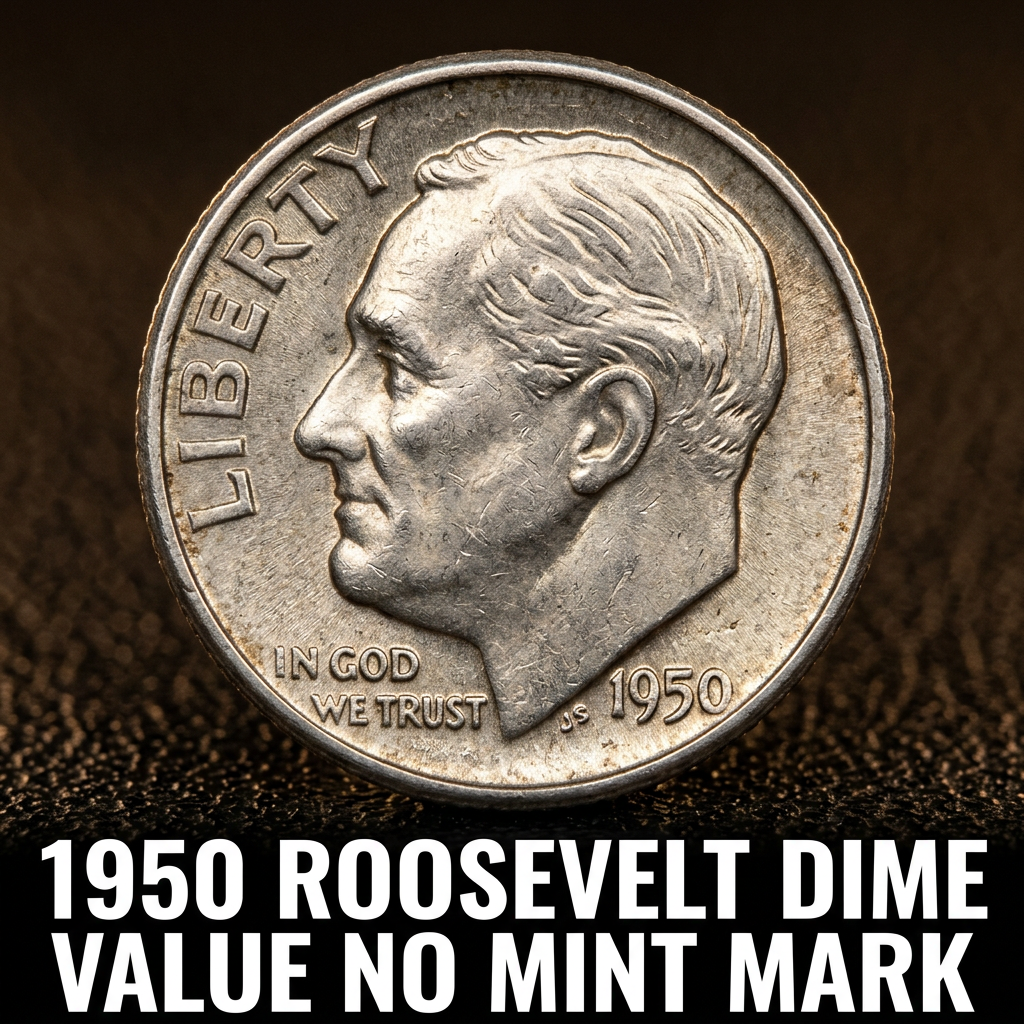
1950 Roosevelt Dime Value No Mint Mark and What Your Coin Is Worth Today
The 1950 Roosevelt Dime with no mint mark is worth anywhere from $2.50 in worn condition to over $25 in high-quality mint state. While most found in change are common, certain high-grade specimens and rare varieties can fetch hundreds of dollars from serious collectors looking for a perfect piece.
The History and Silver Content of the 1950 Roosevelt Dime
If you’ve just found a shiny silver dime from 1950 in an old jar or a relative’s collection, you are holding a piece of American history. These coins were minted just five years after the end of World War II and the passing of President Franklin D. Roosevelt. At that time, the United States Mint was producing millions of these coins to keep up with a booming post-war economy. Unlike the dimes we use at the grocery store today, which are made of copper and nickel, the 1950 dime is composed of 90% silver and 10% copper.
This high silver content means that every 1950 dime has “melt value” that fluctuates with the precious metals market. Even if the coin is incredibly scratched or worn down, it will always be worth its weight in silver. However, before you consider melting it down, you should use a free coin identifier app to see if your specific coin has any rare characteristics that make it worth more to a collector than its raw silver price. Many beginners use CoinKnow to quickly distinguish between common pocket change and genuine numismatic treasures.
How to Identify a 1950 Roosevelt Dime No Mint Mark
One of the most common questions new collectors ask is, “Where is the mint mark?” In 1950, dimes were struck at three different locations: Philadelphia, Denver, and San Francisco. If your coin was minted in Philadelphia, it will have no mint mark at all. You can check the reverse (back) of the coin, specifically at the bottom left of the torch. If the area is blank, you have a Philadelphia issue.
While a lack of a mint mark doesn’t necessarily make the coin rare—given that Philadelphia produced over 70 million of them—it remains a staple for those trying to complete a full set of Roosevelt dimes. For many everyday Americans, the thrill of finding a 1950 silver dime is the first step into the world of coin collecting. To accurately track the value of your growing collection, you might want to look at the CoinKnow app, which helps you log your finds and stay updated on market trends.
Grading and 1950 Roosevelt Dime Market Values
The value of your 1950 dime is heavily dependent on its “grade,” or the physical condition of the coin. Most coins found in circulation are graded as “Good” or “Very Fine,” meaning they show significant wear on FDR’s cheek and the flames of the torch. Coins that look brand new, as if they just left the mint yesterday, are called “Uncirculated” or “Mint State.”
In the professional market, these grades range from 1 to 70. A 1950 dime in a standard circulated grade is usually valued close to its silver melt price. However, as the grade moves into the MS65 to MS67 range, the price jumps significantly. You can find detailed breakdowns of the 1950 Roosevelt dime MS auction prices to see what elite collectors are willing to pay for perfection. Generally, a typical 1950 dime you find in a drawer will be worth between $2 and $5, but museum-quality pieces can break the $100 barrier.
| Condition / Grade | Estimated Value (USD) |
|---|---|
| Good (G4) – Heavily Worn | $2.10 – $2.50 (Melt Value) |
| Fine (F12) – Moderate Wear | $2.75 – $3.50 |
| Extremely Fine (EF40) – Light Wear | $4.00 – $6.00 |
| Uncirculated (MS63) – No Wear | $10.00 – $15.00 |
| Choice Uncirculated (MS65+) | $25.00 – $150.00+ |
Special Varieties and What to Look For
Beyond the standard mintages, some collectors search for specific varieties and errors that can boost the price of a 1950 dime significantly. One highly sought-after feature is known as “Full Bands” (FB). This refers to the horizontal bands on the torch on the reverse of the coin. If these bands are fully separated with no blurring, the coin is considered a premium strike.
A 1950 silver dime with Full Bands in a high grade is a rarity and can command a massive premium over a regular strike. If you suspect your coin has this level of detail or any potential mint errors like double dies or off-center strikes, checking a comprehensive 1950 dime price chart is a great way to verify your findings. Tools like the CoinKnow app can also assist in magnifying the image of your coin to see those tiny details that the naked eye might miss.
Final Thoughts on the 1950 No Mint Mark Dime
While you likely won’t be able to retire on a single 1950 Roosevelt dime, it is a fantastic gateway into the hobby of numismatics. Because it is made of 90% silver, it holds intrinsic value that protects you from inflation, and its historical significance makes it a great conversation piece. Whether you are keeping it for its precious metal content or hoping to find a “Full Bands” rarity, the 1950 Philadelphia dime remains an iconic piece of American coinage.
Always remember to handle your coins by the edges to avoid getting oils from your skin on the surface, as this can degrade the condition over time. Happy hunting, and may your next find be the big one!
Q: Is a 1950 dime with no mint mark rare?
A: No, the Philadelphia Mint produced over 70 million of these coins, making them relatively common. However, they are highly valued for their 90% silver content and can be expensive in “Mint State” condition.
Q: How much silver is in a 1950 Roosevelt dime?
A: Each 1950 dime contains 0.07234 troy ounces of pure silver. Its value will always be at least equal to the current market price of that amount of silver.
Q: Should I clean my 1950 dime to make it worth more?
A: Never clean your coins! Cleaning or polishing a vintage coin actually removes the original surface and significantly lowers its value to collectors. If you’re unsure of its worth, use an app or consult a professional.
