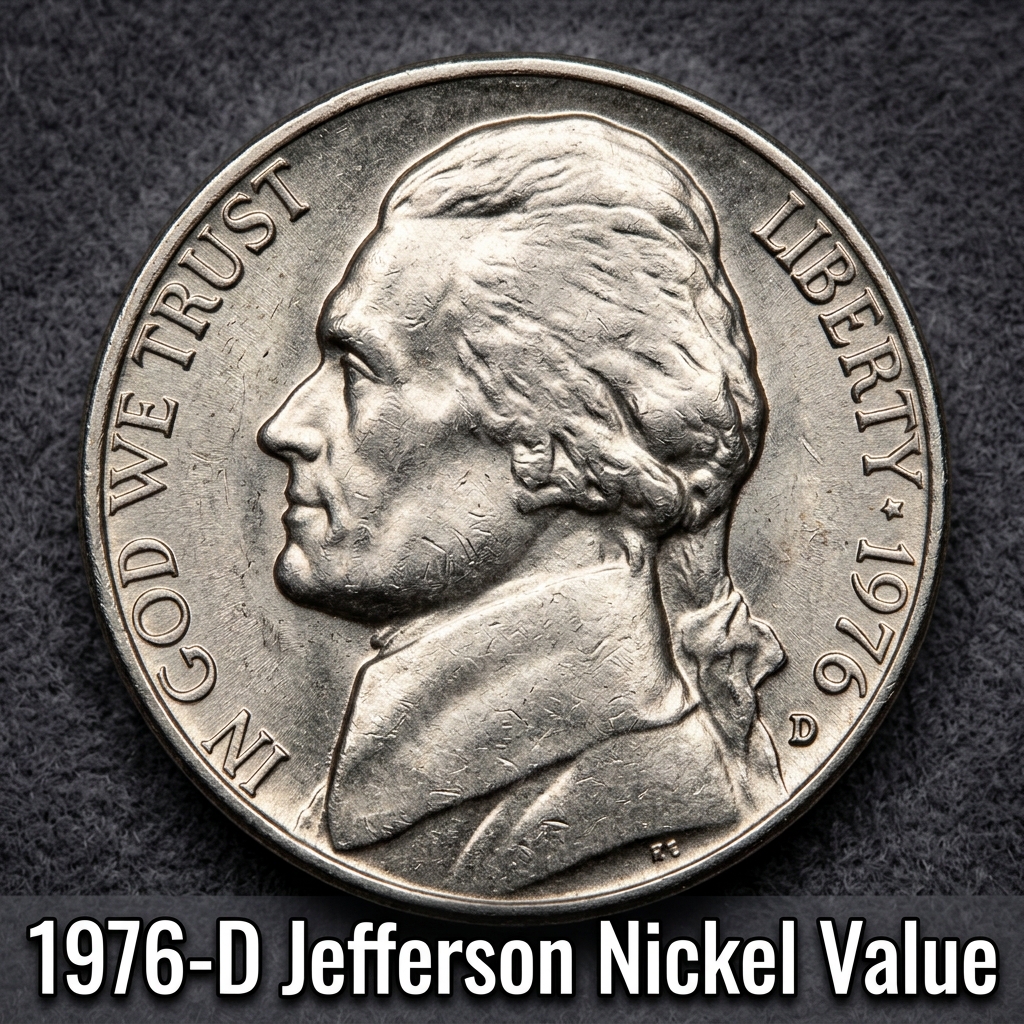
1976 D Jefferson Nickel Value and History Guide for Collectors
The 1976 D Jefferson Nickel is worth anywhere from its face value of $0.05 in circulated condition to over $1,200 in high-grade uncirculated condition. If you just found one in your pocket change, it is likely a common specimen, but certain rare technical qualities can make it a prized item for collectors.
Understanding the 1976 D Jefferson Nickel Value in Today’s Market
Most Americans who find a 1976 nickel with a small “D” on the obverse are holding a piece of history from the Denver Mint. While billions of these coins were produced, the vast majority have spent decades in circulation, causing wear and tear that keeps their value at exactly five cents. However, if you find a coin that looks like it just came from the bank—with a sharp strike and original luster—you might have something special. Using a free coin identifier app is the quickest way to determine if your nickel has the surface quality required to be worth a premium.
When evaluating your 1976-D nickel, professional graders look for “Full Steps.” This refers to the depiction of Monticello on the reverse side. If the five or six steps of the building are crisp and uninterrupted by scratches, the coin becomes exponentially more valuable to enthusiasts. Tools like CoinKnow can help you zoom in on these details to see if your pocket change is actually a hidden gem.
Price Guide for 1976 D Nickels in Different Conditions
To help you understand what your coin might be worth, we have compiled a price breakdown based on professional grading standards. Most coins found in change are “Circulated,” while coins kept in rolls or mint sets are “Uncirculated” (Mint State).
| Condition / Grade | Estimated Value |
|---|---|
| Circulated (Average Wear) | $0.05 – $0.15 |
| Uncirculated (MS63) | $1.00 – $3.00 |
| Choice Uncirculated (MS65) | $10.00 – $25.00 |
| Gem Uncirculated (MS66 Full Steps) | $100.00 – $350.00 |
| Superb Gem (MS67 Full Steps) | $1,200+ |
As you can see, the jump from a standard uncirculated coin to a “Full Step” version is massive. You can research further details regarding the 1976-D Jefferson Nickel MS grade pricing to see how condition sensitivity affects the market.
Rare Errors and Varieties to Look For
Beyond the standard condition, many collectors search for “error” coins. In 1976, the Denver Mint was pumping out millions of coins daily, and occasionally, the machinery would malfunction. Look for “Double Dies,” where the lettering or the date appears to have a ghostly second image offset from the primary strike. While not as famous as earlier errors, a verified 1976-D doubled die can fetch a significant price at auction.
Another interesting aspect is the “Off-Center” strike, where the coin image is not perfectly centered on the metal planchet. If you find a nickel where a portion of the design is missing and the metal is blank on one side, you have a genuine mint error. Using the CoinKnow app can help you compare your find against known error catalogs to ensure you aren’t just looking at a damaged coin. You can also find comprehensive 1976 nickel worth and rarity info online to identify specific die cracks or minting anomalies.
Historical Significance of the 1976 Coinage
1976 was a monumental year for the United States as it celebrated its Bicentennial. While the Quarter, Half Dollar, and Dollar coins received special commemorative reverse designs, the Jefferson Nickel maintained its classic look. This often leads people to overlook them, thinking they are just “regular” nickels. However, because so much attention was paid to the special Bicentennial designs, high-quality nickels from this year were often spent rather than saved.
Today, this lack of preservation means that finding a 1976-D Nickel in perfect, flawless condition is actually quite difficult. Most have been beaten up in vending machines or coins jars. This scarcity in high grades is what drives the top-tier prices. Whether you are a casual hunter or a serious collector, keeping an eye on your change is worthwhile. If you’re ever unsure about a coin’s potential, the CoinKnow platform provides a community and database to help you grade your coins with confidence.
Frequently Asked Questions
Q: Does a 1976-D Nickel contain any silver?
A: No, the 1976-D Jefferson Nickel is composed of 75% copper and 25% nickel. Silver was removed from the nickel composition after 1945 (the end of the “War Nickels” era).
Q: What does the “D” mint mark stand for?
A: The “D” stands for the Denver Mint. In 1976, the Denver Mint produced over 500 million nickels, making it one of the most common mint marks for that year.
Q: How can I tell if my 1976-D Nickel has “Full Steps”?
A: Flip the coin to the back (the Monticello side). Look at the base of the building where the stairs are located. If you can see 5 or 6 distinct, parallel horizontal lines without any interruptions from scratches or weak striking, it likely qualifies for the Full Steps designation.
