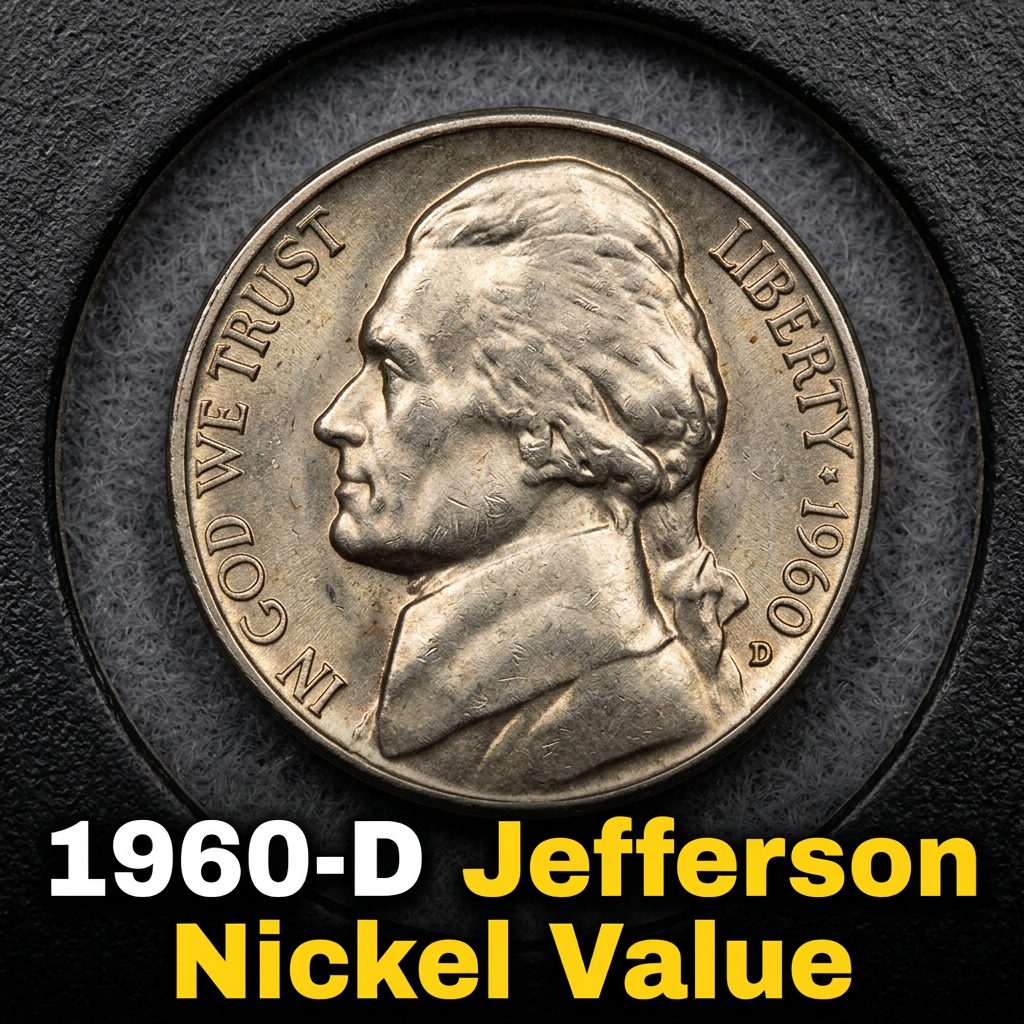
Current 1960 D Jefferson Nickel Value and Collector Guide
The 1960-D Jefferson Nickel is worth anywhere from $0.05 in worn condition to over $35 in high-grade mint state. While many of these coins today are only worth their face value, finding a specimen with exceptional luster or rare striking errors can lead to a surprising payday for casual collectors.
Understanding the 1960 D Nickel Mint Mark and Rarity
If you have just discovered an old nickel in your change, the first thing to check is the mint mark. The “D” located to the right of Monticello on the reverse side indicates the coin was struck at the Denver Mint. In 1960, the Denver Mint produced over 193 million nickels, making it one of the most common coins of that era. Because of this high production, 1960-D nickels are still frequently found in pocket change today.
Before you take your jar of coins to the bank, it is a good idea to use a free coin identifier app to ensure you aren’t overlooking a rare error. Most examples are worth exactly five cents, but collectors look for coins that have never been circulated. These “Mint State” coins retain their original factory shine and are free from the scratches and dents caused by everyday handling. If you find one that looks brand new, it might be worth snagging for your collection or checking its price on CoinKnow.
Grading and 1960 D Jefferson Nickel Price Guide
Determining the value of your nickel requires looking at its “grade,” or its physical condition. Professional grading ranges from “About Good” (heavily worn) up to “Mint State 70” (perfect). For the 1960-D, coins in lower grades are essentially worth face value. However, once you reach Uncirculated grades, the value starts to climb incrementally as the number of surviving high-quality specimens decreases.
To help you understand the market, you can review the 1960-D Jefferson Nickel auction prices in mint state to see what professional collectors are paying. Below is a general guide for current market values based on common grades found in the hobby today.
| Condition / Grade | Estimated Market Value |
|---|---|
| Circulated (Good to Extremely Fine) | $0.05 – $0.15 |
| About Uncirculated (AU58) | $0.25 – $0.50 |
| Mint State 63 (MS63) | $1.00 – $3.00 |
| Mint State 65 (MS65 Gem) | $10.00 – $18.00 |
| Mint State 66 (MS66) | $35.00+ |
What Makes a 1960 D Nickel More Valuable
Beyond the standard grade, certain features can boost the value significantly. The most important feature for Jefferson Nickel enthusiasts is “Full Steps.” This refers to the steps of Monticello on the back of the coin. Most 1960-D nickels have “mushy” details where the steps are blurry. If you find one with five or six clearly defined horizontal lines, that coin is a rare prize that can sell for hundreds of dollars at auction.
Varieties and errors also add interest. Look for “re-punched mint marks” (RPM), where the “D” appears to have been stamped twice, slightly overlapping. While the valuation details for the 1960 Jefferson Nickel generally focus on high-grade coins, an obvious mint error can make even a worn coin valuable to a specialist. Using the CoinKnow app can help you zoom in on these small details to see if your coin has a rare minting mistake.
Collecting 1960 Nickels for Future Gains
While the 1960-D is not considered a “key date” like the 1950-D, it remains a pillar of a complete Jefferson Nickel set. Many people who grew up in the 1960s are now looking to complete sets from their birth year, which keeps the demand for clean, shiny examples steady. If you are starting a collection, focus on finding coins that have no deep scratches on Thomas Jefferson’s cheek, as this is the most prominent part of the design.
If you find a 1960 nickel without a mint mark, that means it was minted in Philadelphia. These are often slightly scarcer in uncirculated grades than the Denver issues, but they follow similar pricing patterns. Keeping your coins in protective flips or albums will prevent further wear and help maintain their value over time. You can keep track of your growing collection’s worth easily within the CoinKnow platform.
Q: Is a 1960-D nickel made of silver?
A: No, Jefferson Nickels were only made of silver from 1942 to 1945 (known as “Wartime Nickels”). The 1960-D nickel is composed of 75% copper and 25% nickel.
Q: Where is the mint mark on a 1960-D nickel?
A: The mint mark is located on the reverse (back) of the coin, specifically to the right of the Monticello building, near the rim.
Q: What is the highest price ever paid for a 1960-D nickel?
A: While most are worth less than a dollar, rare “Full Steps” examples in extremely high grades (MS67) have sold for over $500 at major coin auctions.
