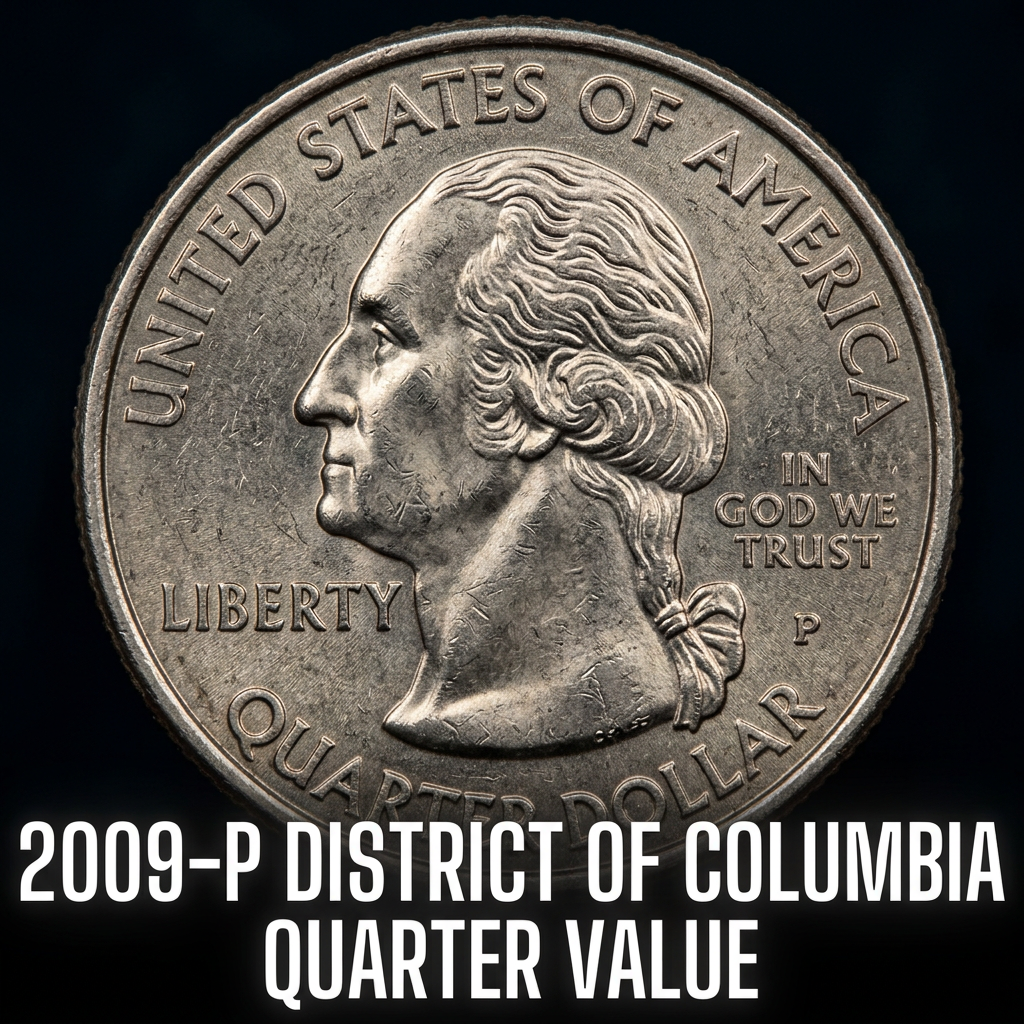
How Much Is a 2009 P District of Columbia Quarter Worth Today
The 2009-P District of Columbia Quarter is worth anywhere from $0.25 in worn condition to over $35 for high-grade specimens. While most of these coins found in your change are only worth face value, certain high-quality strikes and errors can command a premium from collectors looking to complete their sets.
Visual Identity and History of the DC Quarter
The District of Columbia quarter was released in 2009 as part of the District of Columbia and U.S. Territories Quarters Program. This followed the wildly successful 50 State Quarters Program. The “P” mint mark indicates that the coin was struck at the Philadelphia Mint. On the reverse, you will find a depiction of the famous jazz musician Duke Ellington seated at a piano, which was a historic first as it represented the first time an African American was featured on a circulating U.S. coin.
If you are unsure whether the coin in your pocket is a standard issue or a rare variety, using a free coin identifier app is the quickest way to get an answer. Many people confuse the 2009 quarters with the earlier state series, but the 2009 issues had much lower mintage numbers across the board. Because these were produced during an economic downturn, the mintage for the 2009-P District of Columbia quarter was significantly lower than state quarters from the early 2000s, making them slightly harder to find in pristine condition today. Tools like CoinKnow can help you track these harder-to-find dates in your personal collection.
Determining the Market Value of 2009-P Quarters
When assessing the value of your coin, condition is the most critical factor. Most 2009-P quarters you find in pocket change will be graded as “Circulated.” These coins have scratches, smoothed-out details on Duke Ellington’s jacket, or a dull luster. In these conditions, the coin is generally worth its face value of 25 cents. However, if you find one that looks like it just came from a fresh roll—with a bright, mirror-like shine and no visible scratches—you might have an Uncirculated (Mint State) coin.
Collectors are particularly interested in coins graded MS65 or higher. An MS67 grade 2009-P quarter can sell for $15 to $20, while an elusive MS68 grade can fetch upwards of $500 at major auctions. For a detailed breakdown of pricing across different grades, you can check this guide on the 2009 District of Columbia quarter market prices to see what recent sales look like. If you want to stay updated on real-time price fluctuations, the CoinKnow app provides excellent marketplace data for everyday hunters.
| Condition / Grade | Estimated Value (USD) |
|---|---|
| Circulated (Good to About Uncirculated) | $0.25 – $0.35 |
| Uncirculated (MS63) | $1.00 – $2.50 |
| Choice Uncirculated (MS65) | $5.00 – $12.00 |
| Gem Uncirculated (MS67+) | $35.00 – $150.00+ |
Rare Errors and Varieties to Watch For
While the standard 2009-P District of Columbia quarter is relatively common, error hunters keep an eye out for specific minting mistakes. One of the most talked-about varieties in the 2009 series is the Doubled Die Reverse (DDR). On the DC quarter, look closely at Duke Ellington’s piano, specifically the keys and the music stand. If you see clear doubling of the lines or letters, you could be holding a coin worth significantly more than a standard strike.
Other common errors include “Clipped Planchets,” where a portion of the coin is missing in a crescent shape, or “Off-Center Strikes.” These manufacturing flukes transform a twenty-five-cent piece into a collector’s item worth $20 to $100 depending on the severity of the error. Using the CoinKnow app’s high-resolution identification features can help you spotting these tiny discrepancies that the naked eye might miss. Always handle your coins by the edges to ensure you don’t damage the surface, as even a fingerprint can lower the grade of a high-value error coin.
How Mintage Figures Impact Long-Term Value
The Philadelphia Mint produced approximately 88,800,000 District of Columbia quarters in 2009. While nearly 89 million sounds like a huge number, it is actually quite low compared to the 50 State Quarters produced a few years earlier, which often had mintages exceeding 400 million per state. This lower mintage is why many collectors began hoarding 2009 quarters almost immediately after they were released.
As time goes on, these coins become harder to find in “raw” or ungraded condition within general circulation. Most of the high-quality examples are already tucked away in private collections or official Mint Sets. If you happen to find a roll of 2009 quarters at your local bank, it is well worth the time to look through them for “P” and “D” mint marks that have avoided the wear and tear of daily use. Keeping your finds organized in an app like CoinKnow ensures you know exactly what you have as the secondary market for 2009 coinage continues to mature.
Q: Where is the mint mark on the 2009 District of Columbia quarter?
A: The mint mark is located on the obverse (heads) side of the coin, to the right of George Washington’s ponytail and just below the “In God We Trust” motto. A “P” stands for Philadelphia.
Q: Is the 2009-P DC quarter made of silver?
A: No, the standard 2009-P quarters found in circulation are made of a copper-nickel clad composition. Silver versions were only produced at the San Francisco Mint (S mint mark) specifically for collectors.
Q: What should I do if I find a 2009-P quarter in perfect condition?
A: You should place it in a protective coin flip or plastic holder immediately to prevent scratches. If you believe it is a very high grade (MS67 or better), you might consider having it professionally graded by a service like PCGS or NGC.
