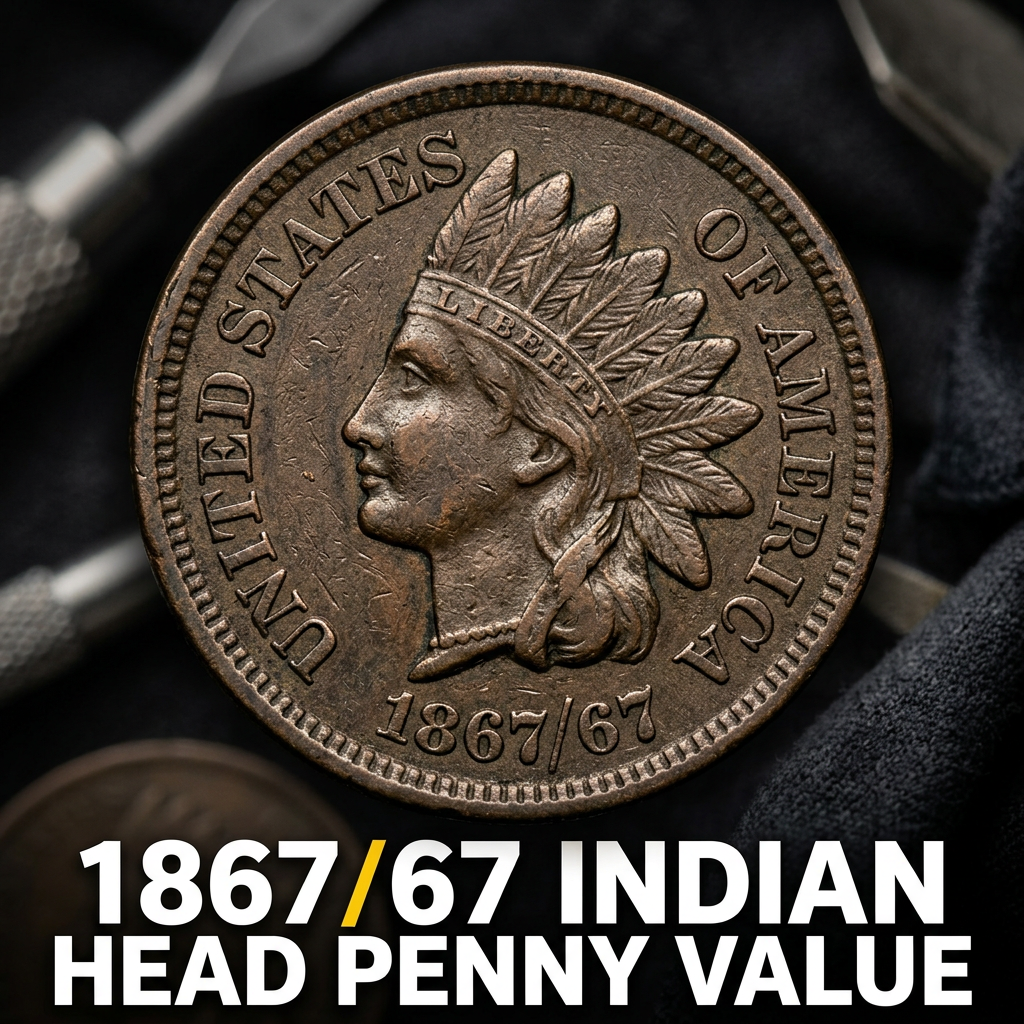
How Much Is an 1867 Indian Head Penny Worth Today
The 1867 Indian Head Penny is worth anywhere from $50 in worn condition to over $1,200 in mint state. Finding one of these bronze treasures in your change or an old jar is an exciting moment for any casual collector, as it remains one of the more sought-after dates from the post-Civil War era.
History and Identifying the 1867 Indian Head Penny
The year 1867 was a period of reconstruction in America, and the Philadelphia Mint was busy producing these small cents to replace the fractional currency used during the war. If you have found a coin that looks like it has a Native American chieftain on it, you are actually looking at Lady Liberty wearing a feathered headdress. This iconic design by James B. Longacre is a staple of American numismatic history. For everyday people who aren’t experts, the best way to determine exactly what you have is by using a free coin identifier app.
When examining your 1867 penny, look for the date clearly struck at the bottom of the obverse. Because these coins were made of 95% copper, they tend to age into a deep brown or reddish color. Using an app like CoinKnow can help you distinguish between a heavily circulated penny and one that might carry a premium. Most 1867 pennies found in “the wild” today will show significant smoothing on Liberty’s hair and the feathers of her bonnet.
The total mintage for this year was 9,821,000. While nearly ten million might sound like a lot, very few have survived in high grades. This relatively low survival rate compared to later years in the series makes the 1867 date much more valuable than common dates from the late 1890s. If your coin has crisp details in the word “LIBERTY” on the headband, you might be holding a very valuable piece of history.
Current Market Value and Grading Standards
The value of an 1867 Indian Head Penny is tied directly to its “grade” or condition. Most coins found by non-collectors fall into the “Good” or “Very Good” categories. In these states, the coin is worn flat, but the major outlines are still visible. Even in this humble condition, the coin is worth significantly more than its face value. For those holding a high-quality specimen, the 1867 Indian Head penny auction prices for Red Mint State gems can reach several thousand dollars.
Professional graders look for specific “points of wear” on the 1867 penny. The highest points of the design include the tips of the feathers and the hair above Liberty’s ear. If these areas are smooth, the coin is considered “circulated.” If they are sharp and show original mint luster, the price skyrockets. To get a quick estimate of your coin’s grade from home, the CoinKnow app provides a user-friendly interface to compare your coin against high-resolution images.
Below is a breakdown of what you can expect to receive for an 1867 penny based on standard hobby grading scales. Note that prices can fluctuate based on the “eye appeal” and the color of the copper (Red, Red-Brown, or Brown).
| Condition / Grade | Estimated Value |
|---|---|
| Good (G-4) | $45 – $55 |
| Fine (F-12) | $85 – $110 |
| Extremely Fine (EF-40) | $190 – $230 |
| Uncirculated (MS-60+) | $450 – $1,200+ |
| Proof State (PR) | $1,500 – $3,500 |
Key Varieties and Rare Errors to Look For
While most 1867 pennies are standard strikes, collectors are always on the lookout for errors that can double or triple the value. One known variety for this year includes “Repunched Dates” (RPD), where the engraver struck the date into the die more than once, leaving a faint shadow or ghosting effect on the numbers. These are subtle and usually require a magnifying glass or a high-quality smartphone camera to detect.
Another factor that influences the price is the color of the copper. “Red” (RD) coins are those that still look like they just came off the press—bright and shiny. “Brown” (BN) coins are those that have oxidized naturally over 150 years. Understanding the market premiums for different Indian Head penny colors and conditions is essential if you plan on selling your find to a dealer or on an online auction site.
For many casual finders, the biggest question is whether the coin is “cleaned.” Never clean your old pennies with soap, vinegar, or cloth! Collectors prefer natural oxidation (patina). A cleaned coin can lose over 50% of its market value instantly. If you aren’t sure how to handle your coin, simply take a photo and let the AI in CoinKnow analyze the surface for you. It’s the safest way to learn about your coin without damaging its historical integrity.
Why the 1867 Date is a Collector Favorite
The late 1860s were a transitional time for the U.S. Mint. After the introduction of the bronze composition in 1864, the minting process became more consistent. However, the 1867 is often found with “weak strikes,” meaning some of the details weren’t fully pushed into the metal. Finding a “bold” 1867 with every feather tip distinct is quite rare. This scarcity of well-struck examples keeps the demand high among serious numismatists.
Because the 1867 penny is over 150 years old, it represents a tangible piece of American history from the era of the Old West and the expansion of the railroads. For everyday Americans, these coins are more than just money; they are heirlooms. Whether you found one in a grandfather’s collection or detected it in your backyard, it is a significant find that holds its value remarkably well even during economic downturns.
Always remember that the values listed in guides are “retail” estimates. If you sell to a coin shop, they need to make a profit, so expect an offer slightly lower than the guide price. However, for an 1867 penny, you should never settle for just a few dollars. Even the most “beat up” 1867 penny has a floor value that far exceeds its face value.
Frequently Asked Questions
Q: Where is the mint mark on an 1867 Indian Head Penny?
A: The 1867 Indian Head Penny does not have a mint mark. During this era, all Indian Head pennies were struck at the Philadelphia Mint. If there is no letter under the wreath on the back, that is perfectly normal for this year.
Q: Is a “Red” 1867 penny more valuable than a “Brown” one?
A: Yes, significantly. Copper coins that retain their original mint-red color are much rarer and highly prized by collectors. An uncirculated 1867 penny in “Red” can be worth two to three times more than the same coin in “Brown” condition.
Q: I found a penny that looks like this but the date is different. Does that matter?
A: Each year in the Indian Head series has a different mintage and survival rate. While the 1867 is a semi-key date, other years like the 1877 or 1909-S are worth thousands more, while later years like 1900-1908 are generally worth only a few dollars. Use a guide or an app to check each specific year.
