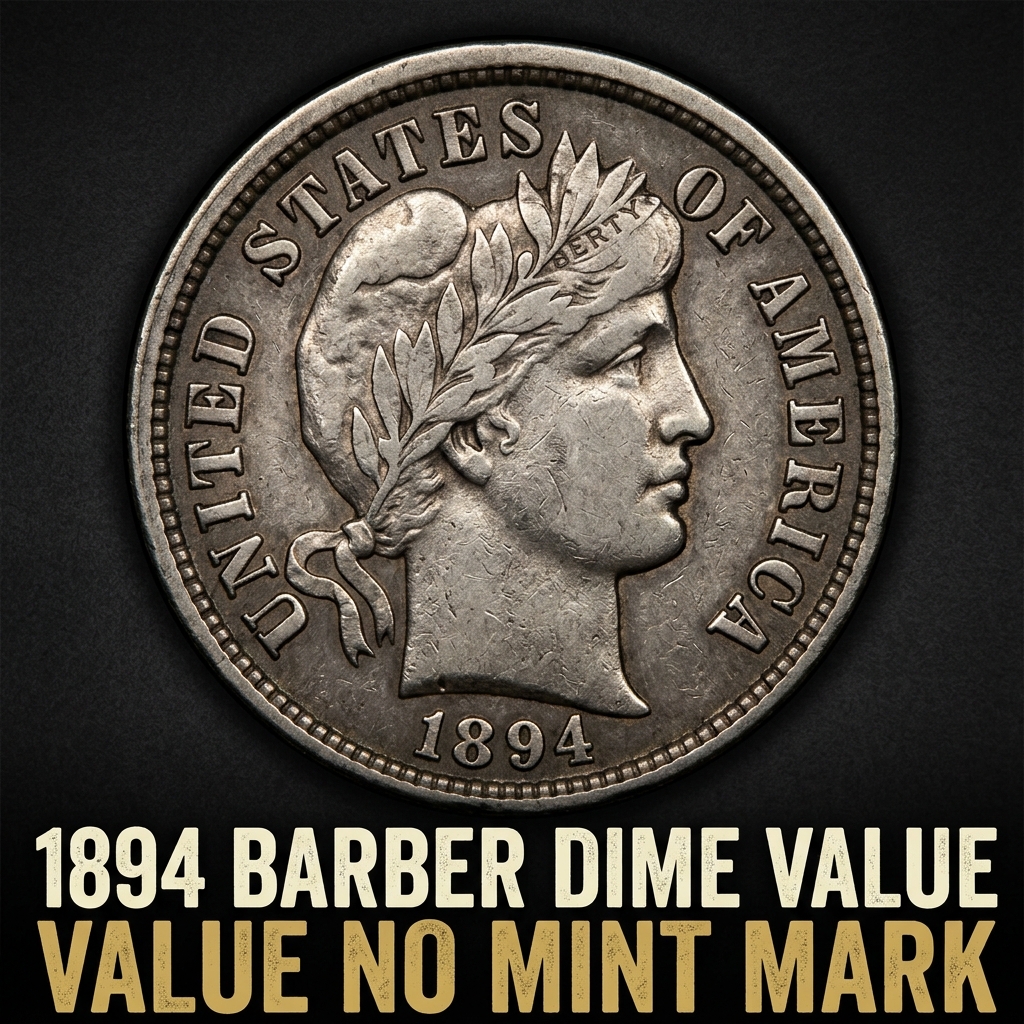
1894 Barber Dime Value Guide for Coins with No Mint Mark
The 1894 Barber Dime with no mint mark is worth anywhere from $5 in heavily worn condition to over $600 in exceptional uncirculated condition. Finding one of these silver treasures in a forgotten jar or an old collection is an exciting moment for any American, as it represents a classic era of United States coinage.
History and Identification of the 1894 Philadelphia Dime
The 1894 Barber Dime was designed by Charles E. Barber, who served as the Chief Engraver of the US Mint. These coins are part of a series that ran from 1892 to 1916. When you look at an 1894 dime and see no letter “S” or “O” on the reverse side below the wreath, it means the coin was struck at the main Philadelphia Mint. In 1894, Philadelphia produced over 1.3 million of these dimes, making them relatively accessible to collectors today compared to the legendary and ultra-rare 1894-S version.
Identifying your coin correctly is the first step to understanding its market price. Many people use a free coin identifier app to quickly confirm the date and mint mark of their silver coins. Because these dimes are 90% silver, they always carry a “melt value” regardless of their condition. However, for a coin from the 1890s, the numismatic or collector value is almost always higher than the raw silver price. To get an instant estimate of what your collection might be worth, the CoinKnow app is a fantastic resource for everyday users.
Determining the Condition and Grade of Your 1894 Dime
The value of an 1894 Barber Dime is heavily dependent on its “grade,” which refers to how much wear and tear the coin has endured over the last century. Most 1894 dimes found today are in “Good” or “Very Good” condition. In these lower grades, the word “LIBERTY” on the headband of Lady Liberty’s cap will be worn away or only partially visible. If you can read all the letters in “LIBERTY” clearly, you likely have a “Fine” or “Very Fine” coin, which commands a higher premium.
If your coin looks like it just came from the bank—with a brilliant luster and no visible scratches—it could be in “Mint State.” These are the coins that serious collectors compete for at auctions. Before selling, many people use the CoinKnow app to compare their coin’s appearance to high-resolution images of graded specimens. Keep in mind that cleaning your coin can actually destroy its value; collectors prefer the natural patina or “toning” that develops over decades.
Current Market Value and Pricing Comparison
The market for Barber silver dimes remains steady because they are a staple of American numismatics. While a common worn specimen might sell for a modest price, the 1894 Barber Dime value increases significantly as the preservation quality improves. Because these coins are over 120 years old, finding them in high-grade condition is increasingly difficult, leading to steep price jumps for “About Uncirculated” examples.
| Condition / Grade | Estimated Value (USD) |
|---|---|
| Good (G-4) | $5.00 – $8.00 |
| Very Good (VG-8) | $12.00 – $18.00 |
| Fine (F-12) | $25.00 – $35.00 |
| Very Fine (VF-20) | $60.00 – $85.00 |
| Extremely Fine (EF-40) | $140.00 – $180.00 |
| Uncirculated (MS-60+) | $350.00 – $650.00+ |
Why the No Mint Mark Dime is Special
In the world of coin collecting, the “No Mint Mark” designation signifies the coin was minted in Philadelphia, which was the primary facility of the US Mint system. While the Philadelphia issues of 1894 aren’t as rare as the San Francisco (S) mint of the same year—which is one of the rarest coins in the world with only 24 struck—the Philadelphia dime is still a highly sought-after piece of history. It represents the Gilded Age of America, a time of massive industrial growth.
For many casual hunters, the 1894 dime is the perfect “entry-level” key date. It is old enough to feel like a real relic but affordable enough for a hobbyist to own. If you find a stash of old silver, using tools like the CoinKnow app can help you sort through your dimes to see if you have any rare dates or mint marks that could be worth hundreds of dollars. Always check the reverse side of the coin; if it’s blank under the wreath, you’ve got the Philadelphia 1894 dime.
Tips for Selling and Preserving Your 1894 Barber Dime
If you decide that you want to sell your 1894 dime, there are a few things to keep in mind. First, never clean the coin with chemicals or clothes, as this leaves microscopic scratches that professional graders will spot immediately. Instead, hold the coin by its edges to prevent oils from your skin from touching the surface. Selling to a reputable local coin shop or listing on a specialized numismatic platform will usually yield a better return than a pawn shop.
Prices for the 1894 Barber Dime vary based on current silver spot prices and collector demand. During times of economic uncertainty, the value of 90% silver “junk silver” dimes often rises, providing a solid floor for the price of your 1894 dime. Whether you are keeping it as a family heirloom or looking to turn it into cash, knowing the specific characteristics and current market trends of this 19th-century coin is essential for any owner.
Q: How can I tell if my 1894 dime is the rare 1894-S?
A: Check the reverse side of the coin below the bow of the wreath. If you see a small “S” mint mark, you have one of the rarest coins in existence. If the space is blank, it is the common Philadelphia mint version.
Q: Is the 1894 Barber Dime made of real silver?
A: Yes, all Barber Dimes minted between 1892 and 1916 consist of 90% silver and 10% copper. This gives them intrinsic metal value regardless of their condition as a collectible.
Q: Should I get my 1894 Philadelphia dime professionally graded?
A: Unless the coin is in exceptionally high “Uncirculated” condition (showing no wear at all), professional grading might cost more than the coin is worth. Most coins in “Good” to “Fine” condition are best kept in a protective flip or sleeve.
