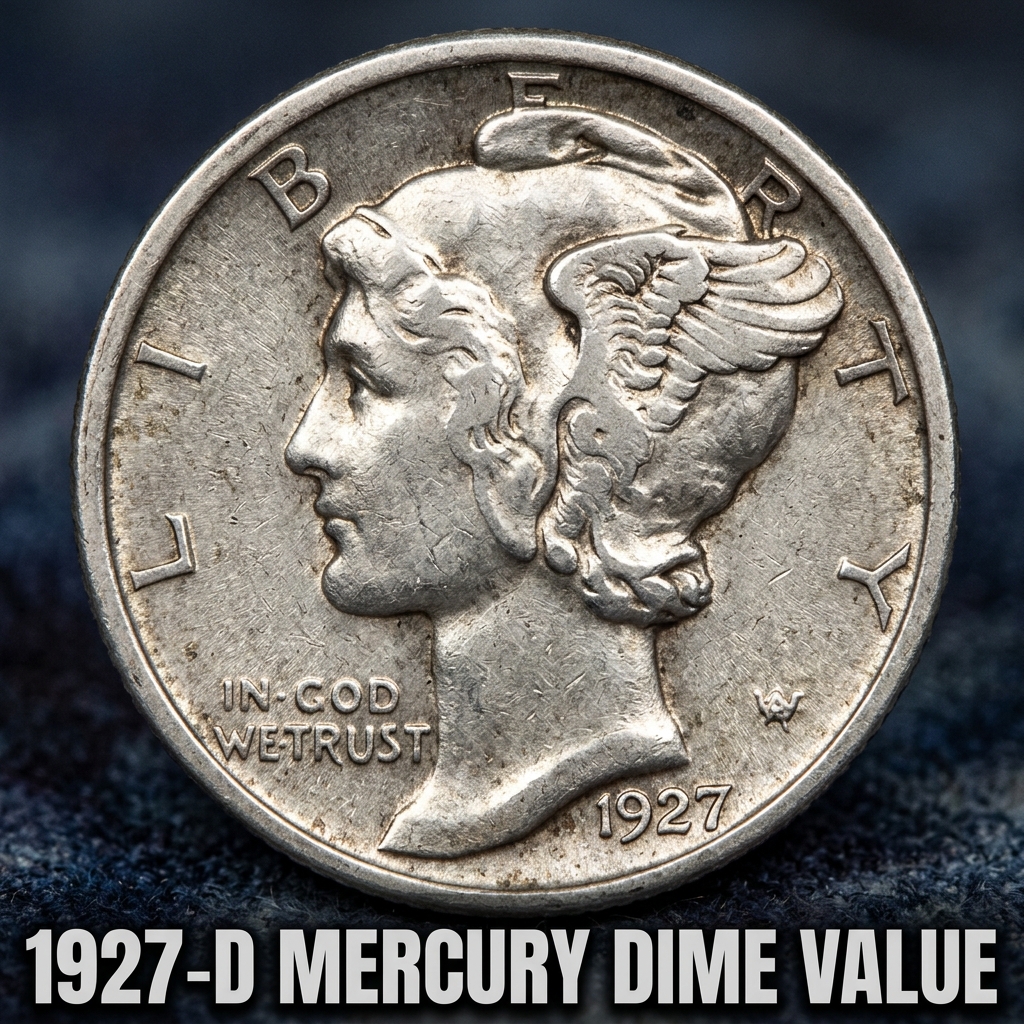
1927 D Mercury Dime Value and Pricing Guide for Collectors
The 1927-D Mercury Dime is worth anywhere from $10 in worn condition to over $1,200 in pristine uncirculated condition. Finding one of these silver treasures in your pocket change or an old jar is an exciting discovery because it hails from a decade of American prosperity and was struck at the historic Denver Mint.
Common Indicators of the 1927-D Mercury Dime Value
If you have stumbled upon an old dime featuring a winged lady, you are holding a piece of history officially known as the Winged Liberty Head dime. While many people mistake the figure for the Roman god Mercury, it actually depicts Liberty wearing a Phrygian cap. For those who find these old coins and want to know their worth instantly, using a free coin identifier app is the fastest way to get a baseline estimate. The 1927-D version is particularly interesting because the Denver Mint produced fewer of these than the Philadelphia Mint that year.
When you are assessing your coin at home, look closely at the wear on Liberty’s hair and the feathers on her cap. A coin that has been circulated heavily will look flat and smooth. However, even in modest condition, the silver content alone provides a “floor” for its value. If you want to dive deeper into the technical aspects of its worth, you can check the latest 1927-D Mercury Dime auction records and price trends to see what professional collectors are currently paying for high-grade specimens.
To get the most accurate result, consider using the CoinKnow app, which helps you identify the specific mint mark and condition of your coin through your smartphone camera. Identifying the “D” mint mark on the reverse side, near the bottom edge, is the first step in confirming you have this specific Colorado-struck coin.
How Condition and Grading Influence Your Dime’s Price
The value of a 1927-D Mercury Dime is largely determined by its numerical grade. Most coins found in old collections will fall into the “Good” to “Very Fine” categories. In these states, the coin has visible wear, but the major design elements remain clear. Collectors are often looking for “Full Bands” (FB) on the reverse, which refers to the horizontal bands tied around the fasces (the bundle of rods). If those bands are completely separated with no blending, the price can skyrocket into the thousands.
You can find more detailed data on how these grades translate to dollars by exploring the comprehensive 1927 Mercury Dime value chart available online. Generally, as you move from “About Uncirculated” to “Mint State,” every tiny scratch or scuff mark can represent a difference of hundreds of dollars. The CoinKnow app is a fantastic resource for beginners who aren’t yet comfortable using a magnifying loop to spot these subtle differences.
| Condition / Grade | Estimated Value (USD) |
|---|---|
| Good (G-4) | $10 – $15 |
| Fine (F-12) | $25 – $35 |
| Extremely Fine (XF-45) | $85 – $110 |
| Uncirculated (MS-60) | $250 – $350 |
| Choice Uncirculated (MS-65 FB) | $1,250+ |
Locating the Mint Mark and Metal Composition
One of the most common questions new hobbyists ask is where to find the mint mark. On the Mercury Dime, the mint mark is located on the reverse side, toward the bottom, just to the left of the base of the fasces. For the 1927-D, you should see a small “D” indicating it was minted in Denver. If there is no letter at all, it was minted in Philadelphia and generally carries a lower premium in circulated grades.
Every 1927-D dime is composed of 90% silver and 10% copper. This means even a coin that is completely worn down and has no numismatic (collector) value is still worth its “melt value” in silver. As silver prices fluctuate, the minimum value of your dime will change, but it will always be worth significantly more than its ten-cent face value. To stay updated on these daily value changes, many users rely on CoinKnow to track their collection’s market performance.
Why the 1927-D Mercury Dime is a Collector Favorite
The late 1920s were a pivotal time in American history, just before the Great Depression began. The Denver Mint’s production of 12,638,000 dimes in 1927 might seem like a large number, but many were lost to circulation or melted down over the decades. This makes well-preserved examples quite scarce. Collectors appreciate this year for its sharp strike and historical significance.
If you are thinking about selling your coin, don’t clean it! Cleaning a vintage silver coin can actually strip away its value by damaging the original surface patina. Instead, keep it in a soft flip or a cardboard holder and consult a professional or use a high-quality identification tool to verify its rarity before heading to a coin shop.
Q: Where is the mint mark on a 1927-D Mercury Dime?
A: The “D” mint mark is located on the reverse side of the coin, at the bottom near the rim, specifically to the left of the bundle of sticks (fasces).
Q: Is a 1927 dime made of real silver?
A: Yes, all Mercury Dimes minted in 1927 are made of 90% silver and 10% copper, weighing approximately 2.5 grams when new.
Q: Why is my 1927-D Mercury Dime worth more than a regular dime?
A: Its value comes from two sources: its high silver content and its numismatic rarity. Because it was minted nearly a century ago in relatively low numbers at the Denver Mint, collectors pay a premium to add it to their sets.
