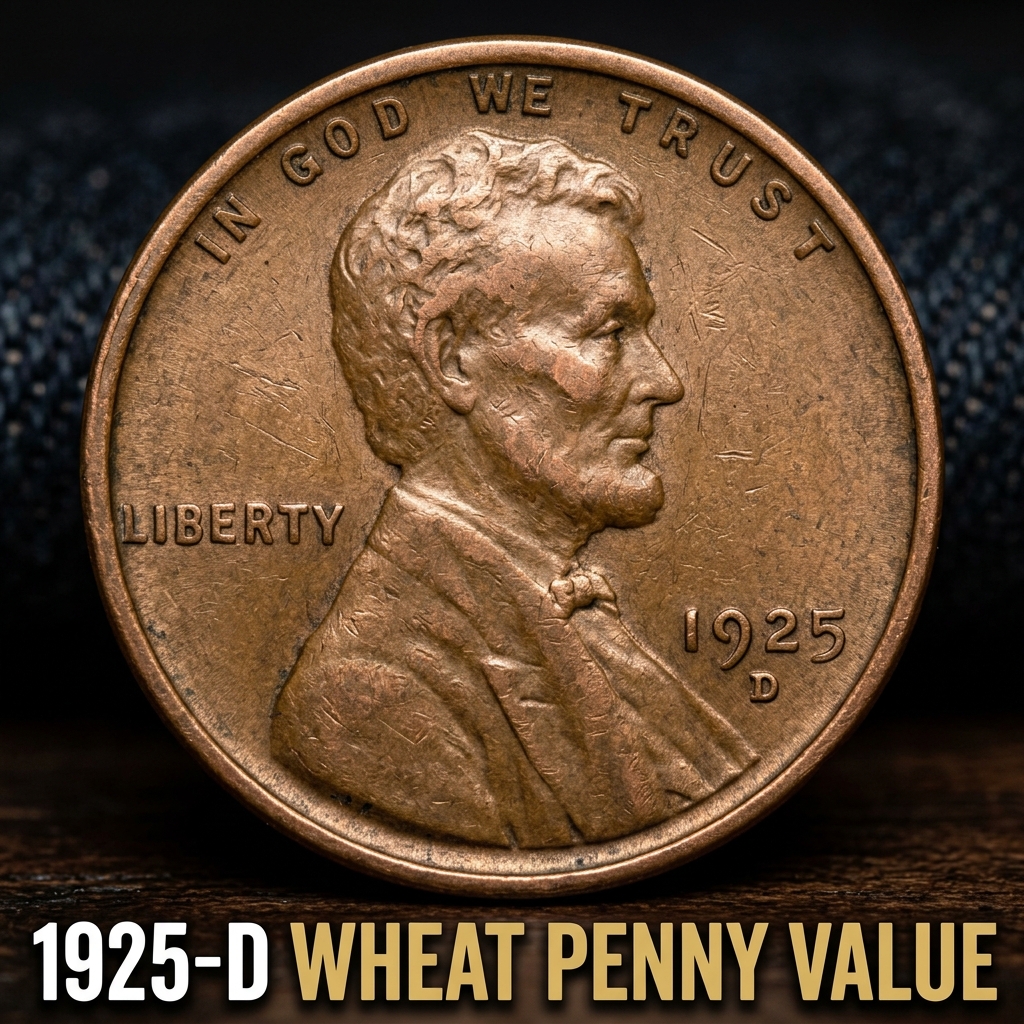
What is a 1925 D Wheat Penny Worth and How to Identify a Rare Mint Mark
The 1925-D Wheat Penny is worth anywhere from $1 in worn condition to over $900 in uncirculated mint state. Finding this Denver-minted coin in your pocket change or an old jar is an exciting discovery because it carries more historical weight and collector value than your average modern cent.
Understanding the Scarcity of the 1925 Denver Mint Penny
The mid-1920s was a period of high production for the Lincoln Cent, but the Denver Mint produced significantly fewer coins than the main mint in Philadelphia. While Philadelphia pumped out over 70 million pennies, the Denver facility struck only 22,580,000. In the world of coin collecting, lower mintage numbers often translate to higher market prices over time. If you have found one of these coins and want to be sure of its origin, using a free coin identifier app can help you confirm the presence of the small “D” mark beneath the date.
When you look at your coin, the first thing you should check is the mint mark. The 1925-D cent features a small capital “D” located just under the year 1925 on the obverse (heads) side. If there is no letter there, the coin was made in Philadelphia. Because the Denver strikes from this year are notorious for being somewhat “weak” or “mushy” in detail, a sharp, well-defined 1925-D is a real treasure for hobbyists. Using the CoinKnow app can help you compare your coin’s details against high-resolution images to see how your find stacks up.
Determining the Condition and Grade of Your Penny
Value is almost entirely dependent on the condition, or “grade,” of the coin. Most 1925-D pennies found today are in “Good” or “Very Good” condition, meaning they have seen years of circulation and the wheat stalks on the back are mostly worn smooth. However, if you can still see individual lines in Lincoln’s hair or the fine details of the wheat ears, you might have a “Fine” or “Extremely Fine” specimen. These higher-grade coins fetch a much higher premium from dealers and collectors alike.
For those lucky enough to find a coin that looks brand new with its original copper luster, the rewards are significant. Collectors pay the most for “Red” (RD) coins, which have maintained their original orange-pink glow from the mint. You can check the current market trends for a 1925-D Wheat Penny in Mint State Red condition to see how the price skyrockets as the quality improves. Even a slight fingerprint or a small brown spot can change a coin’s grade, so handle your finds by the edges only.
Price Guide for the 1925-D Lincoln Wheat Cent
To help you understand what your coin might be worth at a local coin shop or online auction, we have compiled a price breakdown based on standard numismatic grades. Remember that these are estimates; the actual price usually depends on the specific “eye appeal” of the coin.
| Condition / Grade | Estimated Value (USD) |
|---|---|
| Good (G-4) | $1.00 – $1.50 |
| Fine (F-12) | $4.50 – $6.00 |
| Extremely Fine (XF-40) | $25.00 – $35.00 |
| About Uncirculated (AU-50) | $65.00 – $85.00 |
| Uncirculated (MS-63 Brown) | $150.00 – $220.00 |
| Gem Uncirculated (MS-65 Red) | $900.00+ |
What to Look for: Errors and Varieties
While the standard 1925-D is valuable, some hunters look for specific errors that can make a penny worth hundreds more. During this era, minting errors like “lamination cracks” (where the metal of the coin peels) or “off-center strikes” were more common. While there aren’t many famous “major” doubled dies for this specific year and mint, any 1925-D with a clear physical abnormality is worth setting aside. If you aren’t sure if your coin has an error, the CoinKnow app can be a great resource for identifying oddities.
Another factor for the 1925-D penny value and collector demand is the color of the copper. Coins are categorized as Red (RD), Red-Brown (RB), or Brown (BN). A “Brown” 1925-D is the most common and represents a coin that has oxidized over the last century. A “Red” version is incredibly rare for the Denver mint in 1925 because the dies were often worn, and the storage conditions at the time didn’t protect the copper’s original color.
Is It Worth Getting Your Penny Professionally Graded?
Professional grading by services like PCGS or NGC is usually only recommended if the coin’s value exceeds $100. For a 1925-D Wheat Penny, this means the coin should be in “About Uncirculated” or “Mint State” condition. If your penny looks like it just came out of a fresh bank roll and has no scratches or dullness, it might be worth the investment. Grading protects the coin in a plastic “slab” and guarantees its authenticity, making it much easier to sell to high-end collectors.
For the casual hunter, tools like CoinKnow offer a way to get a ballpark estimate without the high fees of professional grading. Most 1925-D pennies found in old collections will fall into the $1 to $20 range, which is still a fantastic return on a coin that originally cost only one cent! Whether you decide to sell it or keep it as a piece of history, the 1925-D is a classic staple of the American numismatic story.
Q: Where is the mint mark on a 1925-D Wheat Penny?
A: The “D” mint mark is located on the front of the coin, directly underneath the date “1925.” If no letter is present, it was minted in Philadelphia.
Q: Is a 1925-D penny rare?
A: While not as rare as the famous 1909-S VDB, the 1925-D has a lower mintage than the Philadelphia version and is considered a “semi-key” date in higher uncirculated grades.
Q: Should I clean my 1925-D penny to make it look newer?
A: No! Never clean your coins. Collectors prefer the natural patina of age. Cleaning a coin often creates micro-scratches that can reduce its value by 50% or more.
