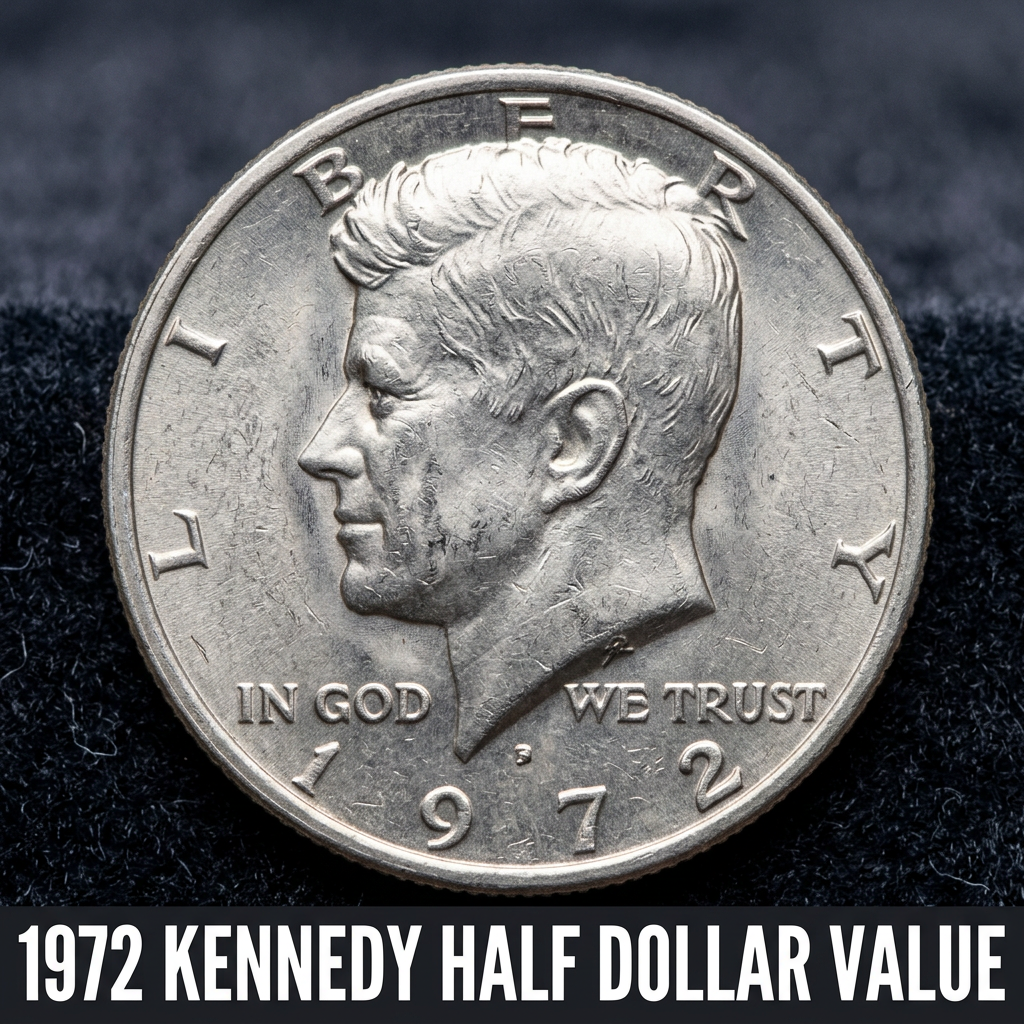
How Much Is a 1972 Kennedy Half Dollar Worth Today
The 1972 Kennedy Half Dollar is worth anywhere from its face value of 50 cents in worn condition to over $1,500 in high-grade mint state. While most coins found in pocket change today are only worth their legal tender value, certain rare varieties and pristine specimens can command a significant premium among collectors.
Understanding the Value of Your 1972 Kennedy Half Dollars
Finding a large silver-colored coin in an old jar or a drawer is always exciting, though it helps to manage expectations early on. If you want to identify your find quickly, using a free coin identifier app is the most efficient way to get an instant result. In 1972, the U.S. Mint produced hundreds of millions of these coins, which is why they remain relatively common in everyday circulation.
Unlike the halves minted before 1971, the 1972 issue contains no silver. These coins are composed of a copper-nickel clad sandwich. Because they lack precious metal content, their value is driven entirely by “numismatic” demand—meaning how badly a collector wants that specific date and condition. Most 1972 coins you find at the bank will be worth exactly 50 cents, but if you notice the coin looks like it just came from the mint, you might want to look closer. Using the CoinKnow app can help you distinguish between a common coin and a potential treasure.
Determining the Mint Mark and Condition
To determine the specific value, you first need to look for the mint mark. On the 1972 Kennedy Half Dollar, the mint mark is located on the obverse (front) side, just above the year and below the truncation of Kennedy’s neck. A “D” signifies the Denver Mint, while no letter (or a blank space) signifies the Philadelphia Mint. An “S” indicates a Proof coin minted in San Francisco, which was intended for collectors rather than circulation.
Condition is everything when it comes to the 1972 Kennedy half dollar auction prices for mint state grades. Collectors use a 70-point scale to grade coins. Most 1972 halves found in change are “Circulated” (Very Good to About Uncirculated). However, “Uncirculated” coins—those that never spent time in a wallet or cash register—are the ones that fetch high prices. Even subtle scratches invisible to the naked eye can drop the price from hundreds of dollars to just a few bucks.
| Condition/Grade | 1972 (No Mint Mark) | 1972-D (Denver) | 1972-S (Proof) |
|---|---|---|---|
| Circulated (Average) | $0.50 | $0.50 | N/A |
| About Uncirculated (AU58) | $1.50 | $1.50 | N/A |
| Uncirculated (MS63) | $5.00 | $5.00 | N/A |
| Superb Gem (MS67+) | $350.00+ | $400.00+ | N/A |
| Proof-69 Deep Cameo | N/A | N/A | $15 – $25 |
Rare 1972 Varieties and Errors to Watch For
One of the most exciting parts of coin collecting is hunting for errors. While the 1972 Kennedy Half Dollar doesn’t have a “major” world-famous error like some other years, there are subtle varieties that savvy collectors look for. The most common things to look for are “Double Dies.” This happens when the coin’s design is hubbed twice, creating a faint ghosting or doubling effect on the lettering or the date.
Another thing to look for is the “No FG” variety, though this is much more common in 1972-D issues. On the reverse side, look near the eagle’s right leg (your left) for the initials “FG” (Frank Gasparro). If the initials are missing due to over-polishing of the die, the 1972 Kennedy half dollar value for error coins can increase significantly. If you think you’ve found an error, the CoinKnow app can help you compare your coin against known error specimens.
Is Your 1972 Half Dollar Worth Saving
For the average American, the 1972 Kennedy Half Dollar is a cool piece of history, but not necessarily a retirement fund. If your coin is shiny, has no scratches, and looks like it was minted yesterday, it is definitely worth putting in a protective coin flip. Most of these coins found in circulation today have “hit marks” from banging against other coins, which reduces their value to 50 cents.
If you are an aspiring collector, the 1972 “S” Proof coins are beautiful additions to any collection. These were struck with specially prepared dies and have a mirror-like finish. They weren’t meant for spending, so if you find one in your change, it likely escaped from a private collection. Even though they aren’t silver, their visual appeal makes them a favorite for beginners. For a deeper dive into your pocket change, always keep the CoinKnow tools handy to stay updated on price fluctuations.
Q: Is the 1972 Kennedy Half Dollar made of silver?
A: No, the 1972 Kennedy Half Dollar is made of a copper-nickel clad composition. The U.S. Mint stopped using silver for circulating half dollars after 1970.
Q: How can I tell if my 1972 half dollar is worth more than 50 cents?
A: It is worth more if it is in “uncirculated” condition (meaning no wear or scratches) or if it possesses a rare mint error like a doubled die or the “No FG” reverse.
Q: Where is the mint mark on a 1972 Kennedy Half Dollar?
A: The mint mark is located on the front (obverse) of the coin, just above the year “1972.” You will see a small “D,” “S,” or no mark at all (for Philadelphia).
