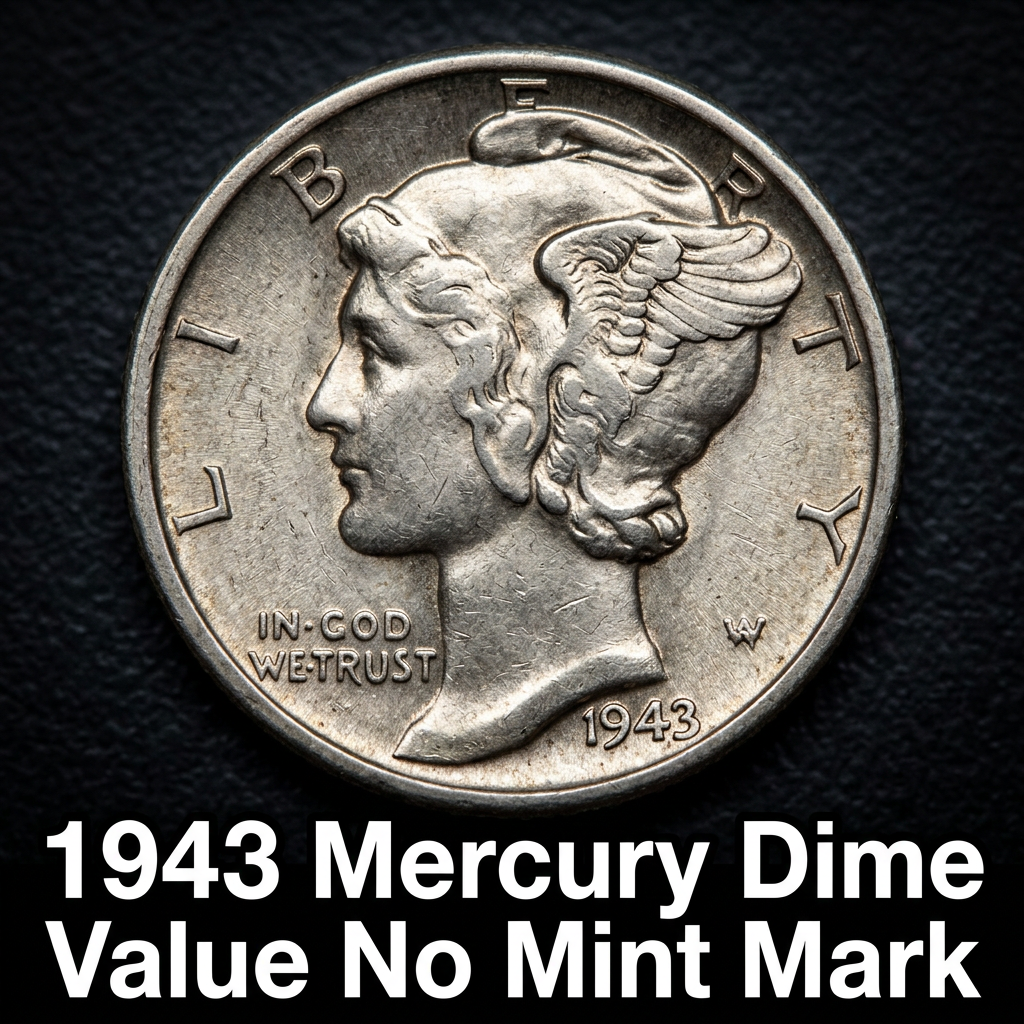
1943 Mercury Dime Value Guide for Coins With No Mint Mark
The 1943 Mercury Dime is worth anywhere from $3 in worn condition to over $100 in high-grade mint state. Finding one of these beautiful silver coins in your pocket change or an old jar is an exciting discovery, especially since they are composed of 90% silver and carry significant historical value from the World War II era.
History and Identification of the 1943 No Mint Mark Dime
The 1943 Mercury Dime is technically known as the Winged Liberty Head dime. Designed by Adolph A. Weinman, the image depicts Liberty wearing a Phrygian cap with wings, which many people mistook for the Roman god Mercury. By 1943, the United States was in the middle of World War II, and the production of these coins was ramped up to meet the demands of a booming wartime economy.
If you are looking at your coin and notice there is no letter “P,” “D,” or “S” on the back, don’t worry—this is completely normal. Dimes struck at the Philadelphia Mint during this era did not feature a mint mark. This makes the “No Mint Mark” variety the most common version of the 1943 dime, with over 191 million coins produced. If you are unsure if your coin is genuine, using a free coin identifier app can help you confirm the variety and origin in seconds.
For modern collectors, the CoinKnow app is a great way to log these finds and keep track of your growing collection. Knowing the history of your coin adds a layer of appreciation beyond just its monetary worth.
Understanding the Current Market Value of Your Silver Dime
The value of a 1943 dime is primarily determined by two factors: its silver content and its numismatic (collector) condition. Because these coins are 90% silver, they will always be worth at least their “melt value,” which fluctuates with the price of silver bullion. However, even a heavily circulated 1943 dime usually carries a premium above the metal price.
For coins that have been tucked away and preserved, the 1943 dime value increases significantly as the condition moves from “Good” to “About Uncirculated.” Collectors look for sharp details in the feathers of Liberty’s cap and the horizontal bands on the fasces (the bundle of sticks) on the reverse side.
If you happen to find a coin that looks brand new with its original “mint luster,” you might be looking at a significant payday. Tools like CoinKnow allow you to compare your coin against high-resolution images to see where it fits on the grading scale.
| Condition / Grade | Estimated Value |
|---|---|
| Good (G-4) | $2.50 – $3.00 |
| Fine (F-12) | $3.50 – $4.50 |
| Extremely Fine (XF-45) | $5.00 – $7.00 |
| Uncirculated (MS-60) | $12.00 – $18.00 |
| Gem Uncirculated (MS-65+) | $35.00 – $120.00+ |
The “Full Bands” Designation and Rare Rarities
When researching the 1943 Mercury Dime price data, you will often see a term called “Full Bands” (FB). This refers to the horizontal straps that hold the bundle of rods together on the back of the coin. On most dimes, these bands are slightly flat or blurry due to a weak strike at the mint.
If your 1943 dime has perfectly separated, distinct horizontal lines in the center of the fasces, it is highly sought after by serious investors. A 1943 Philadelphia dime with the Full Bands designation in high mint state can sell for hundreds, or even thousands, at major auctions.
Using the CoinKnow app can help you zoom in on these tiny details to see if your coin qualifies for this rare designation. While most coins found in everyday circulation won’t have Full Bands, it is always worth checking the center of the reverse side just in case.
How to Care for Your 1943 Mercury Dime
If you find a 1943 Mercury Dime with no mint mark, your first instinct might be to clean it to make it shine. Stop! Cleaning an old coin with polish, soap, or even a soft cloth can leave microscopic scratches that instantly destroy its collector value. Numismatists prefer a coin with its original “patina” or even a bit of dirt over a coin that has been artificially cleaned.
To preserve the value of your find, handle the coin only by its edges. Oils from your skin can cause corrosion over time. The best way to store it is in a PVC-free plastic flip or a simple cardboard “2×2” holder. Keeping the coin in a dry, cool place ensures that the silver remains stable and the details stay sharp for years to come.
Remember that the 1943 dime is a piece of American history. Whether it’s worth $3 or $300, it represents the resilience of the United States during the peak of the Second World War.
Frequently Asked Questions About the 1943 Dime
Q: Why doesn’t my 1943 Mercury Dime have a mint mark?
A: In 1943, the Philadelphia Mint did not use a mint mark on dimes. If your coin has no letter on the reverse near the bottom, it was simply minted in Philadelphia.
Q: Is the 1943 Mercury Dime made of real silver?
A: Yes, all Mercury Dimes minted between 1916 and 1945 are made of 90% silver and 10% copper. This gives them “intrinsic value” regardless of their condition as a collectible.
Q: Are there any 1943 dime errors I should look for?
A: While the 1943 Philadelphia issue is generally consistent, collectors look for “doubled die” errors where the lettering or the date appears to have a shadow or a double image. These errors can significantly increase the coin’s value.
