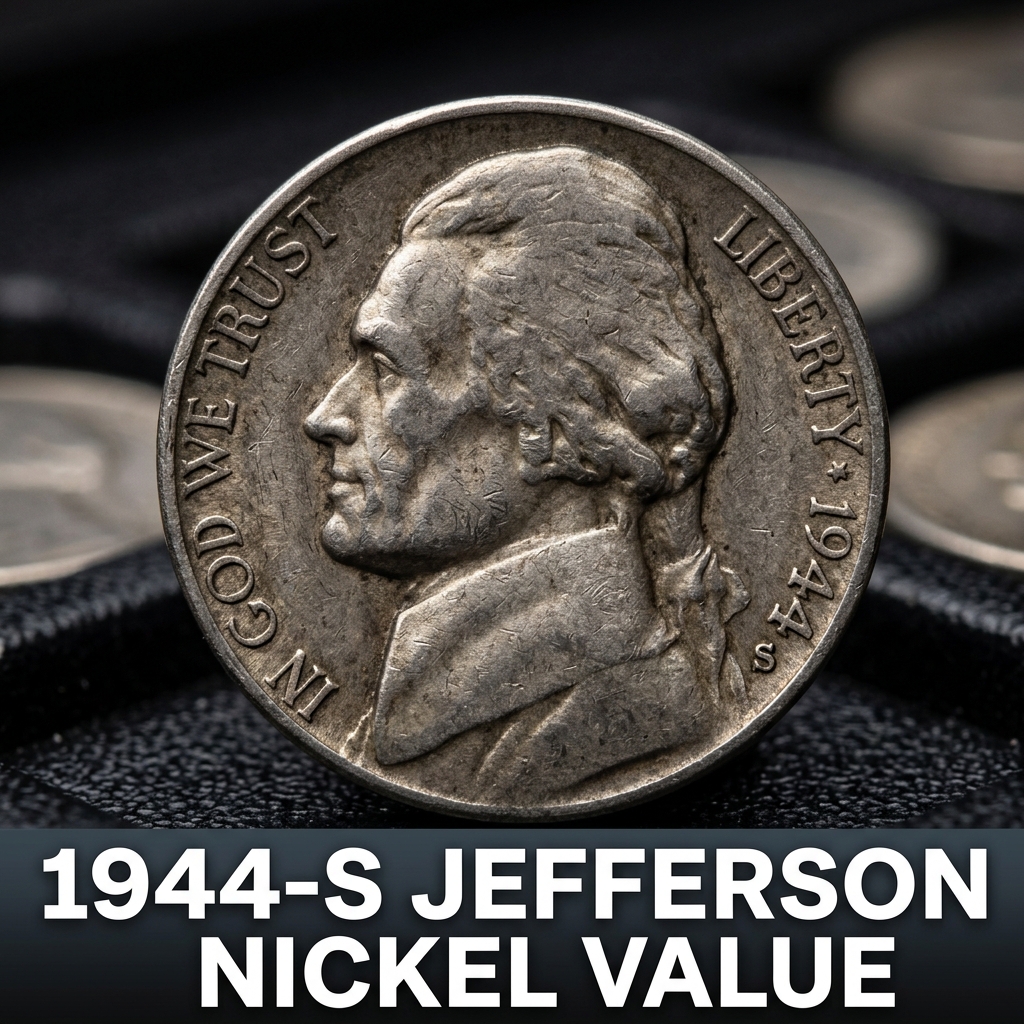
1944 S Jefferson Nickel Value and Coin Appraisal Guide
The 1944-S Jefferson Nickel is worth anywhere from $1.50 in worn condition to over $100 in high-grade mint state. Finding one of these silver treasures in your pocket change is an exciting moment for any casual collector, as they represent a unique era of American history and metal composition.
Why the 1944 S Jefferson Nickel Is Special
If you’ve discovered a nickel from 1944 with a large “S” mint mark above the building on the back, you’ve found a “War Nickel.” During World War II, nickel was a critical material for armor plating and military equipment. To conserve this essential metal, the U.S. Mint changed the nickel’s composition from 75% copper and 25% nickel to a unique alloy of 35% silver, 56% copper, and 9% manganese. Using a free coin identifier app is the fastest way to confirm if your coin belongs to this silver-enriched series.
Because these coins contain real silver, they will always be worth more than five cents, even if they are heavily damaged. Many people use the CoinKnow app to track their collection because war nickels have a distinct, slightly darker “greasy” luster compared to modern nickels. The large “S” above Monticello is the easiest way to identify that your coin was minted in San Francisco and contains precious metal.
How Much Is a 1944 S Nickel Worth Today
The market value of a 1944-S Jefferson Nickel is primarily driven by two factors: the current price of silver and the coin’s physical condition. In circulated condition, where the details of Thomas Jefferson’s hair and the pillars of Monticello are worn down, the value usually tracks closely with the “melt value” of its silver content. However, for coins that look like they just came from the bank, collectors are willing to pay a significant premium.
For those looking for precise market trends, studying the 1944 nickel auction records for mint state grades can provide a clearer picture of what professional investors pay. While most circulated examples sell for a few dollars, rare “Full Steps” versions—where the steps on the back of the building are perfectly defined—can reach into the hundreds or even thousands of dollars. The CoinKnow mobile tool helps you spot these subtle details that distinguish a common coin from a rarity.
| Condition / Grade | Estimated Value |
|---|---|
| Good (Circulated/Worn) | $1.50 – $2.25 |
| Fine (Visible Details) | $2.50 – $3.50 |
| Extremely Fine (Slight Wear) | $4.00 – $8.00 |
| Uncirculated (MS-60 to MS-63) | $15.00 – $35.00 |
| Choice Mint State (MS-65+) | $50.00 – $150.00+ |
Identifying Key Rare Features and Varieties
When examining your San Francisco-minted nickel, look closely at the large “S” mint mark. While millions were produced, some coins exhibit “doubled die” errors where the lettering or the mint mark appears blurry or doubled. These errors are highly sought after by specialists and can drastically increase the current resale price for 1944 silver nickels.
Another feature to watch for is the strike quality. Because the silver alloy was softer than the standard nickel-copper mix, the dies often wore out quickly. A sharp, crisp strike on a 1944-S is somewhat harder to find than on other years. If you aren’t sure if your coin is a “Full Steps” variety or just a regular strike, the CoinKnow app’s high-resolution visual database can help you compare your coin to certified museum-quality examples.
Tips for Selling and Protecting Your Coin
If you find a 1944-S nickel that seems exceptionally shiny, do not clean it! One of the biggest mistakes new collectors make is rubbing a coin with soap or polish to make it look “new.” This actually destroys the coin’s numismatic value and can turn a $50 coin into a $2 coin instantly. Instead, handle the coin only by its edges and place it in a PVC-free plastic flip or even a simple paper envelope to prevent further scratching.
To get the most money for your 1944-S Jefferson Nickel, it is best to group it with other silver war nickels if they are in circulated condition, as dealers often buy them in “rolls” of 40. For high-grade specimens that appear flawless, consider getting them authenticated by a grading service or using a digital identifier to see if it’s worth the professional grading fee.
Q: How can I tell if my 1944 nickel is silver?
A: Look at the back of the coin. If there is a large letter (P, D, or S) located directly above the dome of Monticello, it is a 35% silver war nickel.
Q: Is a 1944-S nickel rare?
A: While they were produced in large numbers (over 32 million), high-quality uncirculated examples are relatively scarce, and many were melted down for their silver content over the years.
Q: Can I find a 1944-S silver nickel in my pocket change today?
A: It is possible, but very rare. Most silver war nickels have been pulled out of circulation by collectors, though they occasionally turn up in old jars of change or estate sales.
