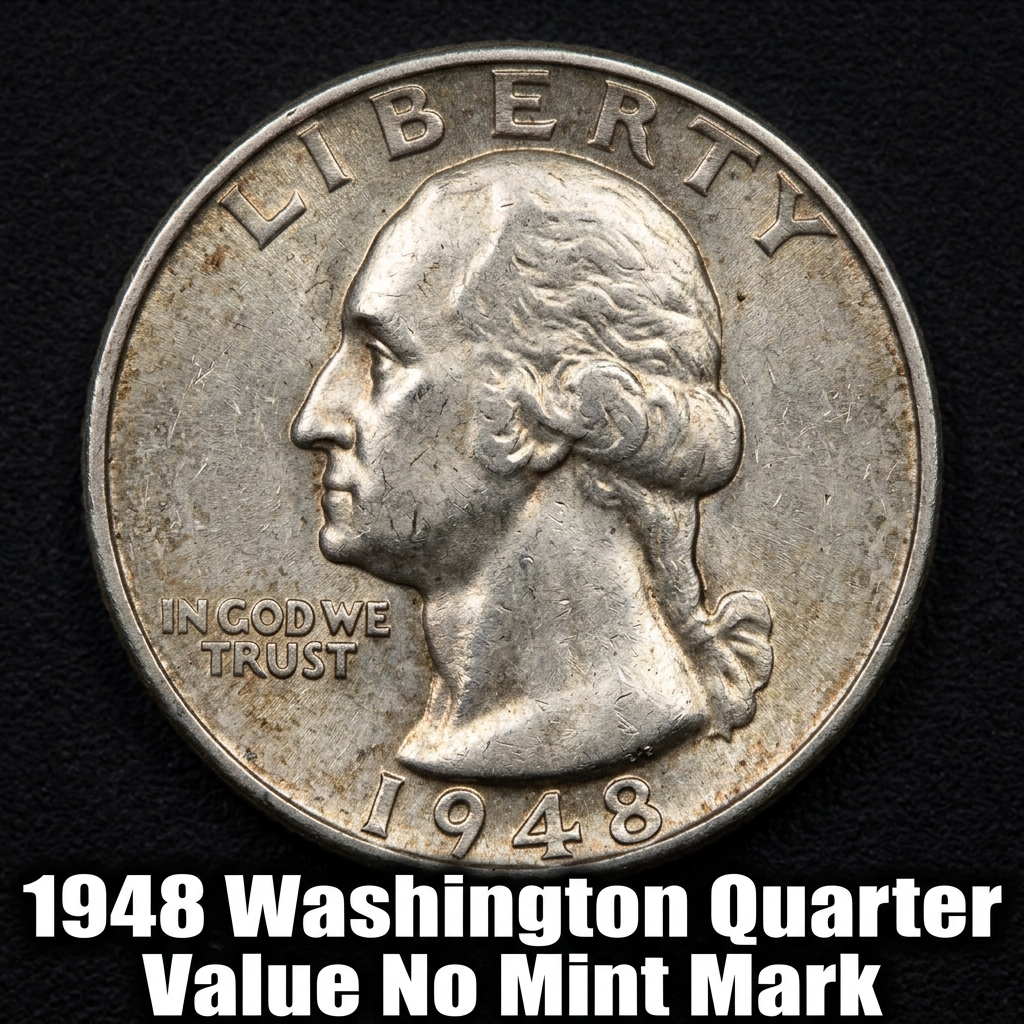
1948 Washington Quarter Value Without Mint Mark and Price Guide
The 1948 Washington Quarter No Mint Mark is worth anywhere from $6 in worn condition to over $1,200 in high mint state. If you have just pulled one of these silver treasures out of an old jar or inherited a collection, you are likely holding 90% pure silver history in your hand.
Historical Significance of the 1948 Silver Quarter
The 1948 Washington Quarter was struck during a time of post-war economic growth in the United States. Unlike modern quarters that are made of copper and nickel, this vintage coin is composed of 90% silver and 10% copper. Because there is no mint mark on the reverse (the tail side), it indicates the coin was minted in Philadelphia. For everyday collectors, finding one of these in a pocket change stash is a thrill because of its intrinsic metal value and historical charm. To get an instant appraisal from your smartphone, you can use a free coin identifier app to see if your specific coin has any unique markers.
Many people use the CoinKnow app to quickly scan their vintage quarters and determine their silver content. In 1948, the Philadelphia mint produced over 35 million of these coins. While they are not considered “rare” in the sense of low mintage, finding them in pristine, uncirculated condition is becoming increasingly difficult. Most coins found in circulation today will show significant wear on Washington’s hair and the eagle’s breast feathers.
Detailed 1948 Washington Quarter Value Guide
The value of your 1948 quarter is primarily determined by its grade. Coins that have been heavily circulated are generally worth their “melt value,” which fluctuates with the current price of silver. However, as the grade increases to “About Uncirculated” or “Mint State,” the premium grows significantly. Collectors look for sharp details in the eagle’s wings and the luster of the original mint finish. Use the CoinKnow app to verify the surface quality of your coin before selling.
The following table outlines the current market prices based on standard grading scales. For those looking for professional-grade updates, check out this 1948 Washington Quarter price chart to see how much collectors are paying for uncirculated specimens.
| Condition / Grade | Estimated Market Value |
|---|---|
| Good (G-4) | $5.75 – $6.50 |
| Fine (F-12) | $7.00 – $8.50 |
| Extremely Fine (XF-40) | $10.00 – $15.00 |
| Uncirculated (MS-60) | $25.00 – $35.00 |
| Choice Uncirculated (MS-65+) | $60.00 – $1,200+ |
How to Identify a Philadelphia Mint 1948 Quarter
When looking at your 1948 quarter, you might wonder where the mint mark is. On Washington Quarters minted before 1965, the mint mark is usually located on the reverse side, right below the center of the eagle’s wreath. If that space is blank, it means it was minted in Philadelphia. Philadelphia was the primary minting facility and did not use a “P” mark on quarters during this era. Identifying the lack of a mint mark is the first step in determining the 1948 quarter value and rarity compared to its counterparts from Denver (D) or San Francisco (S).
Since there are no mint marks to look for, collectors focus heavily on the “eye appeal” of the Philadelphia strike. Some coins may have a slightly “mushy” appearance due to worn dies, while others are sharp and crisp. The CoinKnow tool can help you zoom in on these fine details. A 1948 quarter with exceptional luster and no visible scratches can fetch a massive premium at auction, sometimes reaching into the thousands of dollars if it achieves a high “Superb Gem” grade from services like PCGS or NGC.
Common Errors and Varieties to Watch For
While the 1948 Philadelphia quarter is known for being a consistent strike, there are certain varieties that collectors search for under a magnifying glass. Double die obverse (DDO) or double die reverse (DDR) errors can occasionally be found. These appear as slight doubling on the lettering or the dates. If you find a coin where the “1948” looks like it was stamped twice, you could be looking at a coin worth several hundred dollars regardless of its silver content.
Another thing to look for is “re-punched” features or die cracks. Because these coins were produced in large quantities, the machinery often showed signs of wear, leading to interesting unique markers. Always keep your coins in a protective flip or sleeve once you identify them. Handling a silver coin with your bare hands can transfer oils that damage the surface over time, potentially lowering its future resale value.
Frequently Asked Questions
Q: Is the 1948 Washington Quarter made of real silver?
A: Yes, all Washington Quarters minted through 1964 are composed of 90% silver and 10% copper. This gives them an inherent bullion value that is much higher than their 25-cent face value.
Q: Where is the mint mark on a 1948 silver quarter?
A: On a 1948 quarter, the mint mark (if it has one) is located on the back (reverse) of the coin, directly underneath the wreath that the eagle is perched upon. If there is no letter there, it was minted in Philadelphia.
Q: How can I tell if my 1948 quarter is worth more than silver melt value?
A: Your coin is worth more than melt value if it is in “Uncirculated” condition (showing no wear on high points like Washington’s cheek) or if it possesses a rare minting error like a double die. Using a specialized app can help you make this distinction quickly.
