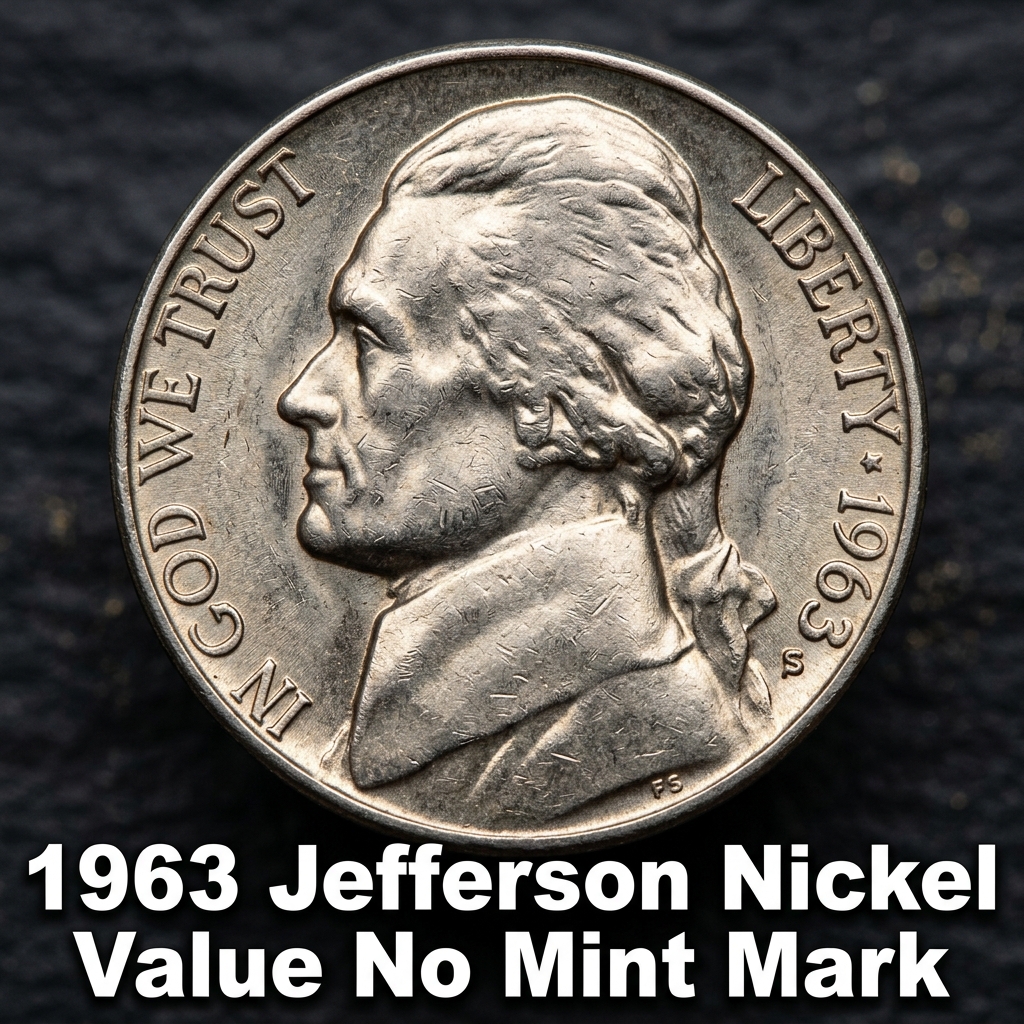
1963 Jefferson Nickel Value No Mint Mark Worth and Pricing Guide
The 1963 Jefferson Nickel is worth anywhere from $0.05 in worn condition to over $1,500 in rare high-grade mint state. Finding one of these classic coins in your pocket change is a common occurrence, and while most circulated examples carry little premium, certain varieties can be surprisingly valuable to collectors.
Understanding the 1963 Jefferson Nickel and Its Rarity
The 1963 Jefferson Nickel was struck at the Philadelphia Mint during a period of massive economic growth in the United States. Because it was minted in Philadelphia, you will notice that it has no mint mark. At the time, the US Mint produced over 178 million of these nickels, making them a staple of American commerce for decades. If you have found one while sorting through a jar of old change, using a free coin identifier app can help you confirm the date and minting location instantly.
While the sheer number of coins produced means that most are only worth their five-cent face value, the 1963 nickel is a favorite among entry-level collectors. For many everyday Americans, these coins serve as a “gateway” into the world of numismatics. If you aren’t sure where to start, the CoinKnow app can provide a quick valuation to see if your coin is a common spender or a collector’s item worth keeping in a protective sleeve.
Grading and Condition Impacts the 1963 Nickel Value
When determining the 1963 Jefferson Nickel value, the single most important factor is the physical condition, or “grade.” Coins that have spent years circulating in pockets and cash registers will show significant wear on Thomas Jefferson’s hair and the pillars of Monticello on the reverse. These circulated coins rarely sell for more than five to ten cents. However, if you find a coin that looks like it just came from the bank—with a sharp strike and original luster—you may have a “Mint State” (MS) coin on your hands.
Collectors pay a significant premium for coins graded MS65 or higher. At this level, even tiny scratches can decrease the price significantly. To get a better idea of what professional graders look for, you can check the latest 1963 Jefferson Nickel price charts for mint state specimens. High-grade coins are much rarer because most were dumped into circulation and worn down over time, making pristine survivors quite valuable.
| Condition / Grade | Estimated Market Value |
|---|---|
| Circulated (Good to About Uncirculated) | $0.05 – $0.15 |
| Uncirculated (Mint State 60-63) | $1.00 – $5.00 |
| Gem Uncirculated (Mint State 65) | $20.00 – $50.00 |
| Superb Gem (Mint State 66+) | $150.00+ |
| Full Steps (FS) Designation | $500.00 – $2,500.00+ |
How to Identify Full Steps and Error Varieties
The “holy grail” for a 1963 nickel collector is the “Full Steps” designation. On the reverse of the coin, Thomas Jefferson’s home, Monticello, has a set of steps. In most strikes from 1963, these steps are blurry or blended together due to worn dies. If you find a coin where five or six steps are clearly visible and uninterrupted, the value skyrockets. Reviewing detailed 1963 nickel value information will show that “Full Steps” versions are among the most sought-after by serious investors.
Beyond the steps, error hunters should look for “Double Die” varieties. Although not as famous as earlier years, some 1963 nickels show slight doubling on the lettering or the date. If you suspect your coin is an error, the CoinKnow app can help you compare your specimen against known error patterns. Rare errors can turn a five-cent piece into a hundred-dollar treasure overnight, provided the condition remains relatively clean.
Final Tips for Storing and Selling Your 1963 Nickel
If you’ve discovered a high-grade 1963 Jefferson nickel No Mint Mark, the way you handle it matters. Never clean your coins with chemicals or abrasive cloths; this destroys the “bloom” of the metal and kills the numismatic value. Instead, hold the coin by the edges and place it in a cardboard 2×2 flip or a plastic coin capsule. Keeping the coin away from humidity and skin oils is the best way to ensure it retains its maximum potential price.
When you are ready to sell, consider reaching out to a local coin shop or utilizing online auction platforms. The CoinKnow app is a great secondary tool for tracking market trends so you know exactly when to sell for the highest possible profit. Remember that while most 1963 nickels are common, the thrill of the hunt lies in finding that one exceptionally sharp strike that stands out from the rest.
Q: Where is the mint mark on a 1963 Jefferson Nickel?
A: In 1963, nickels minted in Philadelphia have no mint mark. If the coin was minted in Denver, there would be a small “D” located to the right of the Monticello building on the reverse side.
Q: Is a 1963 nickel made of silver?
A: No, the 1963 Jefferson Nickel is composed of 75% copper and 25% nickel. Silver “War Nickels” were only produced from 1942 to 1945.
Q: How much is a 1963 proof nickel worth?
A: 1963 Proof nickels, which were made specifically for collectors with a mirror-like finish, usually sell for $2 to $5 in their original packaging, though perfect specimens can be worth more.
